
Related videos:
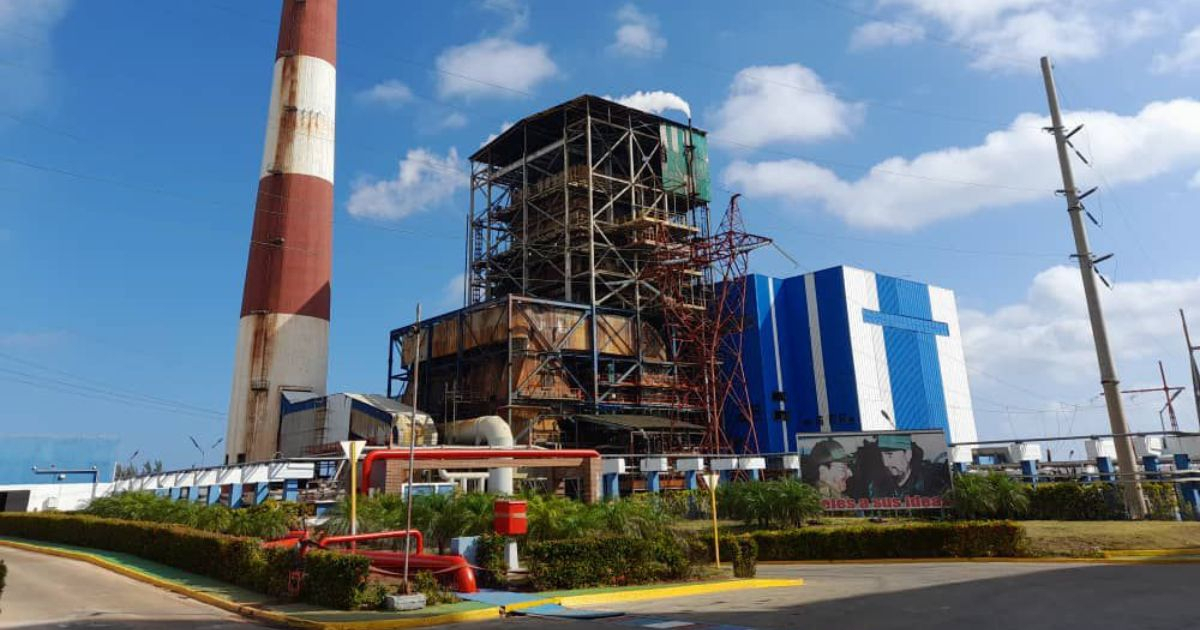
The Antonio Guiteras Thermoelectric Power Plant synchronized with the National Electrical System (SEN) at 9:33 this morning, as confirmed by the plant itself on its social media.
It is the twelfth time that the thermoelectric plant has gone offline and returned to the system in 2026.
«Guiteras synchronized with the National Electric System at 9:33 am on this Wednesday, June 3, 2026. Parameters are stabilizing, and load is being increased with the seriousness this operation requires», published the plant in Matanzas.
The reconnection comes just four days after the Guiteras left the SEN on May 30 due to a leak in the boiler economizer, having been connected for less than 36 hours after its reintegration on May 28.
The informative note from the Unión Eléctrica (UNE) this Wednesday already anticipated the return: "For the peak, the entry of the CTE Guiteras with 200 MW (currently starting up) and the completion of 45 MW in unit 3 of the CTE Cienfuegos is expected."
The energy context in which this reconnection occurs is critical. At 6:00 AM this Wednesday, the availability of the National Electric System (SEN) was only 1,020 MW against a demand of 2,570 MW, with 1,600 MW impacted. For the peak hours, a deficit of 1,885 MW was forecasted, along with an estimated impact of 1,905 MW.
The previous day was particularly serious: the maximum impact reached 2,110 MW at 10:00 PM, exceeding the plan due to the shutdown of units 6 and 8 at the Mariel Power Plant and unit 3 at the Renté Power Plant, caused by a malfunction at the Apolo 110 kV substation.
The difficulties in thermal generation are compounded by 106 distributed generation plants out of service due to lack of fuel, with 890 MW not contributing to the system, and a total of 1,203 MW unavailable for that reason.
Only in May, the Guiteras went offline at least four times: on the fifth due to a boiler malfunction, on the 14th due to a leak in the boiler —which caused a partial collapse of the SEN from Ciego de Ávila to Guantánamo—, on the 24th due to a pore in the economizer, and on the 30th due to another leak in the same area.
The pattern reflects a structural deterioration that has accumulated over more than 15 years: the last major maintenance of the plant took place in 2010.
His director, Román Pérez Castañeda, has publicly acknowledged that the Guiteras requires at least 180 days of downtime for that intervention, but that "the situation in the country still does not allow it."
The Minister of Energy and Mines, Vicente de la O Levy, postponed the maintenance to December 2025, citing a "situational problem." In April 2026, it was promised again, still without a specific date.
Every outage from the Guiteras—the largest thermoelectric plant in Cuba with a nominal capacity of up to 330 MW—directly exacerbates blackouts across the country, turning its endless cycle of breakdowns and restarts into one of the most visible symbols of the collapse of the Cuban electrical system after 67 years of dictatorship.
Filed under: