
Related videos:
A Cuban identified as Subdraine Portales posted a heartbreaking testimony on Facebook this Wednesday about the exhaustion she feels from having to explain to her daughter the reality they are experiencing in Cuba, amidst prolonged blackouts and food shortages.
In their post, Portales highlights the contradiction of seeing Varadero illuminated and equipped with electrical appliances for the start of the summer tourist season, while the Cuban people endure widespread power outages and struggle with food shortages.
"Where did the electric energy come from at the start of summer in Varadero? There are indeed lights and equipment. Where did so much come from when a town is without food because everything is going bad?" the woman wrote.
The Cuban went further by describing the extent of hunger: "When I say everything, I don't mean a lot, because an entire people has nothing to eat, has no life, no happiness, and certainly has no hope for anything."
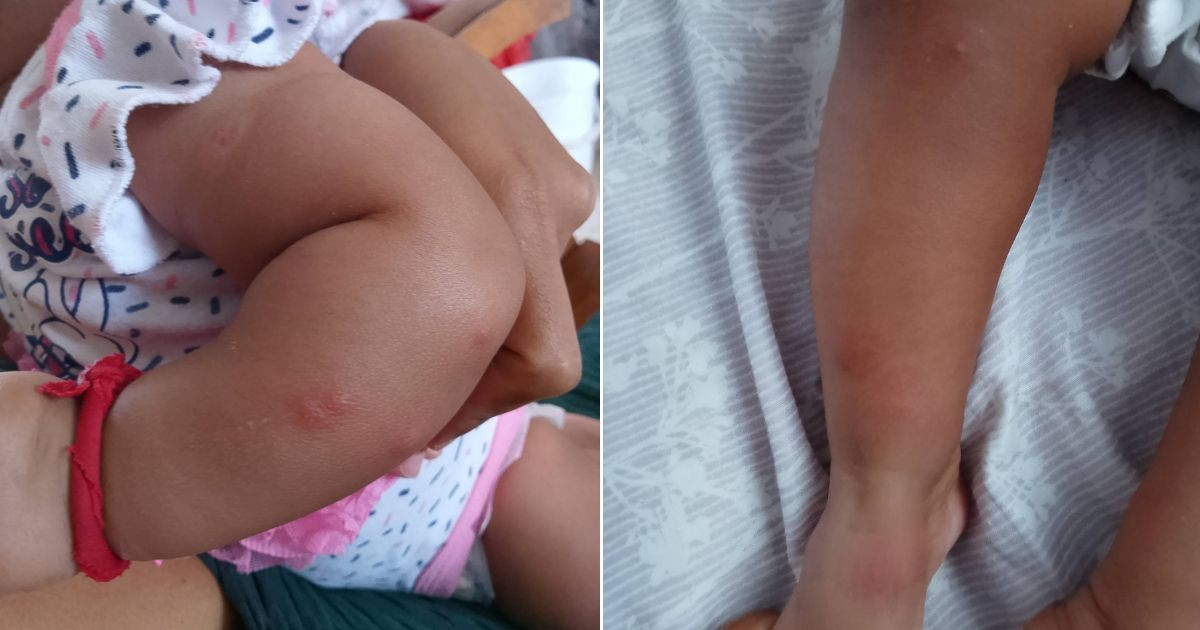
The images accompanying the testimony show what appear to be insect bites on the skin and lesions on the arms of a baby, evidence of the direct health impact of blackouts: without fans or air conditioning, children and infants are left exposed to mosquitoes.
This phenomenon has been documented in various provinces. A Cuban mother showed the body of her son covered in welts from bites linked to power outages, and in July 2025, an eight-year-old boy died in Manzanillo with suspected dengue hemorrhagic fever.
Portales expressed her exhaustion with words that summarize the mood of thousands of Cubans: "I am tired. I am a mother, I am a daughter, I am a granddaughter, and I am tired of explaining to my daughter what we are living through. We can't take it anymore."
Her complaint is not an isolated case. This past Wednesday, another Cuban living in the United States erupted on social media because her grandmother had been without electricity for 25 hours, while Varadero was illuminated for tourist festivities.
The contradiction that outrages Portales reflects a deliberate policy of the regime: the hotels in Varadero operate with their own power plants and fuel guaranteed by GAESA, while the civilian population endures outages of up to 20 and 22 hours daily, as admitted by the Minister of Energy, Vicente de la O Levy.
The deficit of the Cuban electrical system reached 2,113 MW on May 13, a historic record. A survey by the Food Monitor Program revealed that 80% of respondents were unable to cook due to power outages, 47.59% lost food, and one in three households had someone who went to bed hungry.
The to assist two million Cubans, roughly one in five inhabitants of the island.
Portales concluded its publication with a question that encapsulates the despair of those experiencing this crisis without seeing a response from the regime: "Who do we shout to, who do we plead with?"
Filed under: