
Related videos:
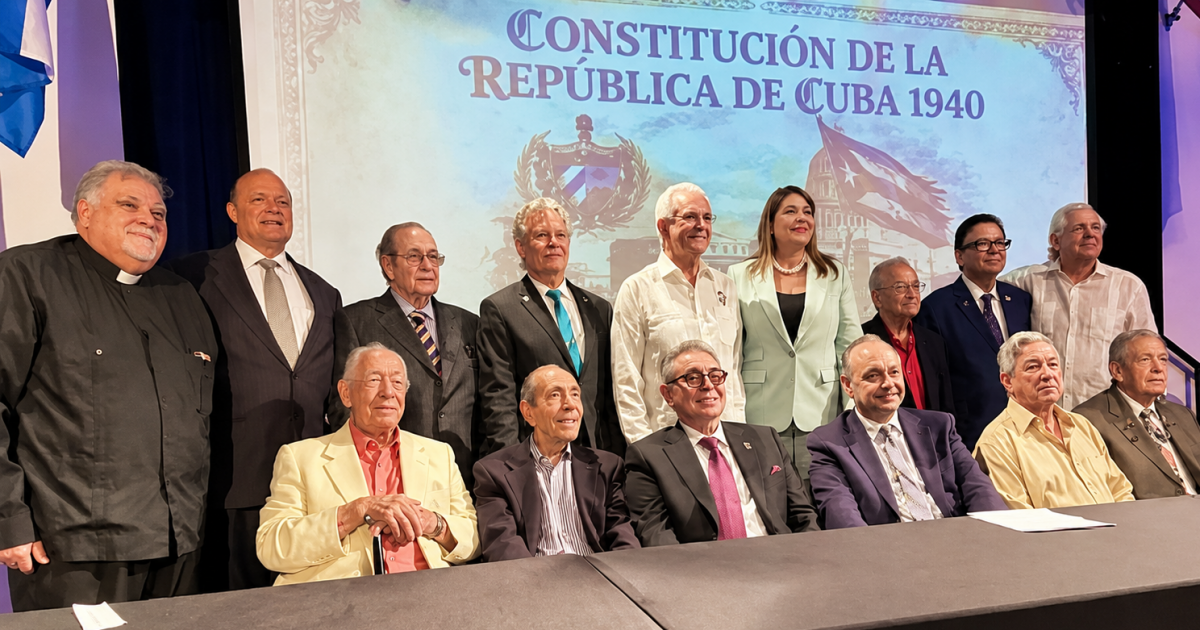
Cuban exile leaders, businesspeople, jurists, and community representatives gathered this Monday at the Cuban Museum of the Diaspora in Miami to advocate for the restoration of the 1940 Constitution as the legal foundation for a potential democratic transition in Cuba, reported EFE.
The meeting, which was attended by the mayor of Miami-Dade, Daniella Levine Cava, brought together figures such as Marcel Felipe, president of the museum; Jim Cason, former chief of the U.S. Interests Section in Cuba; and Madeline Pumariega, president of Miami Dade College.
The participants argued that the 1940 Constitution is "the last Magna Carta approved freely and democratically by the Cuban people and, therefore, provides a legitimate foundation for the institutional reconstruction of the country."
Jurists and international organizations that have studied the text for decades describe it as "a masterful gem of legal architecture," although the debate also included voices that pointed out the document would need changes or modifications to adapt to the realities of the 21st century.
The speakers particularly highlighted Title IV of the Constitution, which encompasses Articles 20 to 40 and outlines individual rights and constitutional guarantees, comparing it to the U.S. Bill of Rights.
Mayor Levine Cava emphasized that the Cuban community in South Florida has been preparing for this moment for decades: "We are always preparing for freedom. Now we are waiting to see what will happen with the government."
In response to the question of whether Miami-Dade has a concrete support plan for the time of the transition, the mayor was straightforward: "Yes, of course. With the sheriff, with our emergency office, speaking with federal forces. Yes. We are preparing for whatever it may be."
The event takes place against a backdrop of increasing pressure from the Trump administration on the Cuban dictatorship. Since January, the U.S. government has implemented over 240 sanctions against the Island, including two executive orders that have reduced Cuban energy imports by between 80% and 90%.
In May, the Department of Justice also declassified a federal charge against Raúl Castro for the downing of two airplanes belonging to Brothers to the Rescue in 1996, with four counts of homicide. Secretary of State Marco Rubio then referred to him as a "fugitive from U.S. justice."
The proposal to restore the 1940 Constitution is not new in exile. In March, the Assembly of the Cuban Resistance presented the “Liberation Agreement” in Miami, a roadmap in three stages that also considers that text as a legal reference.
On May 31, the Cuban American National Foundation presented the "Cuba Roadmap," featuring 13 pillars for the institutional, economic, and social reconstruction of Cuba, signaling that proposals for the day after the dictatorship are multiplying in exile.
The Constitution of 1940, promulgated on October 10 of that year and definitively repealed following Fidel Castro's rise to power in 1959, consists of 286 articles divided into 19 sections and is regarded as one of the most progressive constitutions in Latin America of its time.
Filed under: