
Related videos:
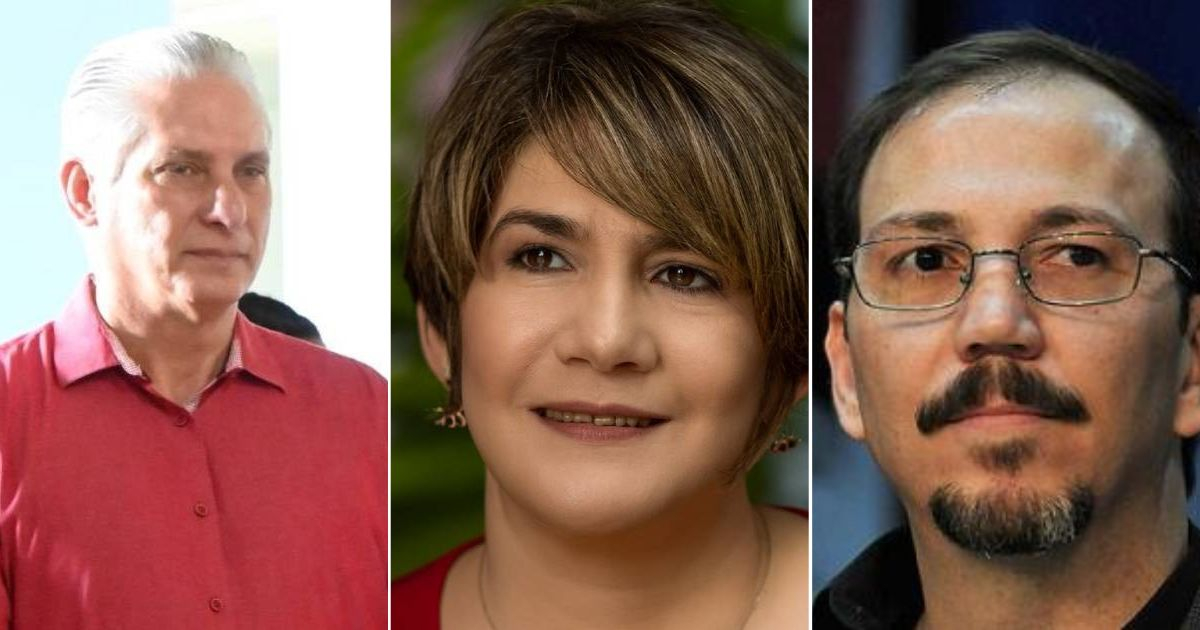
The Office of Foreign Assets Control (OFAC) of the United States Department of the Treasury added this Thursday to the list of Specially Designated Nationals Miguel Díaz-Canel Bermúdez, his wife Lis Cuesta Peraza, Alejandro Castro Espín —son of Raúl Castro— and the Ministry of the Revolutionary Armed Forces (MINFAR), in a new wave of sanctions against the power structure in Cuba.
This is the first time that Díaz-Canel and Cuesta Peraza have appeared directly on the SDN list, which blocks all their assets under U.S. jurisdiction and prohibits U.S. citizens, banks, and companies from conducting any transactions with those designated.
The sanctions also extend to Manuel Anido Cuesta, stepson and advisor to Díaz-Canel, who recently moved to Madrid and has been singled out for acting as a informal representative of the leader on various international trips.
In 2023, Anido Cuesta traveled to the United Arab Emirates with Díaz-Canel, his mother, and the official Cuban delegation. A law graduate, he has become a frequent figure in the international tours of the leader. Although he does not hold a clearly defined institutional role, he often joins the official delegations funded by the public treasury.
The list also includes Raúl Alejandro Castro Calis, the son of Alejandro Castro Espín and the grandson of Raúl Castro.
Among the designated entities are also the Committees for the Defense of the Revolution (CDR), the Cuban Institute of Friendship with the Peoples (ICAP), its travel agency Amistur Cuba S.A., and the mining company Minera La Victoria S.A., a joint entity for gold extraction created in partnership with the Australian company Antilles Gold Ltd and the Cuban state company Geominera S.A.
The Secretary of State Marco Rubio justified the measures in a statement: "These sanctions target the extensive and violent network of radical action of the Cuban regime and the actors who implement and finance it."
Rubio also accused Havana of having served as a "base of operations for the global irregular war against U.S. interests, recruiting, training, and equipping violent leftist militants in our region — including Marxist terrorist groups in the United States — with the ultimate goal of undermining U.S. national security."
The inclusion of Alejandro Castro Espín, known as "El Tuerto," carries particular political weight: he was the chief Cuban negotiator in the secret talks with the Obama administration that led to the restoration of diplomatic relations in 2015.
His designation indicates that the Trump administration now sees him as an obstacle and has opted for a different interlocutor: Raúl Guillermo Rodríguez Castro, the grandson of Raúl Castro.
The designation of the MINFAR is also significant, as the Cuban military apparatus controls a substantial part of the island's economy through structures such as GAESA.
These sanctions arise from Executive Order 14404, signed by Trump on May 1, which expanded measures to the energy, defense, mining, and finance sectors, and authorized secondary sanctions against foreign companies and banks that operate in those sectors in Cuba.
The measures this Thursday represent the third wave in less than a month.
On May 7, Washington sanctioned the military conglomerate GAESA and its executive president, General Ania Guillermina Lastres Morera.
Before, on May 18, a second wave sanctioned 11 high-ranking officials and three entities, including the Intelligence Directorate, MININT, and the National Revolutionary Police.
The day before the new sanctions, Rubio appeared before Congress and stated that the U.S. was open "to a negotiated situation that puts Cuba on a path toward democracy, prosperity, freedom, and normalcy," but acknowledged that it was difficult to find someone willing to lead it: "There are clearly individuals within the power structure in that country who understand that what they have now is unsustainable and needs to be fixed. But do they have power? They do not."
So far, Cuban leaders have not shown a willingness to make political concessions, and the regime has responded to each wave of sanctions with statements of resistance.
Filed under: