
Related videos:
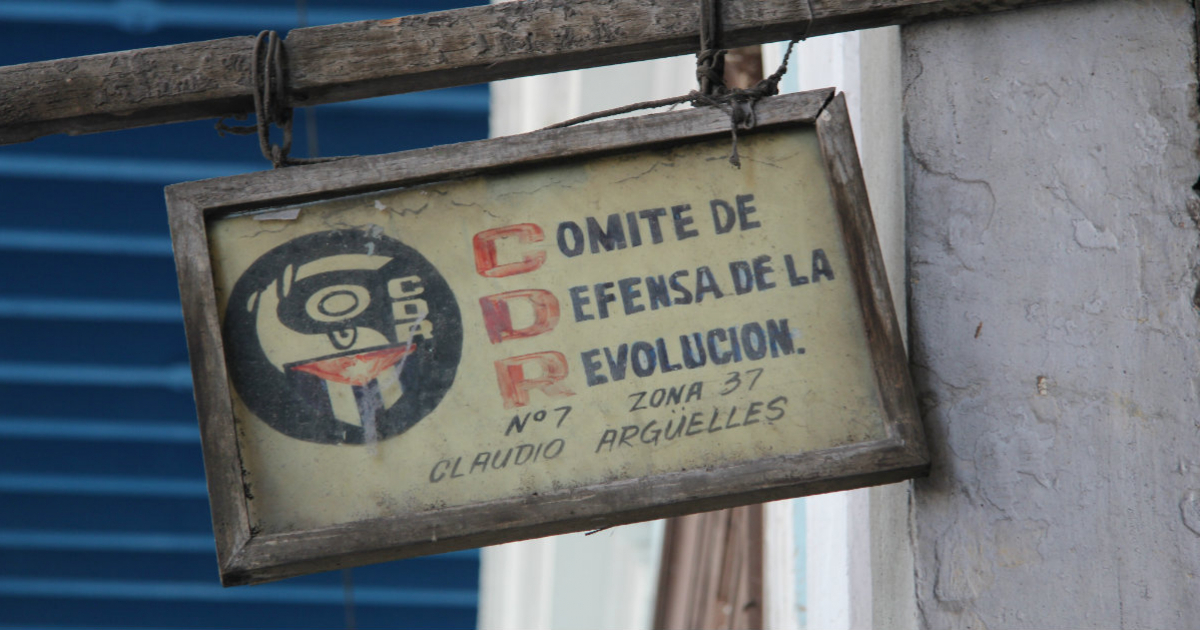
The Committees for the Defense of the Revolution (CDR) and the Cuban Institute for Friendship with the Peoples (ICAP), two organizations established in 1960 and regarded as key components of the political structure and international projection of the Cuban regime, were added this Thursday to the list of Specially Designated Nationals (SDN) by the Office of Foreign Assets Control (OFAC) of the U.S. Department of the Treasury.
The designations are part of the third wave of sanctions against Cuba in less than a month, implemented under Executive Order 14404 signed by President Trump on May 1, 2026, which expanded measures to the energy, defense, mining, and finance sectors, and authorized secondary sanctions against foreign companies and banks operating in those sectors on the island.
The CDR were founded on September 28, 1960 by Fidel Castro as a neighborhood network for surveillance and social control. Since their inception, they have operated as the "eyes and ears of the Revolution," reporting suspicious behaviors and participating in acts of repudiation against dissenters. By 1961, they had more than half a million members.
The ICAP, founded on December 30, 1960, was officially presented as an organization for international solidarity, although multiple sources describe it as a platform for external influence connected to Cuban intelligence. Its president since 2017 is Fernando González Llort, one of the members of the so-called Wasp Network who was convicted in the United States for espionage.
Alongside the CDR and ICAP, the travel agency Amistur Cuba S.A., linked to ICAP, was also sanctioned, as well as the mining company Minera La Victoria S.A. and the Ministry of Revolutionary Armed Forces (MINFAR), established in 1959 and controlling a substantial part of the Cuban economy.
This third wave of sanctions also included, for the first time, the direct designation of Miguel Díaz-Canel, his wife Lis Cuesta Peraza, and other high-ranking officials of the regime, including Alejandro Castro Espín, known as “El Tuerto,” son of Raúl Castro and the main Cuban negotiator during the diplomatic thaw with the Obama administration in 2015.
The maximum pressure campaign began on May 7 with the designation of the military conglomerate GAESA, continued on May 18 with 11 high-ranking officials and three entities, including the Intelligence Directorate, MININT, and the Revolutionary National Police, and concludes today with the broadest strike to date.
Since January 2026, the campaign has accumulated more than 240 new sanctions against Cuba, marking the most intense offensive by Washington against the regime in decades.
The Secretary of State Marco Rubio justified the measures sternly: "These sanctions target the extensive and violent network of radical action of the Cuban regime and the actors who implement and finance it."
Rubio also accused Havana of having served as a "base of operations for the global irregular war against U.S. interests, recruiting, training, and equipping violent leftist militants in our region, with the ultimate goal of undermining U.S. national security."
The day before, on Wednesday, Rubio appeared before Congress and left the door open for a negotiated solution, albeit with skepticism: “There are clearly individuals within the power structure in that country who understand that what they have now is not sustainable and needs to be fixed. But do they have power? They do not.”
Filed under: