
Related videos:
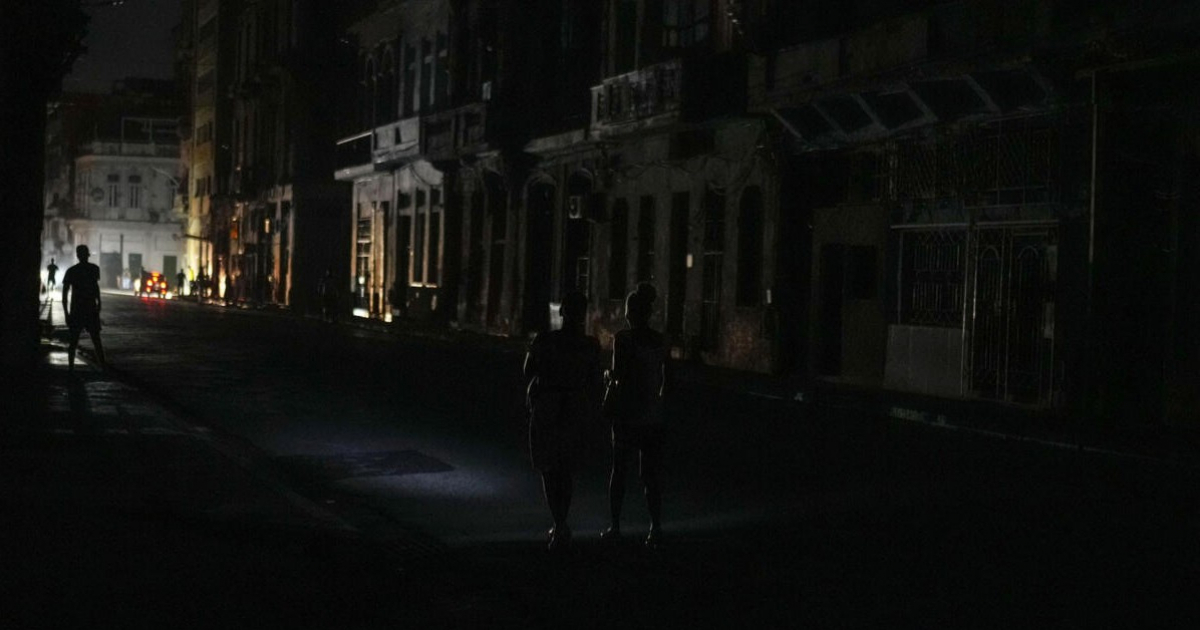
Cuba faces one of the most critical days of its prolonged electrical crisis this Thursday, with a projected impact of 1,975 MW during the peak evening hours, according to the official report from the Electric Union.
At 06:00 hours this Thursday, the National Electric System (SEN) recorded only 1,120 MW of availability against a demand of 2,570 MW, leaving 1,452 MW without service since the early morning.
The previous day, Wednesday, the situation was not any better: the outages continued uninterrupted for 24 hours, with the maximum impact reaching 1,937 MW.
For the peak demand schedule this Thursday, the Electric Union projects a availability of only 1,155 MW against a demand of 3,100 MW, resulting in a deficit of 1,945 MW. The official notice warns that "if the expected conditions persist, a disruption of 1,975 MW is anticipated during this timeframe."
The causes are structural and have been recurring for months. Units 6 and 8 of the Máximo Gómez Thermal Power Plant, Unit 2 of the Ernesto Guevara De La Serna Thermal Power Plant, and Unit 2 of the Lidio Ramón Pérez Thermal Power Plant are out of order. The following units are under maintenance: Unit 5 of the Mariel Thermal Power Plant, Unit 6 of the Renté Thermal Power Plant, and Unit 5 of the Nuevitas Thermal Power Plant.
Furthermore, the Patana de Regla, the Patana de Melones, the Central Fuel of Mariel, and the Central Fuel of Moa are out of operation. The total unavailable MW due to fuel shortages amounts to 1,203, including 106 distributed generation plants shut down due to lack of fuel, equivalent to 890 MW.
The only sign of partial relief comes from the 54 new solar photovoltaic parks, which on Thursday produced 3,269 MWh with a peak power of 446 MW at noon. However, their contribution is nonexistent during the peak nighttime hours due to the lack of storage systems, which means they do not address the structural deficit.
This situation fits into a sustained deterioration that has been worsening since early May, when the shipment of oil donated by Russia—arrived on March 31—ran out, leaving the system without fuel backup.
The Minister of Energy and Mines, Vicente de la O Levy, acknowledged on May 23 that Cuba was "without fuel" and described the situation as "acute, critical, and extremely tense."
The record deficit for the year was recorded on May 14, with 2,174 MW and only 976 MW available.
Filed under: