
Related videos:
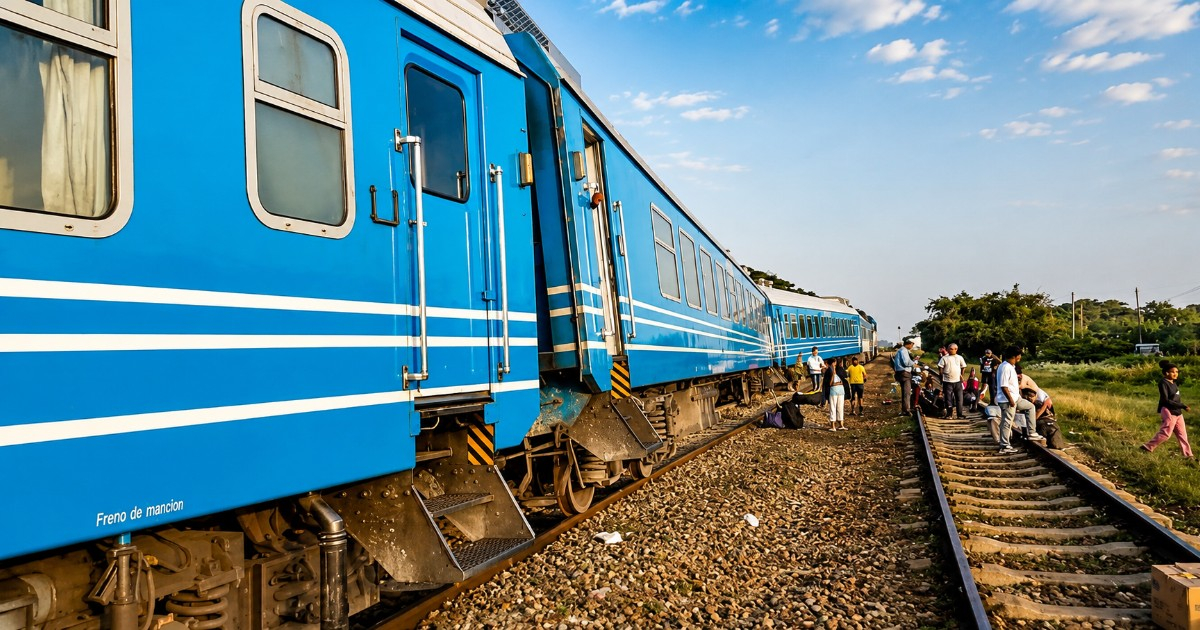
The railway transit on the affected section of the Central Line due to the derailment of train No. 12 Santiago de Cuba–Havana was restored—under speed regulation—on Wednesday afternoon, after approximately 900 people experienced hours of distress near the town of Omaja, in Las Tunas.
The accident occurred on Tuesday night at 9:16 PM, at kilometer 669 of the railway, in the municipality of Majibacoa. Six cars of the train derailed, although none of the passengers or crew were injured.
A specialized brigade from Camagüey worked throughout Wednesday and into the early morning to repair the damaged ties and use a crane to return the train cars to the tracks.
Around four in the afternoon on Wednesday, the six cars were back on the tracks, allowing for the resumption of traffic with speed regulation.
Around six in the evening, the train and its crew were able to continue their journey to Havana, as reported by the provincial outlet Tiempo21Cuba.
The evacuation of nearly 900 passengers was completed at ten in the morning on Wednesday, thanks to the support of transportation companies from Holguín and Las Tunas, as well as local agencies and institutions.
Since midnight on Tuesday, the highest authorities of the province and executives from the Ministry of Transportation have been overseeing the bus transfer operation.
The governor of Las Tunas, Yelenis Tornet Menéndez, confirmed that "the transfer operations began in the early morning of June 3, 2026," while the delegate of the Ministry of Transportation, Reynaldo Reyes Silva, stated that "both passengers and crew received continuous attention."
Health personnel from the municipality of Majibacoa, with advice from the Provincial Director of Public Health, provided ongoing medical care to travelers throughout the emergency.
This Thursday, efforts continued to fully restore vitality to the section, with the aim of normalizing traffic completely throughout the day.
The incident adds to a worrying pattern: Las Tunas has been the scene of at least three derailments in less than two years, including the Bartle incident in October 2025, when train No. 16 Holguín–Havana derailed with 577 passengers on board.
The causes are structural: 67% of Cuba's railways require maintenance, between 60,000 and 80,000 concrete sleepers are needed each year, but only about 15,000 are funded, and barely 12 to 14 heavy locomotives operate out of the 34 that the railway system needs.
This Thursday, the immediate goal was for the Havana-Guantánamo train, scheduled for one in the afternoon, to run smoothly, as well as the freight trains that travel along that section of the Central Line.
Filed under: