
Related videos:
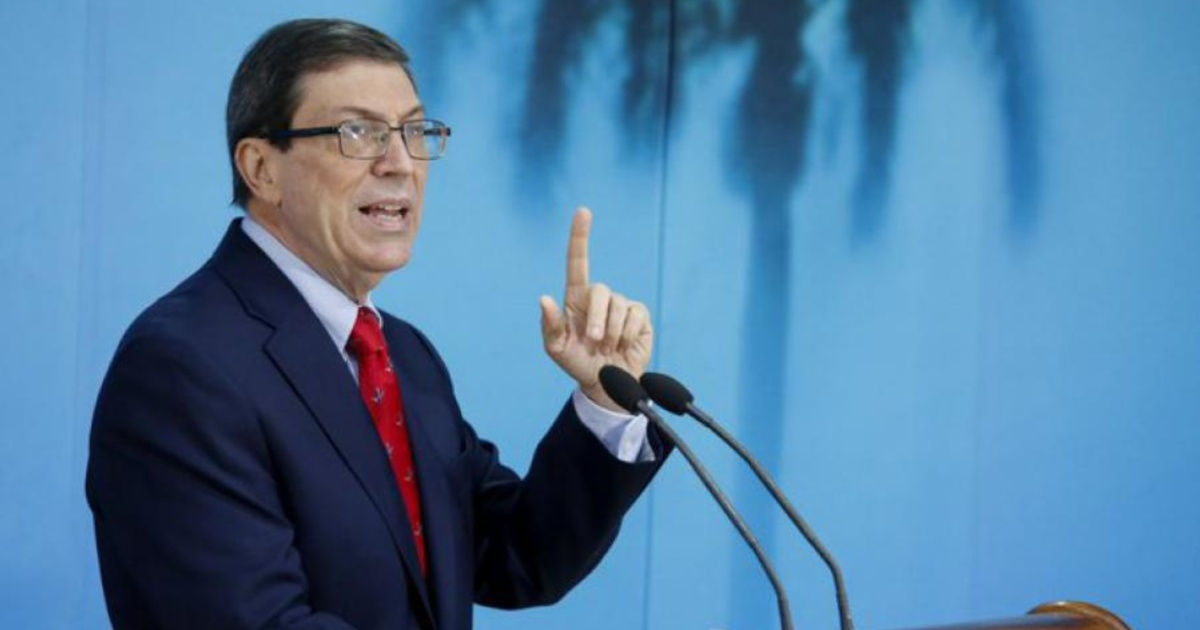
The Cuban Foreign Minister Bruno Rodríguez Parrilla accused the U.S. Secretary of State, Marco Rubio, of lying by claiming that Washington does not block the entry of oil to Cuba.
"The U.S. Secretary of State repeatedly asserts, with the ease provided by media attention and his ability to lie, that his government does not block the entry of oil to Cuba," Rodríguez said in a message posted on X.
The publication coincided with the deadline set by the Trump administration for foreign companies to sever ties with sanctioned Cuban entities such as GAESA.
Rodríguez pointed directly to the Executive Order 14380, signed by Trump on January 29, 2026, as evidence of what he described as an indirect oil blockade.
"It seems to intentionally overlook Executive Order 14380 of January 29, 2026, crafted by himself and signed by his president, which authorized the imposition of punitive tariffs on imports from countries that, directly or indirectly, supply oil to Cuba," wrote the Cuban Foreign Minister.
According to Rodríguez, the mechanism operates through pressure on third parties: "Any nation that sovereignly trades oil with our country is threatened with trade reprisals in the U.S. market."
The chancellor challenged Rubio's narrative with a direct question: "Isn't that blocking the entry of oil to Cuba? How do you call it when you coerce a third party to stop trading with us?"
And he concluded: "It is a blockade that does not require military means off our shores if it manages to impose its objective through the harshest pressures and blackmail."
What does Rubio say about the blockade on oil in Cuba?
Rubio had stated on May 5 that "there is no oil blockade against Cuba as such" and attributed the island's energy crisis to the end of subsidized Venezuelan oil and to the mismanagement of the regime and GAESA.
The OE 14380 was partially reversed following a ruling by the U.S. Supreme Court that declared the tariffs under the International Emergency Economic Powers Act illegal, but the national emergency concerning Cuba declared in January remains in effect, as do other sanctions that continue to exert pressure on the island.
This is not the first time Rodríguez has publicly confronted Rubio on this issue. In May, the chancellor had already accused him of lying about the oil embargo and of inciting aggression against Cuba.
Díaz-Canel also responded to Rubio that month, pointing out that his statements contradict OE 14380 itself.
The energy backdrop surrounding this dispute is devastating for the Cuban population. The Minister of Energy and Mines acknowledged on May 14 that the country is "without fuel."
Venezuela halted its oil shipments since November 2025, Mexico reduced its shipments starting in January 2026, and a Russian shipment of 730,000 barrels that arrived on March 31 was consumed within a few weeks. Cuba has experienced seven total collapses of its electrical system in 18 months.
Filed under: