
Related videos:
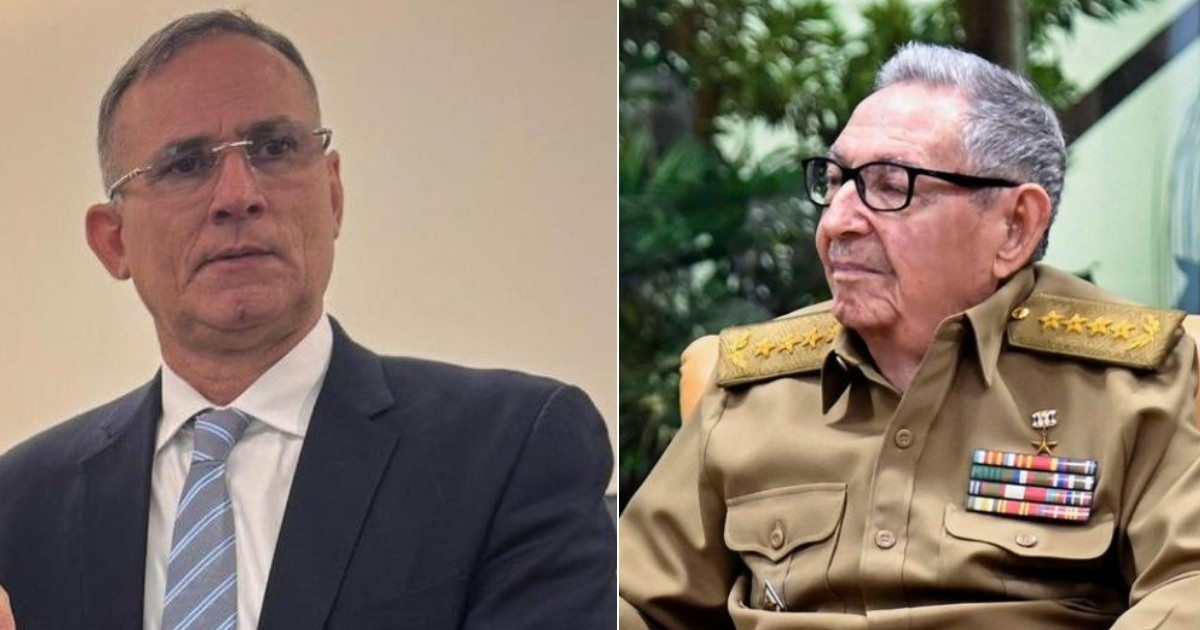
The leader of the Patriotic Union of Cuba (UNPACU), José Daniel Ferrer García, posted an extensive text on social media in which he publicly inquires about the whereabouts of Raúl Castro and challenges him to appear before the Cuban people after turning 95 years old.
"Why, if his followers say he is a very brave man, does he hide like a rat? Why does he not appear before the people who say they love him? Why has he vanished? Because he knows the end of his regime has come," wrote Ferrer, who arrived in exile in Miami in October 2025 after being exiled from Cuba.
In his text, Ferrer reminded that Castro faces federal charges in the United States for the shooting down of the Brothers to the Rescue aircraft on February 24, 1996, a crime in which four defenseless people died.
Ferrer speculates about five possible locations where Raúl Castro could be found. The first is La Rinconada, in the west of Havana, a gated residential area where diplomats and high-ranking officials of the system live, close to MININT and MINFAR.
The second would be some military installation under the direct control of the Revolutionary Armed Forces, given that Castro was for decades the true head of the Cuban military apparatus.
The third one targets a safe house of the Ministry of the Interior in Havana or its surroundings, taking advantage of the regime's long history of secret residences and nighttime movements to conceal its key figures.
The fourth possibility would be the Second Eastern Front, in Santiago de Cuba, a territory symbolically associated with Castro, although Ferrer warns that the theatricality of the tributes organized there may actually serve to confuse.
The fifth location, which Ferrer considers the most probable, is the house built in the reparto Rajayoga, also in Santiago de Cuba, where the former dictator could feel more protected by his historical loyalty networks and farther from the scrutiny of foreign press.
The text from Ferrer comes just days after Castro celebrated his 95th birthday as a fugitive from U.S. justice, not appearing at any public events, while Havana marked the occasion with pots and pans protests amidst power outages of up to 22 hours a day.
On May 22, the regime organized an event at the Anti-Imperialist Tribune in his early honor, but the honoree himself did not attend, triggering mass mockery on social media.
Ferrer does not shy away from the moral dimension of absence: "Raúl Castro knows that he leaves behind a destroyed, hungry Cuba, without electricity, without medicine, without freedoms, and with more than a thousand political prisoners. He knows that many Cuban mothers weep for their children who are imprisoned, murdered, exiled, or sunk in misery. He knows that his name does not inspire respect: it inspires fear, anger, and contempt."
The dissident also connects the Cuban case with the fall of Nicolás Maduro. On May 25, he wrote: “One has already fallen, and Venezuela will be free. The other will soon fall, and Cuba will be free”.
Archivo Cuba documented more than 8,000 deaths attributed to the regime in a report presented on Castro's birthday, while Secretary of State Marco Rubio referred to him as a "fugitive from U.S. justice" and federal prosecutor Yara Klukas warned: "We're waiting for Raúl Castro. This was not a show. He will have his day in court before a jury in South Florida."
Filed under: