
Related videos:
The will not only bring together the best footballers on the planet: it will also be the backdrop for family stories that cross borders, cultures, and national teams, with brothers sharing a locker room and others who could face each other as rivals.
The tournament, which kicks off on June 11 in Mexico, the United States, and Canada, is the first edition featuring 48 teams and 104 matches, a format that has allowed for the qualification of historically absent teams and has strengthened the connections between European and Caribbean football.
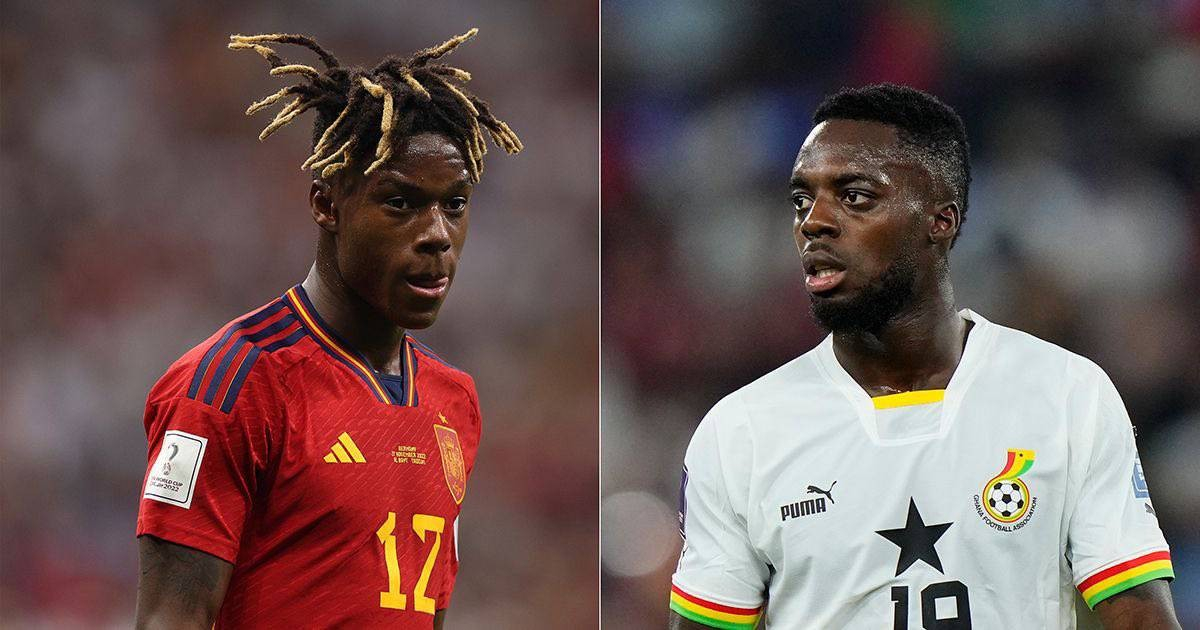
The most well-known case is that of Iñaki and Nico Williams. Both shine at the Athletic Club de Bilbao, but they chose different jerseys: Iñaki represents Ghana and Nico represents Spain. Their family story is one of the most moving in the tournament: their parents, Félix Williams and María Arthuer, fled the war in Liberia, lived in a refugee camp near Accra, and crossed the Sahara to reach Melilla. Their mother was pregnant with Iñaki during that journey.
"My blood is African, it is from Ghana," declared Iñaki Williams about his identity, explaining a decision he made in July 2022 to take advantage of a FIFA regulatory window to switch national teams.
A similar situation is experienced by Désiré and Guéla Doué, from a family of Ivorian origin raised in France. Désiré, a great promise of Paris Saint-Germain, plays for France, while Guéla, a defender for Strasbourg, has been called up by Ivory Coast under the guidance of coach Emerse Faé.
"It's like we're twins," Désiré confessed in a recent interview, reflecting on the bond they share despite representing different teams.
Another curious story is that of the brothers John and Harry Souttar, both born in Aberdeen. John chose Scotland, following their father's roots, while Harry opted for Australia, his mother's homeland, where he already played in the Qatar 2022 World Cup.
There is also the case of Derrick Luckassen and Brian Brobbey, two footballers born in Amsterdam who took different paths: Luckassen ended up representing Ghana, while Brobbey remained loyal to the Netherlands under the guidance of Ronald Koeman.
Not all brothers will be separated by a border. Lucas and Theo Hernández will once again be part of the French national team: Lucas will compete in his third World Cup and Theo his second alongside his brother, solidifying one of the most successful legacies in recent French football.
The twins Jurriën and Quinten Timber, trained in Ajax's academy and born in Utrecht with ancestry from Aruba and Curacao, will also be there, keeping alive the dream of conquering the world with the Netherlands.
Curaçao, one of the major debutants in the tournament, will feature brothers Juninho and Leandro Bacuna, born in the Netherlands but with Caribbean roots, considered the heart of the team thanks to their experience in the Premier League. Their World Cup debut is scheduled for June 14 against Germany in Houston.
Something similar happens with Laros and Deroy Duarte, who will lead Cabo Verde in the 2026 World Cup. Both went through the youth categories of the Netherlands and shared a locker room at Sparta Rotterdam before becoming key players in the historic Cape Verdean project.
The 2026 World Cup will, beyond the colors and anthems, be a celebration of family ties: entire families will be following the tournament with mixed feelings, for few stories are as fascinating as those that blend blood relations with a passion for football.
Filed under: