
Related videos:
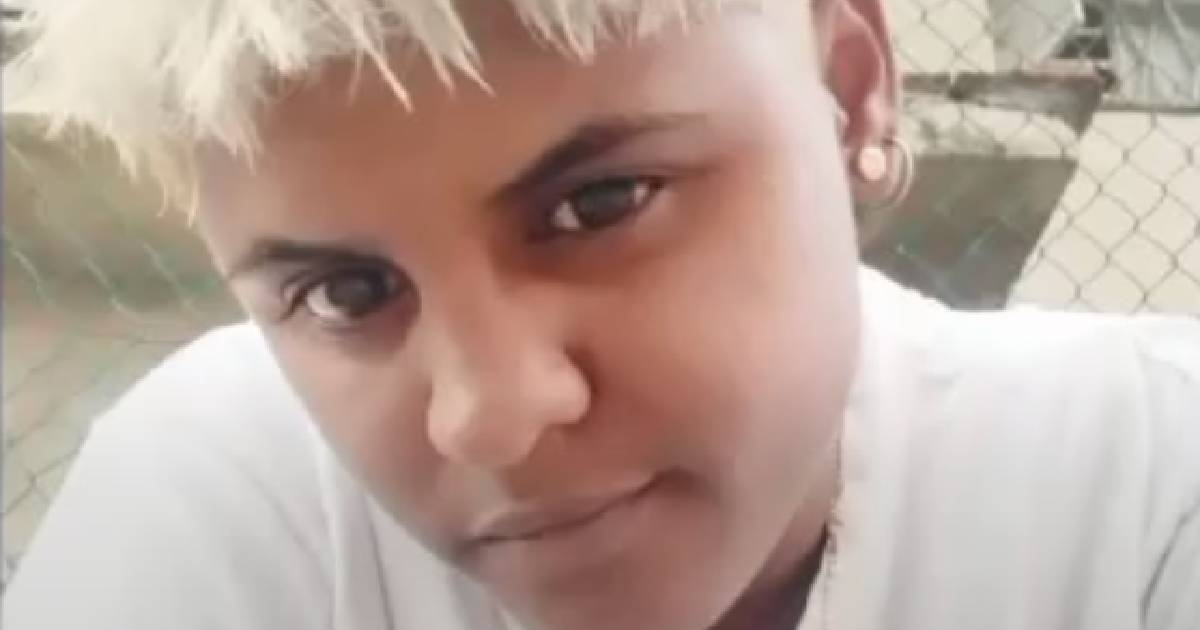
Yunaykis Linares Rodríguez, a political prisoner from July 11, 2021, who was released on probation last year, remains standing in the detention center of the "El Capri" Police Unit, after being arbitrarily detained for 72 hours without any formal charges being brought against her.
The activist Anamely Ramos González reported this Saturday on Facebook: "YUNAYKIS LINARES IS ON A HUNGER STRIKE AT CAPRI. She has been detained for over 72 hours without cause. That's illegal, and they know it."
Linares was arrested on the night of June 2 during a spontaneous protest against the prolonged blackouts—lasting more than 20 hours a day—in the Santa Amalia neighborhood, Arroyo Naranjo municipality.
According to the allegations amplified by Ramos González, police officers beat and suffocated Linares during her transfer and detained her in El Capri, where she was denied water and medical attention.
From the jail cell, Linares recorded a video statement: “I am beaten, they suffocated me, the police officer was covering my mouth and nose to torture me. They denied me medical assistance and water.”
The artist Arián Cruz Álvarez, known as Tata Poet, also amplified the case and pointed out that the police violence occurred in front of underage children and that Linares' family was also assaulted.
Linares was 24 years old when she was arrested for participating in the protests of July 11 and was sentenced to eight years in prison — the prosecution had requested 17 — on charges of public disorder, assault, damage, and sedition.
She spent more than three years in the Western Women's Prison (El Guatao), where she reported experiencing threats, theft of belongings, and forced cohabitation with inmates convicted of serious crimes. Upon her release on parole in January 2025, she stated: “I entered with an innocence that I lost 99.9% of.”
His new arrest is part of a systematic pattern of re-arrests of those released from the 11J protests. At least seven of them were returned to prison between January 2025 and June 2026, according to documentation from Justicia 11J. The most recent case prior to this was that of Yoan de la Cruz, who was arrested again on May 3 in San Antonio de los Baños.
Parole in Cuba does not equate to full freedom: those who benefit from it remain under permanent surveillance and face the constant threat of revocation, making every protest or act of dissent a risk of immediate return to prison.
In May 2026, Prisoners Defenders reported an absolute record of 1,260 political prisoners in Cuba, with reports of torture, assaults, and 14 minors imprisoned, a figure that illustrates the extent of the repression faced by Linares and dozens of Cubans in similar situations.
Filed under: