
Related videos:
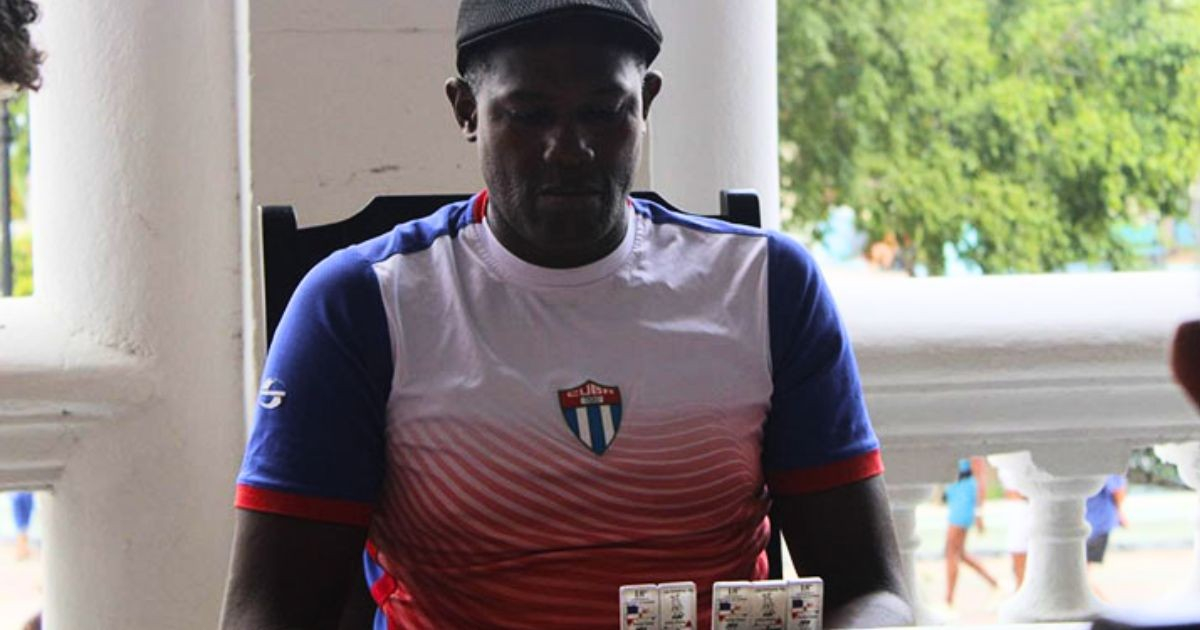
The VI Championship of Domino Ficha de Oro, which for the first time in its history takes on an international character, was inaugurated on Friday at the terrace of the Casagranda Hotel in Santiago de Cuba, amidst a crisis that makes the event a stark contrast difficult to overlook.
The tournament, which will run until this Sunday, is jointly organized by the Provincial Directorate of Sports, the Provincial Delegation of the Ministry of Tourism (Mintur), and the Ecotur Travel Agency. Players from Holguín, Granma, Guantánamo, and the host province are participating, with the addition of six representatives from the Dominican Republic, who are already registered, reported the Cuban News Agency (ACN).
According to Ramón García Repilado, president of the Provincial Domino Association of Santiago de Cuba and technical chief of the competition, the event will be held in individual, quartets, and pairs formats, following the rules of the International Domino Federation (Femudo).
Senén Ramírez Carmenathy, representative of Femudo in Cuba, highlighted that the Ficha de Oro is "a demonstration of the country's intention to host events of this nature and higher caliber with the presence of foreign players and the support of the governing body of the discipline," the source indicated.
The opening ceremony featured a significant symbolic gesture: Orestes Kindelán, the all-time home run leader in Cuban baseball with 487 home runs in National Series, officially kicked off the tournament. A recognition was also given to José Orlando San Nicolás, a native of Holguín and the only Cuban to win the Christmas Tournament in the Dominican Republic.
The event carries the slogan "Where the moves tell the story of the Caribbean," and according to its organizers, aims to establish itself as "a space for the healthy use of leisure time and recreation, while also promoting tourism and the visibility of this eastern province as a destination in the region." Among the accompanying activities are a night tour of the historic center, a stay at an agritourism farm, and a giant game of dominoes in Céspedes Park.
Dominoes is one of the most deeply rooted games in Cuban popular culture, associated with family gatherings, parks, and the everyday life of neighborhoods. In Cuba, it is mainly played with the double nine variant, consisting of 55 tiles, and over time it has been embraced as a national identity trait. The fact that Santiago de Cuba is hosting this tournament is no coincidence: the eastern city has a long-standing tradition with the game.
However, the contrast between the tournament celebration and the reality faced by that same province is hard to overlook. Santiago de Cuba registers 50 inoperative water systems and fecal contamination in the supply, with around 180,000 people directly affected. The water crisis extends across the entire country, impacting two million people.
In addition, the government has indefinitely suspended the distribution of liquefied gas in the East —including Santiago de Cuba— since January, and power outages in the province may last more than 22 hours a day. In May, historic electricity deficits of over 2,100 MW have been recorded, the highest documented on the island.
In that same month, the people of Santiago took to the streets with pots and pans to protest against living conditions. The Cuban economy has experienced a decline of 23% in GDP since 2019, and projections indicate another contraction of 7.2% for this year. Year-on-year inflation reached 13.42% in March, while agricultural prices in the non-state market rose by 31.9%.
Tourism, one of the pillars the regime invokes to justify events like the Ficha de Oro, is also in free fall: in March 2026, only 35,561 visitors came to Cuba, a figure that reflects the collapse of the sector. While the regime presents the tournament as an international showcase, the real "game" in Cuba has been stuck for decades due to 67 years of communist dictatorship that have drained the island. Let's see if the saving golden chip shows up, or if the mistreated people can finally "catch a break."
Filed under: