
Related videos:
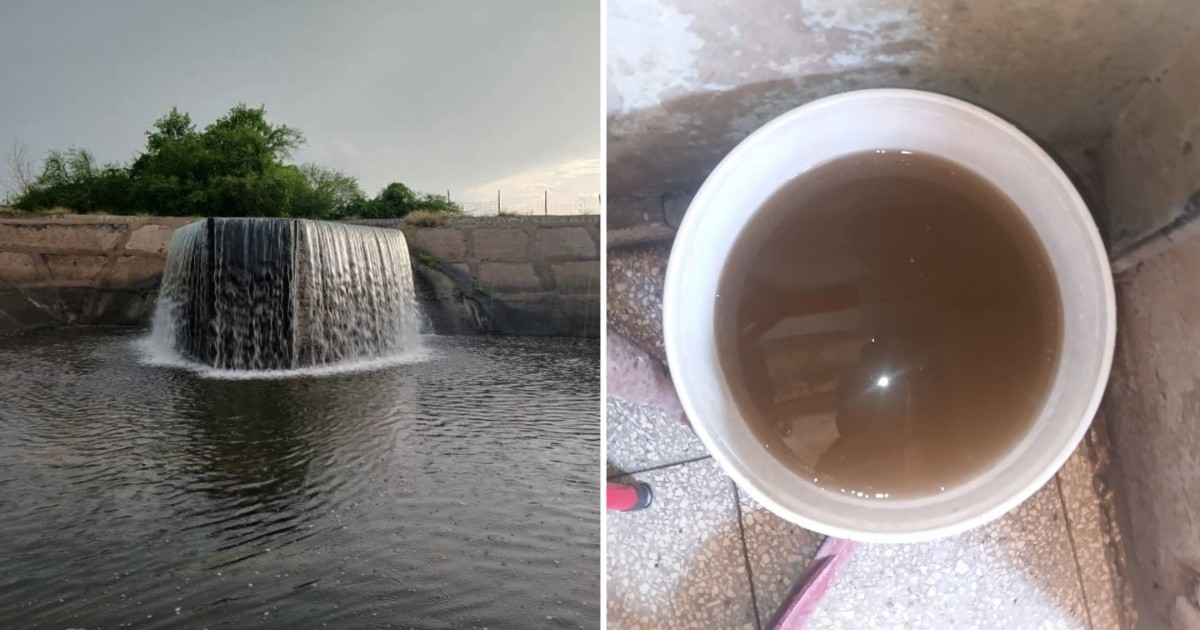
Residents of Camagüey reported this Saturday in Facebook groups that tap water is arriving at their homes with a yellowish or brownish color and a strong smell of decomposing animals, causing alarm among the population over the risk of consuming potentially contaminated water.
The alert was published in the group Revolico La Vigía Camagüey, where a user warned: "Brothers, there are reports circulating that the water is coming out with a strange color and a strong seafood smell. According to tests that have been conducted, it shows signs of animal decomposition. Please do not consume it without boiling it first and take all necessary precautions."
The post unleashed a flood of comments from residents in various neighborhoods of the city who confirmed the issue.
From the Sánchez Soto neighborhood, an internet user wrote: "The water comes out excessively yellow and it does have a smell." Another resident from the same area was more emphatic: "In Sánchez Soto, the water smells like a dead animal."
A neighbor from the Edén neighborhood described that in his house "it smells like a dead mouse and is yellow." In the Simony neighborhood, another resident reported that the water arrived "quite foul, like a sewer."
The descriptions of the liquid are repeated with equally alarming variations: "mud," "black and foul-smelling water," "caramel color," "seems like light coffee," "smell of an old lagoon," and "odor of a huge pit" are some of the expressions used by internet users.
Several residents warned that the water is not suitable for cleaning, washing dishes, cooking, or bathing. "It's pointless; you can't wash, cook, bathe, or clean the house because we would spread all the microbacteria and germs present in it. Instead of cleaning, we would worsen the situation. It's literally a mass extermination bomb; even boiling it doesn’t help," wrote one resident.
A comment alerted about the presence of an abate odor —an organophosphate larvicide used in Cuba for the control of the Aedes aegypti mosquito— in the water, noting that "there are already many people sick due to the water issue." Another user warned: "It smells really bad. And every day there are more cases of hepatitis."
The situation is worsening due to the context of breakdown at the pumping station of the Amistad Cubano-Búlgara dam, the primary supply source for the city, which typically provides 660 liters per second to the water treatment plant.
Last Wednesday, an electrical discharge caused a water hammer in a 1,000 mm pipe, leaving only 500 liters per second available from secondary reservoirs.
This is not the first time Camagüey has faced this problem.
In April, images of brown and muddy water flowing from the taps circulated, and in November 2025 residents of the Modelo neighborhood reported being without water since 2019, despite a water supply system financed by Saudi Arabia that only operated for a few days.
Nationally, the head of the National Institute of Hydraulic Resources admitted in March that 87% of the water supply system depends on the National Electric System, a network in chronic collapse due to decades of neglect by the regime.
A resident summarized the widespread sentiment: “After so many hours without power and water, and when they finally supply water, it turns out it can't be used for anything. It's criminal to neglect what the population depends on. There is no soul or heart that can endure a total abandonment that is unrelated to the blockade. That's called complete disregard.”
Filed under: