
Related videos:
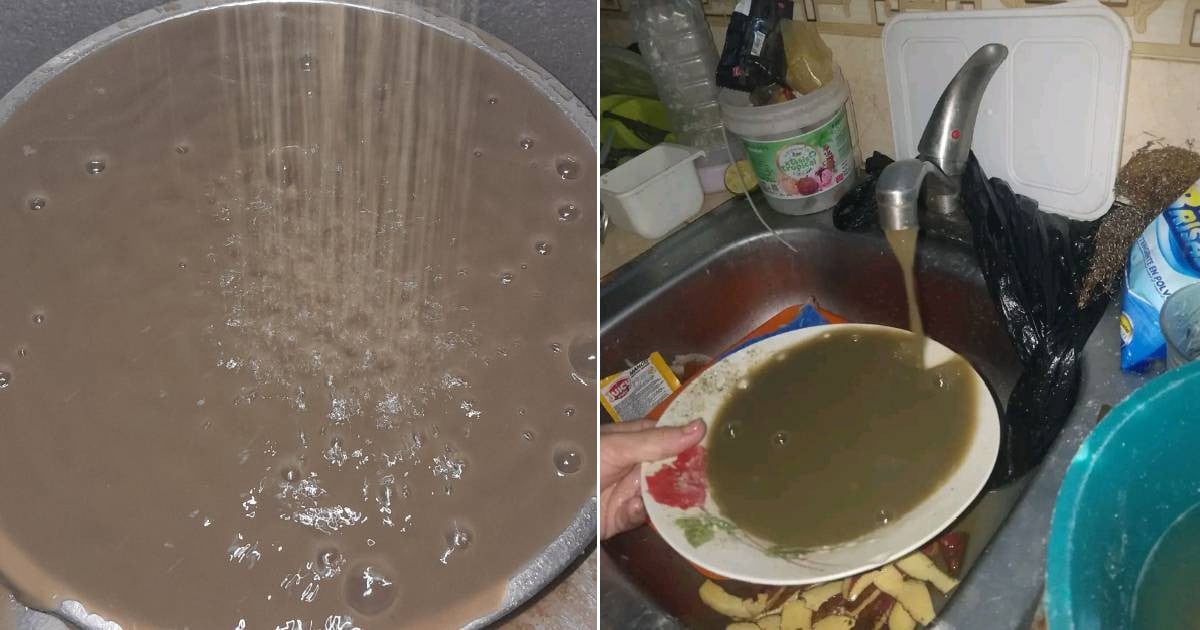
A photograph released this Saturday by independent journalist José Luis Tan Estrada shows brown, muddy water coming from the tap in a home in Camagüey, an image that once again highlights the collapse of the water supply system in Cuba.
"Look at it closely. It's not a river. It's not a ditch. It's not rainwater collected in a bucket. It's the water coming from the pipe. The one from the aqueduct," the reporter pointed out through his Facebook profile, accompanying it with the hashtag #TanteandoCuba, which he uses to make various complaints about everyday reality that the official press tends to overlook.
He pointed out that the liquid is the same one with which "a mother washes the dishes where her son eats" and with which "someone tries to take a shower after a day of work," the same one that the regime labels as "supply service."
The journalist posed several direct questions to the authorities: "Where are the millions in investments they announced for the Camagüey aqueduct? Where are the projects for the rehabilitation of hydraulic networks? Where are the officials who signed those plans and received that budget?"
The post sparked a wave of reactions from citizens who confirmed the situation based on their own experiences. María Padilla recounted that, despite filtering the water through a cistern and elevated tank with a pump, "a few days ago what came out of the taps was pure mud."
Ada Ivis evoked the popular tradition that said those who drank water from Camagüey "would stay there," and lamented that even that is no longer possible. "It's incredible how everything comes to an end, even popular beliefs; there is no water left for the jars of Camagüey," she expressed.
From Holguín, María Isabel Méndez confirmed that the problem is not exclusive to the Agramontino territory. "The tank in my house was completely left with the mark of the mud... horrible and cursed life of the ordinary Cuban, may God have mercy on us."
Yilena Cardero was more direct in describing what comes out of the taps. "That's swamp water." Likewise, Teresita Puentes expressed her alarm: "But what is that? How horrible, they are going to die with that water."
Navir Gonzalez Croza pointed directly at the country's leadership. "Where is the money? Easily in the pockets of the country's leaders... Díaz-Canel's water is super clear; that's why communism must be eradicated from Cuba."
The situation in Camagüey has documented precedents. In November 2025, it was reported that Reparto Modelo had been without stable water supply since 2019, despite Saudi Arabia approving a loan of 50 million pesos in 2023 to rehabilitate more than 24.4 kilometers of collectors and increase storage capacity to 30,000 cubic meters. The aqueduct financed with that loan operated for just a few days.
The water crisis is, moreover, a national phenomenon. Eighty-seven percent of the water supply system in Cuba depends on the National Electroenergetic System, which has experienced six total blackouts in a year and a half. Without electricity, the pumps do not operate, and the water treatment plants do not chlorinate the water.
In recent days, it was reported that in Matanzas, over 300,000 people lack stability in water supply; while in Santiago de Cuba, the Quintero water treatment plant distributes unchlorinated water during power outages.
Similarly, in August 2025, neighbors in Sancti Spíritus received water with larvae, worms, and snails.
The most serious health precedent of this crisis is the hepatitis A outbreak in 2024 in Cienfuegos, which infected over 5,000 people due to contamination of drinking water with sewage.
For the first time in its history, Cuba conducts nationwide tests for E. coli detection in households, through the MICS7 survey with the support of UNICEF, which began in November 2025, indicating that the regime implicitly acknowledges the magnitude of a problem it has denied or ignored for decades.
Filed under: