
Related videos:
A major breakdown at the pumping station of the Amistad Cubano-Búlgara dam, the city's main source of water supply, will leave the municipality of Camagüey without normal water supply for approximately five days, as reported by the Provincial Hydraulics Delegation.
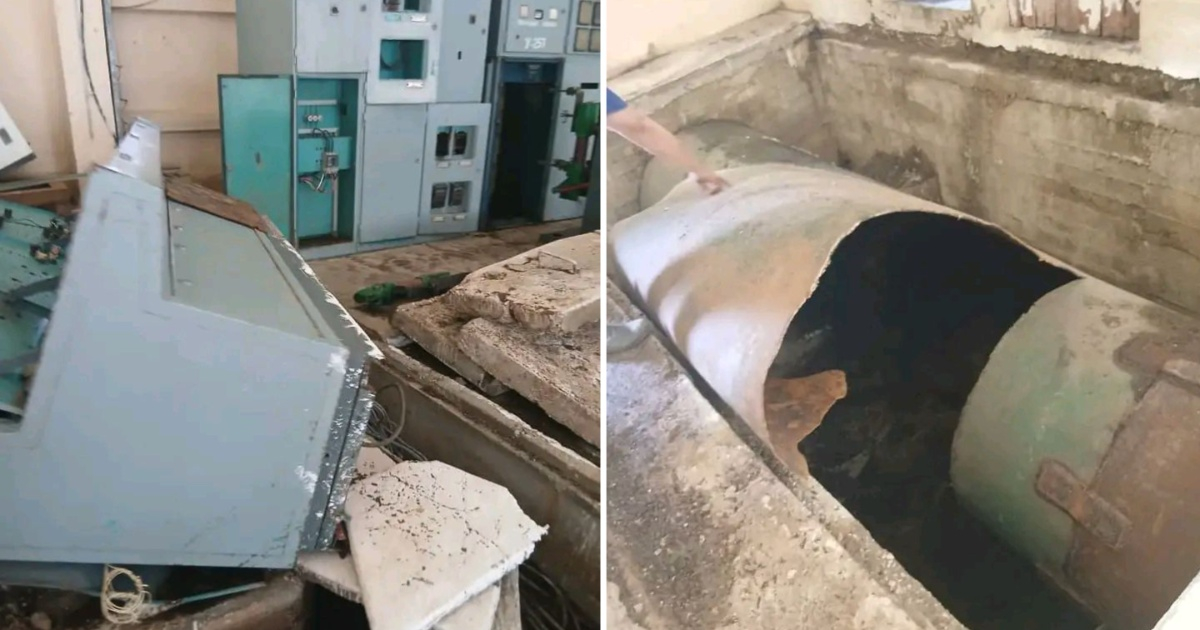
On the night of last Saturday, an electrical surge caused a water hammer in the 1,000 mm pipe, resulting in damage that extended to the main line, the electrical panels, the transfer system, and several pumping equipment.
"An electrical surge caused a water hammer in the 1000 mm pipeline. The break resulted in significant damage: the main conductor, electrical panels, transfer system, and several pumping units were affected," the official information note specified.
The impact on the supply is severe: under normal conditions, the Cuban-Bulgarian station sends 660 liters per second to the city's water treatment plant, but after the breakdown, only 500 liters per second are available from the Máximo and Pontezuela reservoirs.
Daniel Fuentes Milanés, provincial director of Aqueduct and Sewerage, confirmed that "the break limits more than 50% of the water supply to the city," and that those 500 liters per second are exclusively allocated to hospitals and prioritized areas, while water is distributed by tankers in the higher regions.
Specialized brigades from the Water and Sewer Company were deployed for the repairs, supported by Geysel, Azcuba, construction companies, Acinox, EMI, and Azumat.
Osmani Muñoz Lezcano, provincial maintenance director, explained that the work focuses on the installation of a roller to replace the damaged system in the pipeline and then conduct hydraulic tests, using electrodes, motorized welding equipment, and fuel.
Walter Simón Noris, the first secretary of the Provincial Committee of the PCC, and Jorge Enrique Sutil Sarabia, governor of Camagüey, personally oversaw the repair work.
The crisis doesn't surprise the people of Camagüey. In April of this year, images from Camagüey showed brown and muddy water coming out of the faucets, highlighting the deterioration of the local aqueduct system.
In November 2025, residents of the Modelo neighborhood reported being without water since 2019, despite the installation of an aqueduct funded by Saudi Arabia.
In August 2025, more than 884 thousand people were experiencing water shortages in Cuba due to drought, leaks, and breakdowns, with Camagüey being one of the most affected provinces.
The Cuban-Bulgarian dam has a capacity of 137.6 million cubic meters and was at 60.5% capacity at the time of the breakdown, which, according to the authorities, ensures water availability once the repair, estimated to take five days, is completed.
Filed under: