
Related videos:
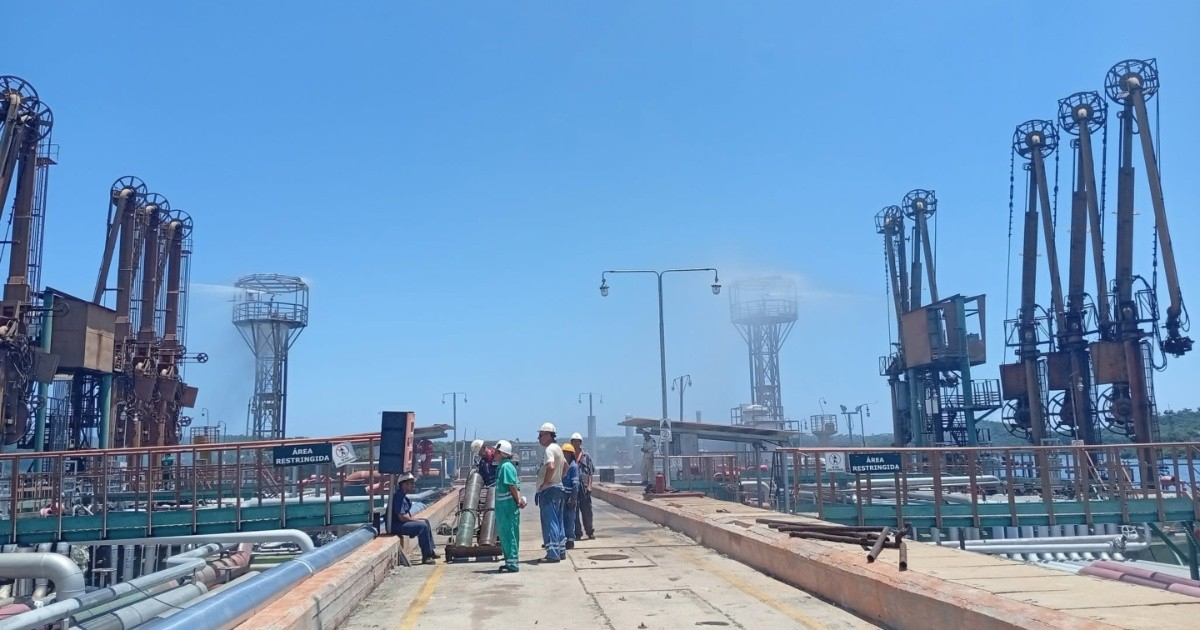
The Hermanos Díaz refinery in Santiago de Cuba conducted pilot tests to refine 100% domestic crude oil, which CUPET and the official press presented as a step towards "energy sovereignty," although the management themselves acknowledged that the results do not meet the demands of the Cuban economy and that the process is still in the pilot phase.
According to a report by the official channel Caribe released this week, the second round of tests processed approximately 20,000 tons of Cuban crude and produced naphtha or solvent, kerosene, and fuel oil.
The obtained solvent is used to support the oil extraction process so that the wells do not stop.
The fuel oil has already been used at the Rente thermoelectric plant in Santiago de Cuba, with results that the management deemed positive.
"We achieved the production of that essential solvent so that the wells do not stop and we can maintain the continuity of national crude for electricity generation," stated an executive from CUPET before the cameras of Canal Caribe.
However, the process has technical weight limitations: the national crude has a high sulfur content, high acidity, and elevated viscosity, which forced specialists to carry out special calculations and adjustments.
The side cut of the process —which under normal conditions would produce diesel— does not meet the quality standards required for use in the rest of the economy.
"This run produced a side cut which, when refining a crude oil that meets the quality standards of our technology, resulted in diesel. However, in accordance with the characteristics of the raw material, which has a higher percent of sulfur and a higher percent of acidity, this side cut does not meet all the quality requirements for diesel. That is why it cannot be used in the rest of the economy," admitted another plant executive.
The Canal Caribe itself acknowledged in its report that "refining results do not meet the demand of the national economy."
This announcement follows the pattern of the official Cuban narrative of presenting partial progress as energy victories while the crisis continues.
In April, Díaz-Canel proclaimed that Cuba "broke a taboo" by refining national crude oil at Hermanos Díaz, but the deputy director of CUPET, Irenaldo Pérez Cardoso, confirmed at that same meeting that the Sergio Soto refinery in Cabaiguán, in Sancti Spíritus, has been processing national crude oil since 2010, producing naphtha, kerosene, gasoline, diesel, fuel oil, and asphaltic liquid.
Meanwhile, Cuba produces between 30,500 and 40,000 barrels of oil daily, covering only about 40% of its consumption, with blackouts reaching up to 18 hours a day and at least three total collapses of the National Electric System recorded in March 2026.
The Hermanos Díaz refinery was designed to process imported light crude, not the heavy and sour crude extracted on the island, which explains the technical difficulties faced by specialists during the tests.
The plant also carries out maintenance actions on its combined cycle while awaiting further studies and tests, and works concurrently on a thermoconversion process to eliminate the use of viscosity-reducing naphthas, which is also in a pilot phase.
"The experience gained represents a significant step in the search for alternatives to strengthen the country's energy security," concluded Canal Caribe, a statement that encapsulates the gap between the regime's announcements and the energy reality faced by the Cuban people.
Filed under: