
Related videos:
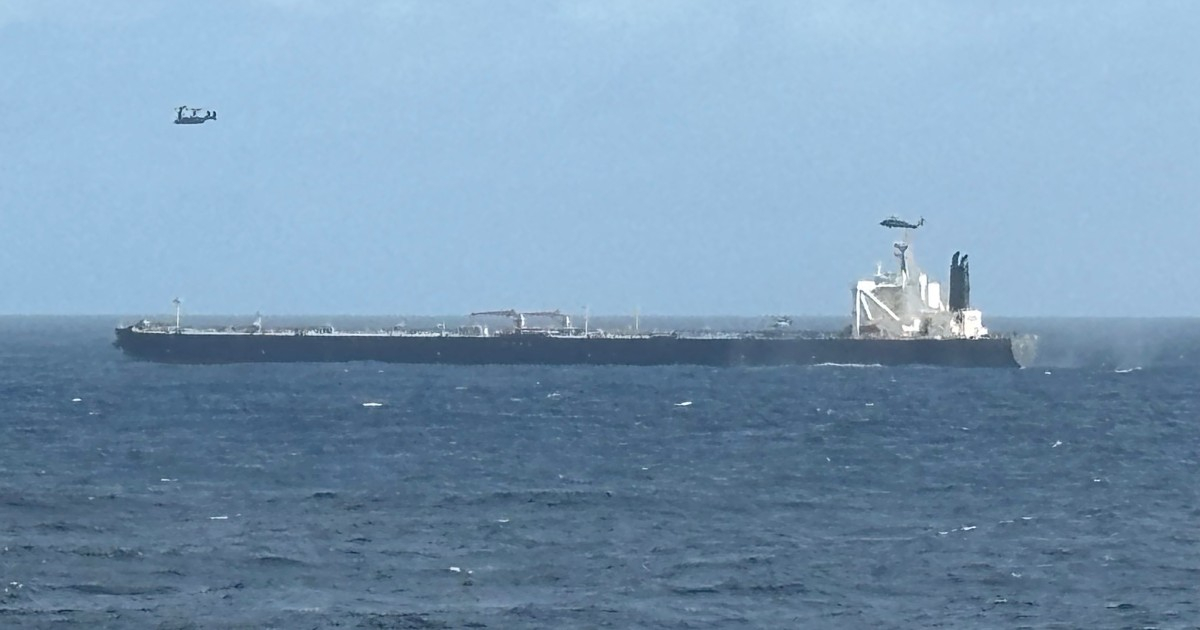
U.S. forces boarded and seized the supertanker MT Davina in the Indian Ocean during the early hours of Friday, in the fourth confirmed maritime interdiction operation by the Indo-Pacific Command (INDOPACOM) since mid-April, according to a report from the U.S. Department of Justice on their social media.
The vessel, also known as Lenore, has the capacity to transport up to two million barrels of crude oil and was located about 32 kilometers southwest of Sri Lanka, where it had remained hidden for approximately six weeks.
According to the organization TankerTrackers.com, the Davina was carrying 1.9 million barrels of Iranian crude oil loaded on March 20 at Kharg Island, and since 2024, it has moved approximately 20 million barrels of oil from that origin.
The Department of Justice described the Davina as part of the so-called “Ghost Fleet” of Iran, “a network of facilitators for illicit shipments that has allowed the Iranian regime to obtain critical energy revenues, destabilize the region, and attack U.S. partners and allies.”
The vessel had been sanctioned by the Treasury Department in October 2024 for its involvement in Iranian oil trade, with documented deliveries to China.
The Davina operated without a recognized flag and had falsely declared registrations in Curacao and, previously, in Palau.
INDOPACOM released photos and a video of the operation, which show the ship at anchor along with a Lewis B. Puller-class support vessel participating in the boarding via helicopters.
This is the fourth confirmed interdiction since mid-April: previously, the Tifani was seized on April 21, the Majestic X —also known as Phonix— on April 23, both in the Indian Ocean or the Bay of Bengal, and the Skywave —or Blue Gulf— in May, although the Pentagon has not officially confirmed the latter.
The U.S. Central Command (CENTCOM) reported that the country's forces have redirected a total of 129 commercial vessels and disabled six ships to ensure compliance with the naval blockade imposed on Iranian ports.
The operation is part of a sustained escalation since Trump ordered the naval blockade of Iranian ports on April 12, following the failure of negotiations in Islamabad.
Iran blocked the Strait of Hormuz in early March, firing on vessels to prevent their passage, and on June 1 suspended negotiations with the U.S. following Israeli attacks in Lebanon.
Around 20% of the world's oil and 25% of liquefied natural gas pass through that strait, making the dispute a direct threat to global energy trade.
INDOPACOM warned that the pressure will not relent: "We will continue to enforce maritime law globally to dismantle illicit networks and intercept vessels that provide material support to Iran."
Filed under: