
Related videos:
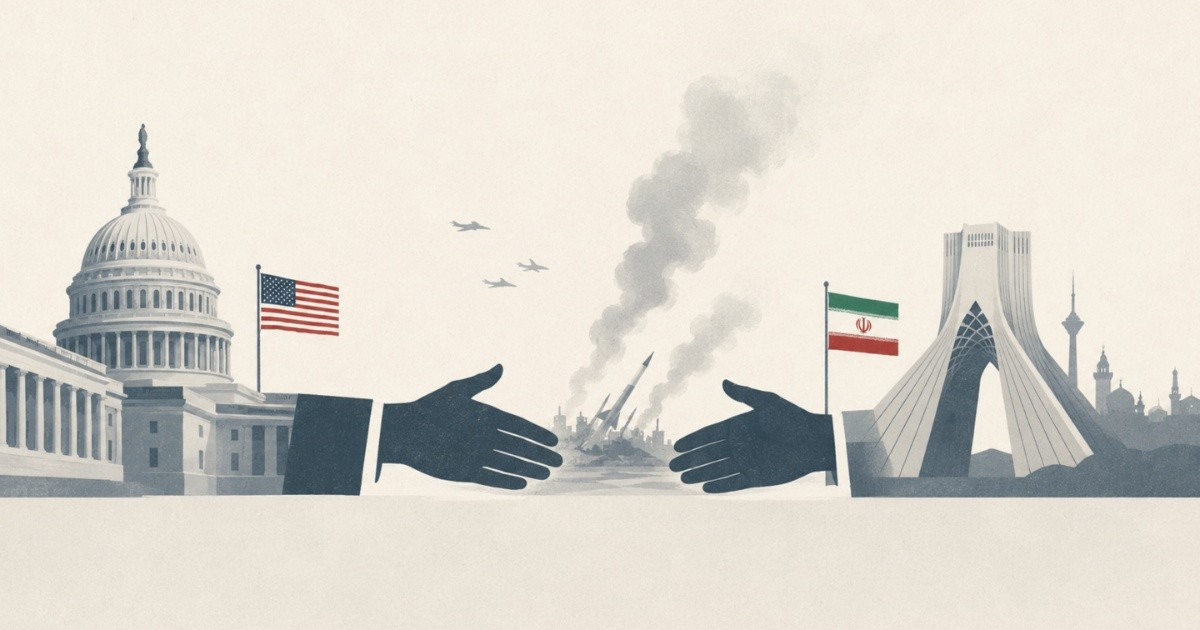
Iran suspended peace negotiations with the United States on Monday, considering that the Israeli attacks on Lebanon constitute a violation of the ceasefire in effect since April 8, as reported by the Iranian agency Tasnim, associated with the Revolutionary Guard.
"The Iranian negotiating team suspends talks and message exchanges with the United States through a mediator, stating that the Zionist regime continues to commit crimes in Lebanon," Tasnim reported, adding that "there will be no dialogue" until hostilities in that country cease.
Iranian Foreign Minister Abás Araqchí supported the decision on X, stating that the ceasefire between Iran and the U.S. is "undoubtedly a ceasefire on all fronts, including Lebanon."
Araqchí warned that "the violation of the ceasefire established on April 8 at just one front constitutes a violation of the ceasefire on all fronts," and that "the United States and Israel are responsible for the consequences of any violation."
The president of the Iranian Parliament and chief negotiator, Mohamad Baqer Qalibaf, also issued a direct warning: "Every decision has a price, and the time to settle the bill has come."
The suspension occurred on the same day that Israeli Prime Minister Benjamin Netanyahu ordered bombings in the Dahye district, in the Shiite suburbs south of Beirut, marking a new escalation of the Israeli offensive in Lebanon.
On May 27, Israel had conducted over 120 airstrikes in Lebanese territory, marking one of the most intense days of conflict in weeks, an episode that Qalibaf cited as evidence of the breach of the ceasefire.
In parallel to the diplomatic break, the armed conflict intensified this Monday on several fronts. The U.S. Central Command reported that its forces intercepted and destroyed two Iranian ballistic missiles aimed at U.S. troops deployed in Kuwait, with no injuries reported.
"These missiles were neutralized immediately and no U.S. personnel were harmed," stated Central Command, which warned that it "remains vigilant and will continue to protect" its forces "from Iranian aggression while supporting the ongoing ceasefire."
The General Staff of the Kuwaiti Army also reported that its air defense systems were intercepting "enemy attacks," without specifying the affected areas.
For its part, the Iranian Revolutionary Guard responded to previous U.S. attacks on radars and command centers in Goruk and on Qeshm Island by launching an attack on a U.S. airbase, stating that "the intended targets were destroyed," without revealing the location.
The diplomatic crisis comes at the worst possible time for the peace negotiations mediated by Pakistan. On May 28, both parties had reached a pre-agreement to extend the ceasefire for 60 days and to initiate formal discussions regarding the Iranian nuclear program.
However, Trump returned the text with modifications last Friday after a two-hour meeting with his advisors, demanding tougher language regarding Iran's nuclear commitments and the reopening of the Strait of Hormuz.
The central issue of the negotiations remains the duration of the moratorium on uranium enrichment: Washington demands 20 years, while Tehran has offered between five and 15 years.
Democratic Senator Chris Coons summarized the difficulty of the moment: "We will need a tough deal to truly address this new capability that Iran has demonstrated in this war."
Filed under: