
Related videos:
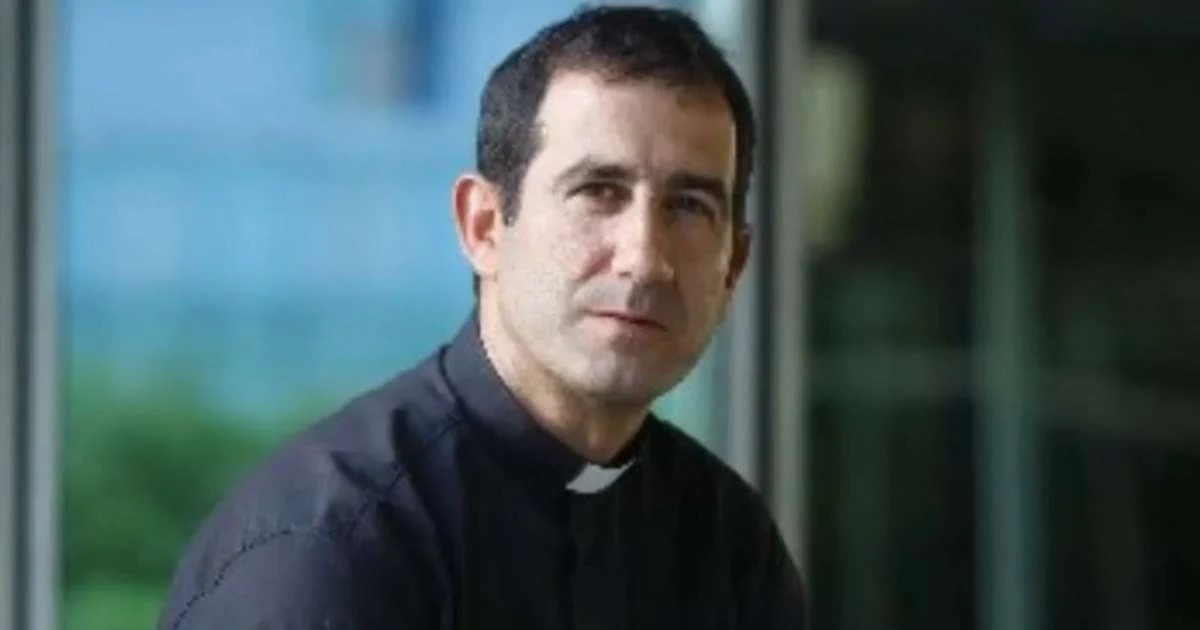
The Cuban priest Alberto Reyes Pías published a new installment of his series "I have been thinking..." on Facebook, in which he compares the situation in Cuba to a concentration camp and calls on the people not to place all their hope in a liberation that is conceived from outside.
The parish priest of Esmeralda, in Camagüey, begins the text with a passage from the book "Man's Search for Meaning" by the Austrian psychiatrist and Holocaust survivor Viktor Frankl, in which it is described how mortality in the Nazi concentration camps soared between Christmas 1944 and New Year's 1945, when the prisoners lost hope of being released by that time.
"We are living a very similar reality, because the question that is most often asked in Cuba today is: How long? We are, at the same time, hopeful and desperate," writes Reyes.
The priest describes Cuba as a "merciless concentration camp" and characterizes the situation as "imposed slavery," while noting that Cubans struggle daily "to survive today’s blackout, today’s scarcity, today’s exasperating helplessness."
One of the most straightforward passages in the text points to the ruling elite: "No power has the right to keep us in this agonizing misery and this lack of prospects, especially when the children and grandchildren of those who govern us constantly make headlines for their lives filled with opportunities."
Reyes acknowledges that hope is renewed daily - "Will it be today? Will it be today?" - but warns that it fades in the face of everyday struggles and the voice that whispers, "This cannot be changed."
Regarding the role of the international community, the priest is explicit: while he appreciates the solidarity, he warns that one cannot place hope in external aid that may take too long to arrive.
"The U.S. administration may support our struggle… or not; Europe may stop flirting and being timid with the Cuban government… or not; Latin America may dare to speak the truth about Cuba… or not," he writes, concluding that "the time has come for us to reinvent ourselves as a people and to seek every possible way to break the chains."
"Let us not rest our hope on a mere liberation brought forth from the outside," he emphasizes.
The post comes days after Reyes granted an interview to the Spanish magazine Aceprensa during a visit to Madrid, where he advocated for transitional justice that holds accountable those responsible for abuses.
The State Security has already summoned him twice to deliver warning letters under threat of judicial prosecution, and the regime accuses him, along with other priests, of being a "promoter of hate" for publicly denouncing the situation in the country.
"The world may offer us its hands, but those hands will not be able to help us stand up if we do not have the ability to lift our heads and stop caressing our chains," concludes Reyes in his publication.
Filed under: