
Related videos:
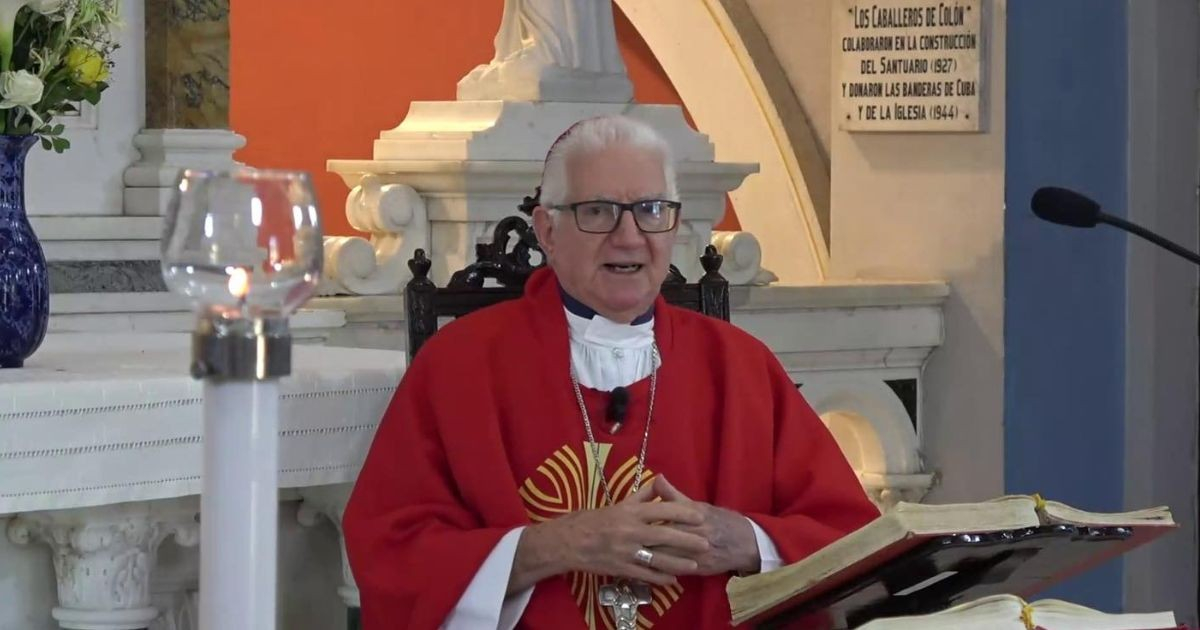
The Archbishop of Santiago de Cuba, Monsignor Dionisio García Ibáñez, issued a direct call to the world's leaders this Sunday during his Pentecost homily at the Basilica Sanctuary of Our Lady of Charity in El Cobre, demanding humility, respect for human dignity, and the pursuit of truth above personal power.
The prelate reserved his most forceful words of the sermon for those in political authority, warning that the leaders of nations must urgently seek the gift of the Holy Spirit "because often those who govern nations or those of us who wield authority believe that we are the only ones. Authority comes from me; I am the only one who is right."
García Ibáñez was direct in highlighting the danger of abuse of power: "Those who bear the responsibilities of the peoples of nations must place greater emphasis on seeking the truth. They should not consider themselves owners of the world, nor decide the fate of millions of people."
The archbishop emphasized that no ruler can impose their judgment over that of an entire society: "My opinion cannot stand above the opinion of everyone, and especially above that of an entire people."
He also demanded that the leaders of the nations prioritize the common good over their own interests: "Seek justice, not whim, and seek justice and goodness, not our own interests."
In his homily, García Ibáñez also warned against division as a political tool, stating that "anything that tends to divide and separate into groups is bad," and he called for brotherhood and communion as the fruits of a life guided by the Spirit.
The prelate made an explicit reference to the situation of the faithful in Cuba by stating: "Here in this world, here in Santiago de Cuba, we need the strength of God to remain steadfast, and we need the wisdom of God to understand things."
The homily this Sunday is part of a sequence of statements by the archbishop that increasingly critique the reality in Cuba.
On May 17, during another mass in El Cobre, García Ibáñez stated that "Cuba needs to change" and that "measures must be adopted to change the situation in the country."
In November 2025, the archbishop called for the creation of a society where no one depends on being "given" anything and emphasized that self-reliance should be the foundation of social life. Following Hurricane Melissa, he questioned the meaning of living amid such precarious conditions.
Other Cuban priests have taken an even more direct tone.
The father Alberto Reyes criticized the "neglect and inactivity" of the government in the face of the normalized scarcity, hunger, and death on the island.
The Catholic Church operates in Cuba as one of the few institutions with some degree of autonomy from the State, and its pastoral messages are often interpreted as direct criticisms of the regime.
García Ibáñez, appointed archbishop by Benedict XVI in 2007 and president of the Conference of Catholic Bishops of Cuba since 2009, concluded his homily with a summary that encapsulates the spirit of his entire message: "To be humble is to live in the truth."
Filed under: