
Related videos:
The National Assembly of People's Power published the draft of the new Housing Law, a document of 91 pages and 190 articles that expands the powers of the State to intervene, control, and reclaim real estate held by individuals.
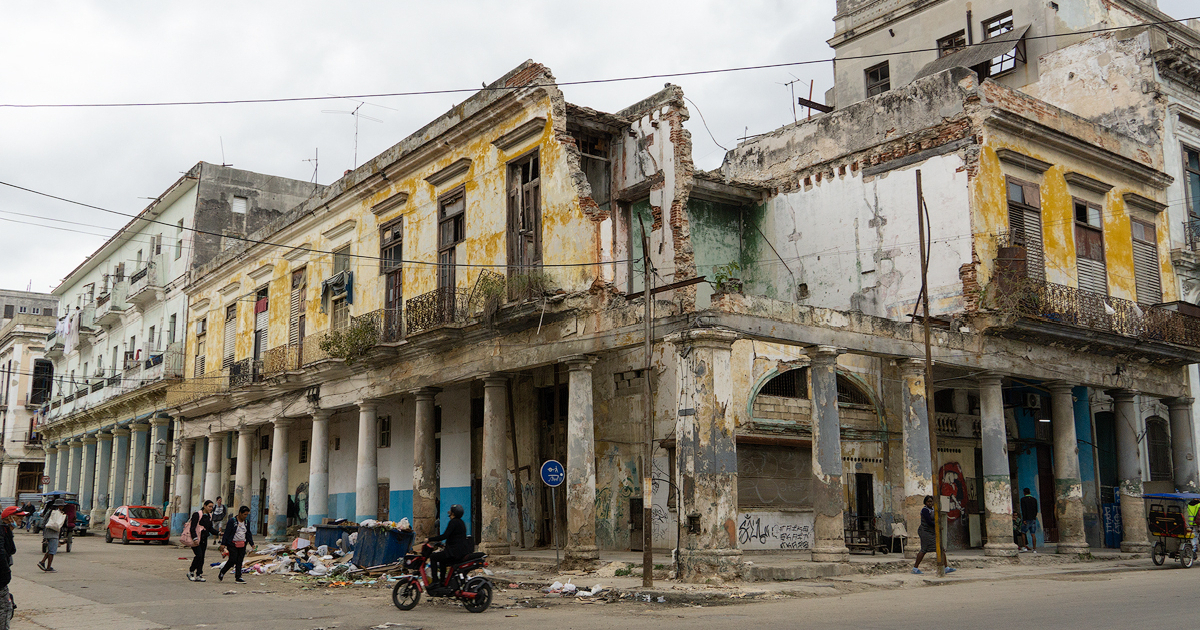
The most significant change is in Article 141, which states that if a property falls into disrepair due to abandonment and the owner does not take steps to recover it, the Municipal Housing Directorate may request from the competent court "the loss of rights due to abandonment and its availability in favor of the Municipal Administration Council for subsequent allocation."
In this regard, Article 18 complements this mechanism by tasking the Municipal Housing Directorate with keeping an updated inventory of buildings in a state of disrepair and informing the Municipal Administration Council for their inclusion in investment plans.
If Territorial Planning determines that a building is in ruin, the municipal housing director may inform the occupants of the deadline by which they are required to vacate it and their relocation, "if applicable."
The provision takes on special significance in the context of mass emigration: between October 2021 and September 2024, over 600,000 Cubans crossed into the United States, leaving behind thousands of closed or deteriorating homes.
Article 139 goes even further: it requires all property owners to recover the use value of permanently unoccupied homes, "even if they are not declared to be in a state of ruin," if they show structural deterioration or negatively impact the surrounding environment.
The same article requires that the absent owner appoint a representative to act on their behalf in emergencies, administrative processes, or judicial matters, which in practice imposes an additional bureaucratic burden on those living outside the country.
Another weight change affects those receiving state-subsidized housing: according to articles 53 to 56, they will be prohibited from selling, donating, or exchanging the property for the first 15 years after allocation, and if they do, they will have to repay the total subsidized amount to the State Budget.
These restrictions would not merely serve as an administrative warning: Article 57 establishes that the right of first refusal and the obligations set forth for subsidized housing must be included in the constitutive deed and registered in the Central Property Registry.
In multifamily buildings, the project establishes management committees composed of all owners, with the authority to set mandatory monthly fees for common expenses.
The Article 157 states that "the agreements adopted by the Board of Administration have binding effects for all holders," with no possibility of exemption from payment.
The project also requires property owners to keep the outdoor areas in front of their properties clean and well-maintained, between the sidewalk and the curb, and reaffirms the limit of two residences per individual, plus one for rest or vacation.
Additionally, Article 67 adds another limitation: owning a home does not prevent one from receiving another through state allocation, but the beneficiary of that right must relinquish the property they owned until that point, with reciprocal compensation if there are price differences.
The text repeals the General Housing Law No. 65 of 1988 and nine amending decrees issued between 1998 and 2018, and bears the signatures of Juan Esteban Lazo Hernández, president of the National Assembly, and Miguel Díaz-Canel, although the approval dates are left blank, indicating that it is still a project in progress.
The project was submitted for public consultation until February 28, 2026 and it is expected that the National Assembly will approve it before the end of the year.
The context in which this law arrives is one of severe housing crisis: the deficit exceeds 929,000 homes, 35% of the housing stock is in regular or poor condition, and in 2025 only 22% of the annual construction plan was completed, with just 2,382 homes finished out of the 10,795 planned.
The project also empowers municipal Administration councils, through the Housing directorates, to purchase homes from private individuals for residential purposes to address established priorities, and to acquire rights to properties under construction, as outlined in articles 91 and 92.
Once approved, the law will take effect 90 days after its publication in the Official Gazette, during which time the Council of Ministers must also issue its regulations.
Filed under: