
Related videos:
The Cuban government has put a new Draft Housing Law up for public consultation that, if approved, would repeal the General Housing Law of 1988 and modify sensitive aspects of the property regime on the island.
Amid a housing deficit exceeding 900,000 homes and with more than a third of the housing stock in regular or poor condition, the proposal introduces structural changes to real estate policy, some of which have long been demanded by the citizens.
Below, we break down what you need to know about the new Draft Housing Law in Cuba, as recently reported by the official media Cubadebate.
End of the confiscation due to permanent departure from the country
One of the most significant changes is the elimination of the confiscation of homes due to emigration.
According to the published text, for the first time, Cubans who settle permanently abroad will be able to retain, inherit, and transfer their properties without losing them simply by residing outside the country.
For decades, the definitive exit meant the automatic loss of the property, a measure that created legal uncertainty and affected thousands of families.
With this modification, the State formally equates the property rights of emigrants with those of residents in Cuba, at least in terms of real estate.
Up to two homes… and one for leisure
The draft expands the possibility for the legal accumulation of real estate.
Individuals may own up to two homes, excluding a third category: the so-called "vacation home", located in beach, countryside, or mountain areas, which can be owned separately.
Until now, property ownership had been severely restricted, and the new framework relaxes that limit, which could impact both the real estate market and wealth inequality, in a context where a significant part of the population faces economic difficulties in accessing even a home in acceptable conditions.
Buying and inheriting with fewer obstacles
The text also promises to simplify the property transfer processes.
The rules for sale, donation, exchange, and inheritance are being relaxed.
Vacation homes will have the same rights of transfer as residential properties, and all will be subject to buying and selling without the administrative obstacles that have historically characterized the Cuban real estate market.
The government proposes to reduce the discretion of local bodies and establish more streamlined procedures in an effort to invigorate the sector.
Mortgages: An Unprecedented Figure in Cuban Legislation
For the first time, the law introduces the concept of mortgage financing.
This would allow families to purchase or build homes through long-term loans secured by the property itself.
Until now, the options were limited to personal savings, remittances, or incremental construction.
The mechanism would be complemented by traditional bank loans and state subsidies for vulnerable sectors.
However, the actual scope of this measure will depend on financial conditions, interest rates, and payment capacity in a country where state wages continue to be insufficient in the face of inflation.
Subsidies and prioritized sectors
The draft establishes priorities for the granting of benefits.
Included are those affected by natural disasters, families in overcrowded situations, young people of working age, large families, senior citizens, individuals with disabilities, and victims of domestic violence.
It also includes a specific chapter on young people's access to housing, recognizing the barriers they face in the real estate market.
Nevertheless, the main challenge remains the actual availability of resources and construction materials.
Changes in the rental regime
The proposal increases the proportion of homes designated for rental and explicitly authorizes subleasing.
This aims to expand the supply in a market characterized by scarcity and high informal prices.
The official intention is to invigorate the formal rental market and provide alternatives for those who cannot access home ownership.
The impact will depend on how prices are regulated and the state's ability to oversee without creating new bureaucratic obstacles.
A deteriorating housing fund
Cuba has approximately 4.1 million housing units, but 35%—about 1.4 million—are in fair or poor condition.
The draft proposal suggests that the State take on the structural rehabilitation of buildings in severe disrepair through comprehensive programs.
In addition, it strengthens the management boards in multifamily buildings, which will be able to set fees, hire services, lease common areas, and access bank loans for maintenance.
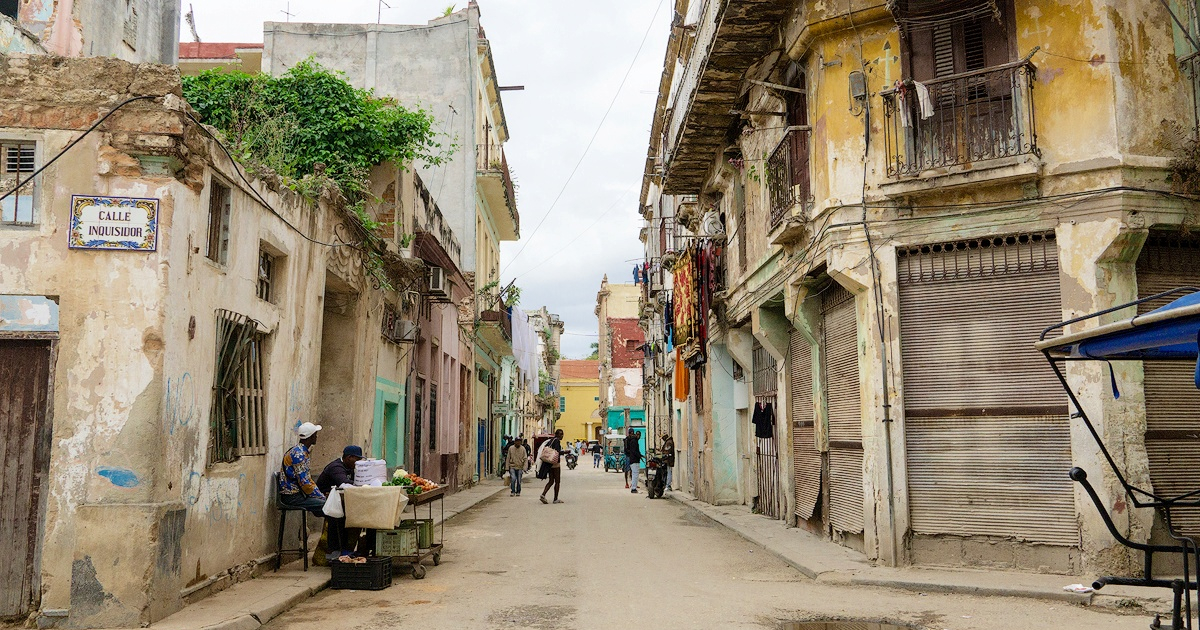
The structural deterioration of the housing stock has been one of the most visible problems in cities like Havana, where partial and total collapses occur every year.
Regulatory Simplification
The government acknowledges that the legislative dispersion has led to a lack of control and delays.
Currently, there are nine decree-laws and 127 regulations related to housing. The new law aims to unify the legal framework, simplify procedures, and reduce bureaucracy in a context where the construction and legalization of housing progresses at an extremely slow pace.
A deficit that leaves no margin
The economic context is decisive.
In the first half of 2025, only 2,728 homes were built, representing an annual growth of just 0.1%.
The housing deficit exceeds 929,000 units, and the construction rate is far below the country's actual needs.
Without a substantial increase in the production of materials, financing, and construction capacity, the new law could encounter serious practical limitations.
What is needed for the approval of the Draft Law on Housing in Cuba?
The public consultation will extend until February 28, 2026. Opinions can be sent to the official email established by the Ministry of Construction.
After processing the received criteria, the organization will draft the final text to be presented to the National Assembly of the People's Power, likely before the end of the year.
The preliminary draft introduces significant changes to the property and financing regime, but its effectiveness will depend on a key factor: whether the legal reform can be translated into real solutions for a country where hundreds of thousands of families continue to wait for adequate housing.
Filed under: