
Related videos:
The Cuban regime is preparing the largest reorganization of its state apparatus in over four decades: a draft law published by the National Assembly of People's Power scheduled for approval in July 2026 elevates the Central Bank of Cuba to the center of executive power and reduces the agencies of the Central State Administration from 27 to 21.
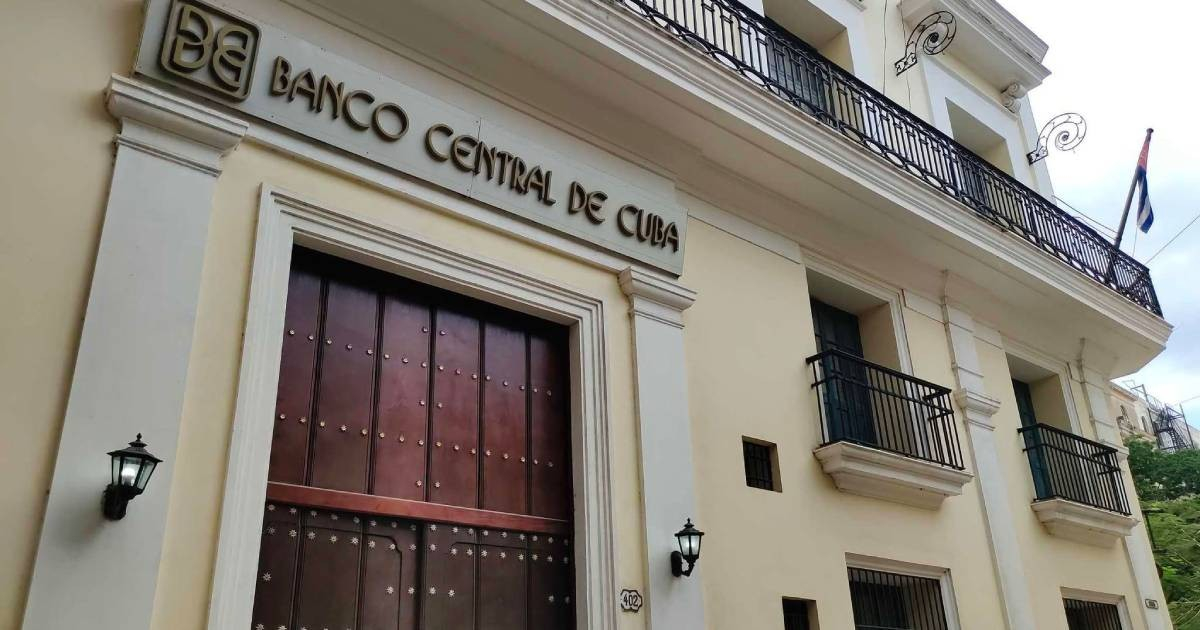
The most significant change from a political-institutional perspective is the formal integration of the Central Bank into the Council of Ministers.
Article 20 of the project states that the Central Bank "is directed by a Minister-President, who is the superior body of the organization."
The Final Provision Four explicitly amends Law 134 of 2020 so that the Council of Ministers is comprised of "the Prime Minister, the deputy prime ministers, the Secretary, the ministers, and the Minister-President of the Central Bank."
The Sixth Final Provision goes further: it declares the "compatibility of holding the position of Vice Prime Minister with that of Minister or Minister-President of the Central Bank of Cuba," which paves the way for monetary policy to be in the hands of a core member of the government.
Since its establishment in 1997, the Central Bank operated with organizational autonomy and its own legal personality, although it was subordinate to the state political framework and did not have direct representation on the Council of Ministers.
The project also includes a series of mergers that concentrate economic power in fewer hands.
The historic Ministry of Agriculture has been replaced by the Ministry of Agro-Food, which encompasses agriculture, food industry, sugar and its derivatives, beverages, liquors, fishing, and the forestry sector.
The Ministries of Economy and Planning and of Finance and Prices are merging into the Ministry of Economy, Finance, and Planning, which will oversee planning, budgeting, taxation, pricing, public credit, and insurance under a single structure.
The Ministry of Environment, Habitat, and Housing is also established, which encompasses housing, urban planning, land management, hydraulic resources, the environment, and the National Cadastre.
The Ministry of Higher Education incorporates science and technology to establish the Ministry of Higher Education, Science, and Technology, while industry and construction fall under the Ministry of Industries and Construction.
One of the most politically charged changes is the creation of the Ministry of Information and Social Communication, which elevates the apparatus for controlling media and public communication to a ministerial level, with explicit powers to “propose and endorse the creation, transfer, merger, and dissolution of the fundamental means of social communication.”
The National Institute of Sports, Physical Education and Recreation (INDER), established in 1961, is formally transformed into the Ministry of Sports and Recreation.
The reform comes at the worst economic context in Cuba in decades. CEPAL projects a GDP decline of -6.5% for 2026, while economist Pedro Monreal warns that the contraction could reach 15%. The year-on-year inflation reached 13.42% at the end of March 2026, with projections suggesting it could close the year near 25%.
The project repeals Decree-Law 67 of 1983, which has governed the state apparatus for more than forty years, and establishes that ministers will have up to one year to complete the necessary organizational changes once the law comes into effect, 60 days after its publication in the Official Gazette.
Filed under: