
Related videos:
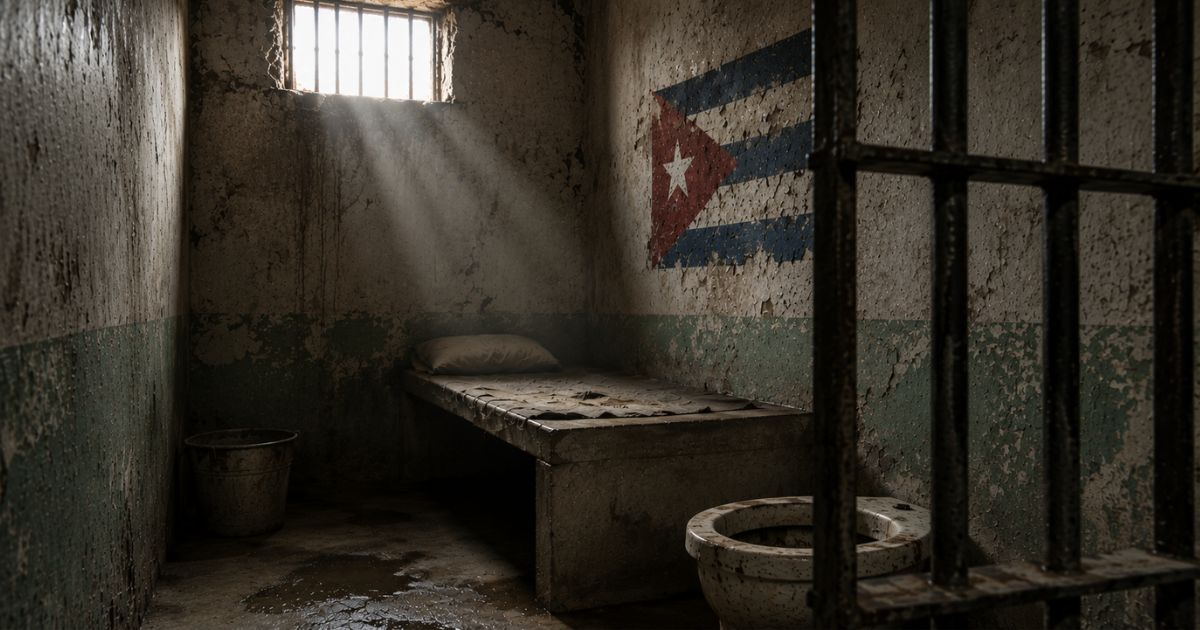
A resident of Havana who visited the Combinado del Este this Friday detailed the living conditions faced by the prisoners from the 11th of July 2021 (11J) movement in that capital prison, in a story published on Facebook that is circulating among activists and families of political prisoners.
Leo Fernández Cruz went to the prison —opened in 1975 and the main maximum-security facility in Havana— to visit a friend, and while waiting for the pass, he was able to talk with four inmates detained after the protests of July 11.
Family members had arrived since nine in the morning, but the pass was not granted until 1:30 in the afternoon, as the authorities explained, because a political event in El Vedado delayed the orders to proceed.
Regarding food, the account is striking: "Gray rice and broth water, with a main dish of 'enriched' picadillo featuring carrots or a scrambled dish 'baptized' with water. As for breakfast, it's better not to say anything," wrote Fernández Cruz.
The irony is greater when considering that within the prison itself there is a farm with pigs and chickens, as well as a bakery and a block factory, all seemingly of a private nature: "They never tell me they've had a pig's foot on their menu," the author pointed out.
In addition to food insecurity, there is forced labor under the sun: “During daylight hours, when the sun is beating down, they are made to clear brush or paint. Refusing such tasks can affect one’s next pass,” warned Fernández Cruz, describing a practice that human rights organizations characterize as systematic coercion.
The nights also offer no rest: "On the mattresses of the locals, the bedbugs bite the chest. I am told that several times in the early morning, they wake up because of it," he recounted.
The contrast with foreign prisoners is striking: "There is a block where foreign inmates serve their sentences. They are Colombians, Bahamians, Peruvians, and others from different countries. They enjoy comforts that are unavailable to Cubans. They have refrigerators, kitchens, televisions, and other more favorable conditions," he reported.
Fernández Cruz also attempted to obtain information about an inmate known as "Spiderman" by directly approaching the camp leader, Major Vicet, who replied: "I have no knowledge of that citizen." The Mixed Martial Arts champion Javier Ernesto Martín Gutiérrez (Spiderman) was transferred to that Havana penitentiary after spending nearly a month detained in Villa Marista, as his mother stated on May 23 to Martí Noticias.
The ideological atmosphere of the Combinado del Este was likewise captured in Fernández Cruz's post: walls covered with political slogans, military service recruits at the posts, and images of José Martí alongside Che Guevara, a combination that the author described as a "colossal absurdity and barbarity."
The professor and activist Alina Bárbara López shared the account on her Facebook profile and was straightforward in her assessment: "The conditions of 'existence,' because it is not life, of our compatriots imprisoned for political reasons are cruel and violate the Mandela rules."
The United Nations Minimum Rules for the Treatment of Prisoners —known as the Mandela Rules— establish minimum standards regarding food, hygiene, medical care, and the prohibition of forced labor. The Cuban state declared to the UN in 2025 that it complies with these standards, while organizations such as Justicia 11J report 775 political prisoners being subjected to conditions that include torture, punitive cells, and arbitrary transfers.
Prisoners Defenders has estimated that there are more than 1200 political prisoners on the Island and has described severe overcrowding, infestations, lack of drinking water, and inadequate food supply.
Five years after the 11J protests—the largest popular demonstrations in Cuba in decades—hundreds of demonstrators remain imprisoned, many of them facing lengthy sentences. The mothers of these prisoners and several organizations and figures from Cuban civil society have tirelessly condemned the terrible harm inflicted on innocent lives and have demanded their release.
Fernández Cruz concluded his account with a mixture of denunciation and hope: "Truly being in those conditions is like having a 'double sentence'... Let us hope for the political prisoners, that it won't be long before their full freedom and the end of such enormous injustice."
Filed under: