
Related videos:
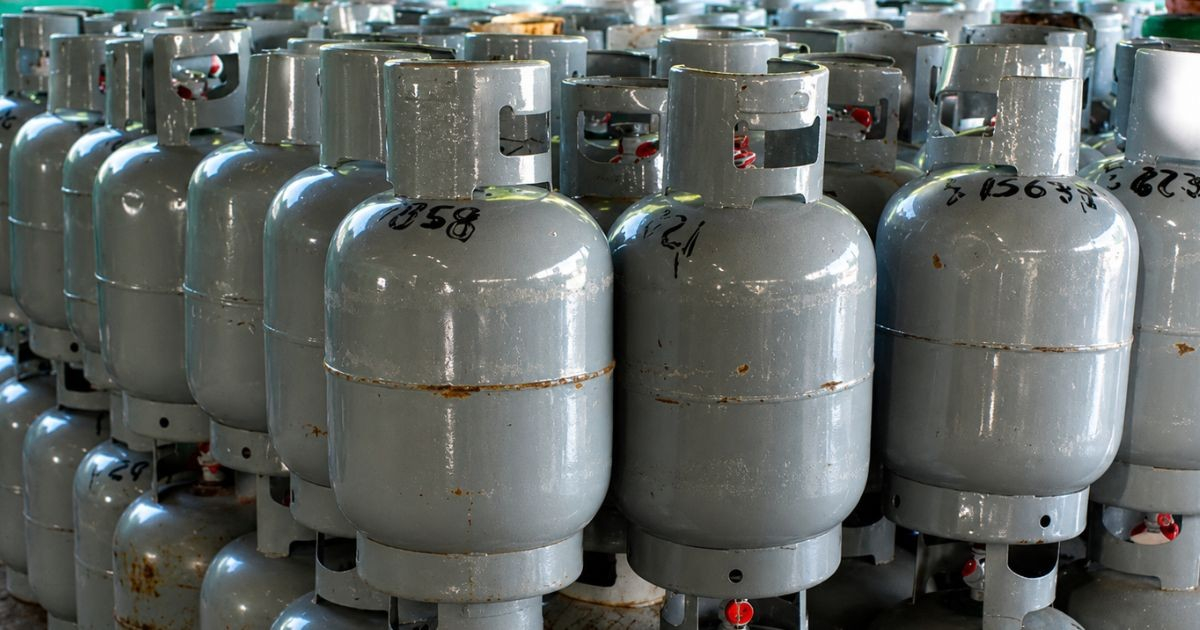
The liquefied gas canisters that the platform KMCero and its distributor Progas sell for 24 dollars at their new point of sale in Guanabacoa reach the informal Cuban market at 50 dollars, more than double the purchase price, as reported by the newspaper 14ymedio.
The second point of sale, located on Santa María Street in the Havana municipality of Guanabacoa, reflects the usual scene of shortages: long lines since dawn, worn-out gas cylinders, and a supply that fails to meet demand.
The price of 24 dollars for a 10-kilogram cylinder is more than five times the monthly minimum wage in Cuba, making domestic gas a luxury item for most Cubans.
Resale is explained by the barriers to access the platform: KMCero requires a foreign currency card and minimum purchases of 50 dollars, which excludes those who do not have access to dollars and pushes others to pay the inflated price in the informal market.
Although Progas claims to be a private company, 14ymedio documented that its trucks load cylinders directly from the facilities of the state-owned company Cupet on Vía Blanca, in the Guiteras neighborhood. The state company has raised the perimeter fence of those facilities to make it harder to observe the internal operations.
KMCero was promoted by Tecnomática along with the state-owned SME TM-NEXGEN as a virtual store for fuels and lubricants, which strengthens its ties with the business ecosystem of Cupet.
There is no public information regarding the ownership structure of either of the two entities, emphasized 14ymedio.
The platform Supermarket23 offers the same product for 29 dollars, also requiring the delivery of an empty container and payment in foreign currency. On June 2, more than 200 people were waiting under the sun in Alamar to collect gas purchased through that platform.
The dollarized gas business has accelerated in recent weeks against the backdrop of a total collapse of the state distribution system. Many Cubans have not received rationed supplies since September 2025, and in numerous provinces, liquefied gas has been missing for months.
The shortage of liquefied gas is compounded by the interruption of the supply of manufactured gas —known as "street gas"— due to delays in maintenance work at the Melones plant, operated by Cupet, where an "unexpected issue related to gas return" occurred, as acknowledged by the state-owned company itself.
The supply crisis has been ongoing since the end of 2024. In April 2025, Cupet admitted that no liquefied gas ships had entered the country, and in May of that year, the authorities of Sancti Spíritus acknowledged that there was no available inventory at the national level.
As noted by 14ymedio, "the coincidence with the severe energy crisis and the scarcity of fuel has turned what should be a basic resource into a commodity of high commercial value, creating inequalities among Cubans based on their resources and access to dollars."
Filed under: