
Related videos:
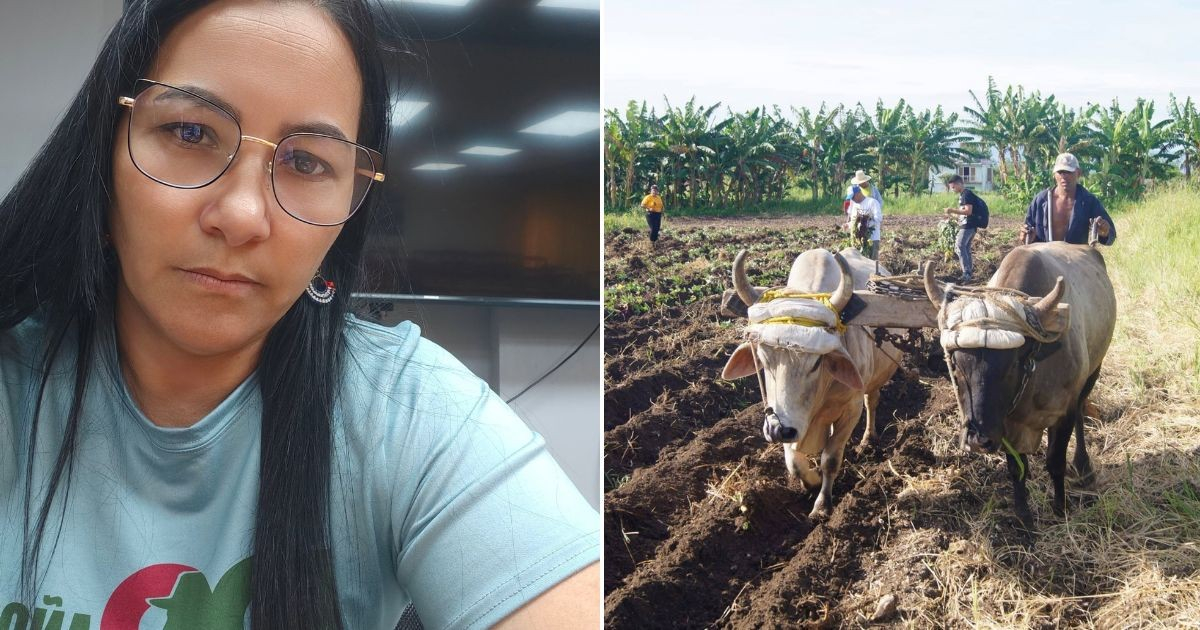
The First Secretary of the Provincial Committee of the Communist Party of Cuba (PCC) in Granma, Yudelkis Ortiz Barceló, posted on her Facebook profile images from a visit to agricultural fields in Manzanillo, where the use of oxen and animal-drawn plows to cultivate the land is evident. She summarized the situation with a phrase that encapsulates the resignation of the official discourse: "We will have whatever we are capable of producing under these circumstances, there are no alternatives."
The leader accompanied the images with an aphorism attributed to José Martí — "If man serves, the land serves" — and presented it as confirmation of what she found in Manzanillo, a coastal municipality in the south of Granma with a tradition of agriculture and livestock.
The shift back to animal traction is not a folkloric anecdote: it is the emergency response of Cuban agriculture to the collapse of the diesel supply.
Cuban agriculture has returned to the use of oxen and windmills as a common practice, and the Agricultural Business Group publicly acknowledged this in May.
This month, viral images circulated of livestock towing a classic car —an "almendrón"— as a symbol of the energy crisis gripping the island.
By the end of April, the planting campaign had only achieved 70% of its national goal, agricultural aviation was stalled due to a lack of fuel, and the harvest at the Quintín Bandera central in Villa Clara could not be completed without support from oxen and solar panels.
The situation in Granma is particularly severe. According to the survey "There is Hunger in Cuba 2025," 78.9% of households in the province reported experiencing hunger.
Farmers from Yara, in the same province, reported in March more than 1,000 tons of tomatoes unpaid by the State, which discourages new plantings.
At the national level, Cuban agricultural production decreased by 52% between 2018 and 2023. The most recent declines report a 44% drop in root vegetables, 43% in eggs, and 37.6% in milk. Cuba produced only 80,000 tons of rice in 2024, less than 15% of the 600,000 tons it requires annually.
Ortiz Barceló's speech contrasts with the recent promises of the regime itself. In January, Díaz-Canel called in a PCC session in Granma to change the "import mentality" and acknowledged serious deficiencies in the planting of root vegetables and milk collection.
In April, the government announced the end of the state monopoly on procurement as a structural solution.
The narrative that turns scarcity into revolutionary virtue has roots within the PCC itself: as early as 2019, then Vice President José Ramón Machado Ventura urged to "make do with whatever resources are available", a slogan that seven years later has become de facto agricultural policy.
The phrase "there are no alternatives" from the leader summarizes, perhaps unwittingly, the outcome of over six decades of an economic model that has led one of the provinces with the greatest agricultural potential in the country to plow the fields with oxen while nearly eight out of ten families go hungry.
Filed under: