
Related videos:
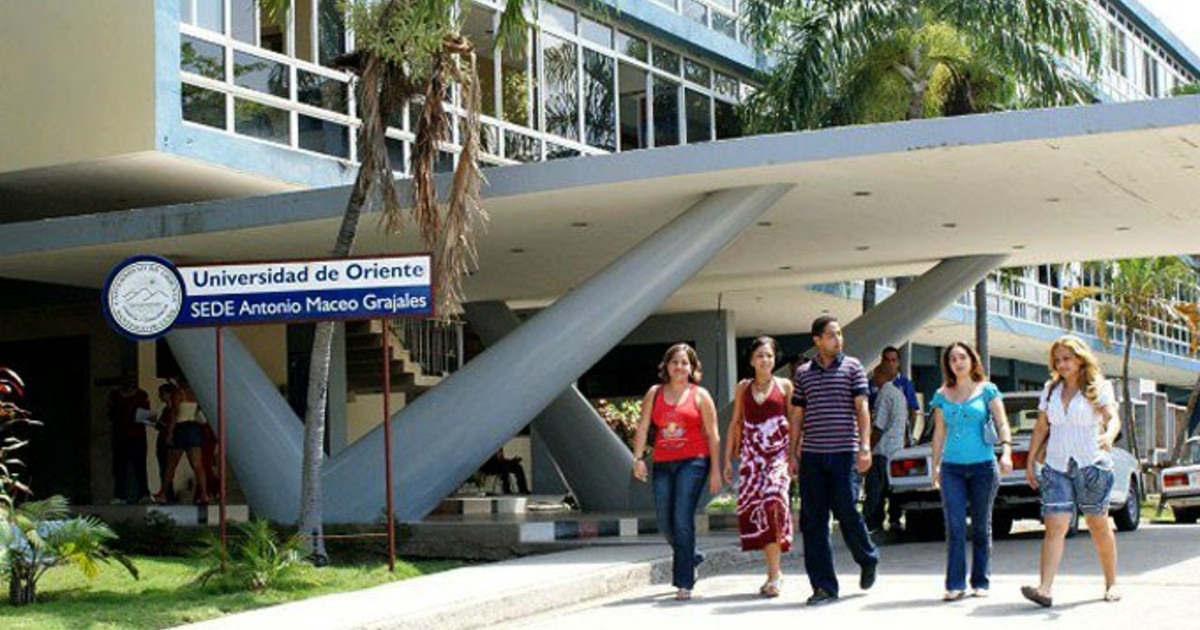
The University of Oriente in Santiago de Cuba announced that graduates from the provinces of Granma, Holguín, and Guantánamo will not be transferred to the central campus for the graduation ceremonies of the 2025-2026 academic year, according to an official information note published on social media by the Vice Rectory of Institutional Relations of the institution.
The document states that Promotion No. 73 will bear the official name of Graduation "Centenary of Commander-in-Chief Fidel Castro Ruz," described by the university itself as "a special motivation."
However, students from Granma, Holguín, and Guantánamo will receive their diplomas at events organized in their own territories, in coordination with other local higher education institutions, without being able to attend the central event scheduled for Sunday, June 15 in Santiago de Cuba.
In contrast, residents of Havana, Ciego de Ávila, Camagüey, and Las Tunas will be transferred to Santiago on national train No. 11, departing on Friday, June 12 at 7:20 p.m. and arriving on Saturday at 7:00 p.m.
The contradiction did not go unnoticed: students from more distant provinces are being transferred while those from neighboring provinces in the east are being excluded.
The decision sparked an avalanche of outrage among those affected. “If this is the case, the Graduation 'Centenary of Commander-in-Chief Fidel Castro Ruz' for this special occasion will be regarded and remembered as a mockery and a disrespect towards the university students who sacrificed so much over these four years despite the country's situation,” wrote Maria Carla Fagundo.
Karen Hornia expressed the sentiments of many: "Honestly, believing in that old slogan of 'University for All' is not valid here, because I only see universities for Santiago, Las Tunas, Ciego de Ávila, and Camagüey. The other provinces have to settle for receiving a degree from an institution to which we do not belong."
Another graduate, Kevin Morales Rodríguez, was more straightforward: "Why not take a little bit of the fuel allocated for political events and use it for transportation to give ALL of us a dignified graduation?"
The decision is framed within the serious crisis of fuel and transportation that prompted the government to move up the end of the school year to the period between June 15 and June 30, earlier than expected.
Miguel Díaz-Canel acknowledged in March that universities cannot operate effectively "with blackouts, without fuel for the transportation of teachers and students."
The government also suspended the entrance exams for higher education for 2026-2027, replacing them with the academic average from pre-university, another direct consequence of the crisis.
A commentator identified as María C. Bolaños Rodríguez noted that this was already the fourth change to the graduation schedule, adding uncertainty to the frustration of those affected.
Reyf Degoo expressed it precisely: "It seems that the sense of belonging had an expiration date and expired just before graduation. Especially in difficult times, the symbols and moments that unite us acquire even greater value."
Graduations by faculty are scheduled from June 15 to 19 at the University Theater, and the Municipal University Centers will hold their ceremonies on Saturday, June 27 at facilities in the municipalities.
Filed under: