
Related videos:
The Board of Governors of the International Atomic Energy Agency (IAEA) approved a resolution this Wednesday that demands Iran report on the whereabouts of its enriched uranium reserves and allow international inspectors to verify that material, in a decision that could further complicate tensions between Washington and Tehran.
The measure, supported by the United States, the United Kingdom, France, and Germany, was approved with 21 votes in favor, three against, and ten abstentions during a closed-door meeting held in Vienna.
According to diplomatic sources cited by Reuters, Russia, China, and Niger were the only countries that voted against the text.
The resolution comes at a particularly delicate moment, just a few hours after the United States and Iran exchanged military attacks following the downing of a U.S. Apache helicopter near the Strait of Hormuz.
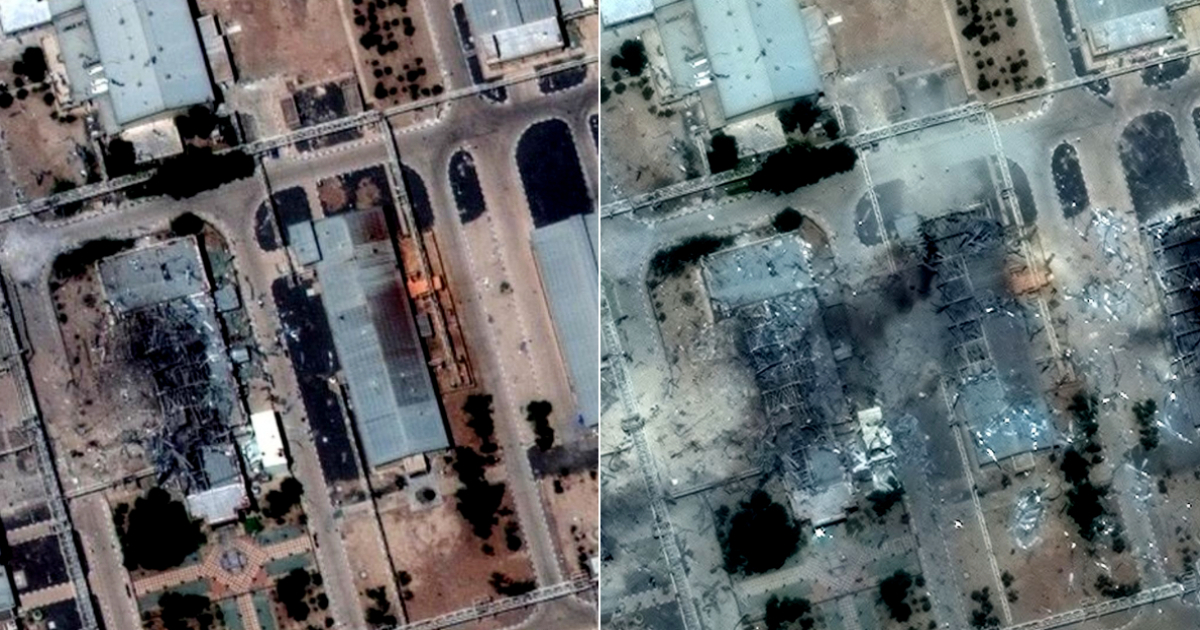
The IAEA seeks to determine what happened to the enriched uranium stockpiles that survived the Israeli and American attacks on Iranian nuclear facilities that took place last year.
Although several enrichment plants were destroyed or severely damaged, international officials believe that a significant portion of the previously produced nuclear material still exists.
Among those reserves is enriched uranium at levels close to those required for the production of nuclear weapons, according to previous assessments by the international organization.
So far, Iran has not officially informed the IAEA about the fate of that material nor has it allowed inspectors to return to the bombed facilities to verify their condition.
Washington led the efforts to pass the resolution, arguing that the international community needs to know the location and condition of enriched uranium stockpiles following the attacks that significantly disrupted Iran's nuclear infrastructure.
Tehran reacted strongly to the decision.
The Iranian mission to the IAEA described the resolution as "political" and "lacking professionalism," accusing the United States of using the international body to justify its military actions.
"The resolution hypocritically expresses support for a diplomatic solution while the United States continues to commit acts of aggression," the Iranian representation stated in a message shared on the social network X.
Iranian authorities assert that the international organization is ignoring the impact of U.S. and Israeli attacks on facilities under international supervision, and they believe that the new resolution aims to cover up those military operations.
The dispute also threatens to affect diplomatic efforts to reach a broader agreement between Washington and Tehran regarding the Iranian nuclear program and regional security.
With the military conflict escalating and the debate over the fate of nuclear reserves still unresolved, the confrontation between Iran and Western powers is now adding a new front in the diplomatic and international arena.
Filed under: