
Related videos:
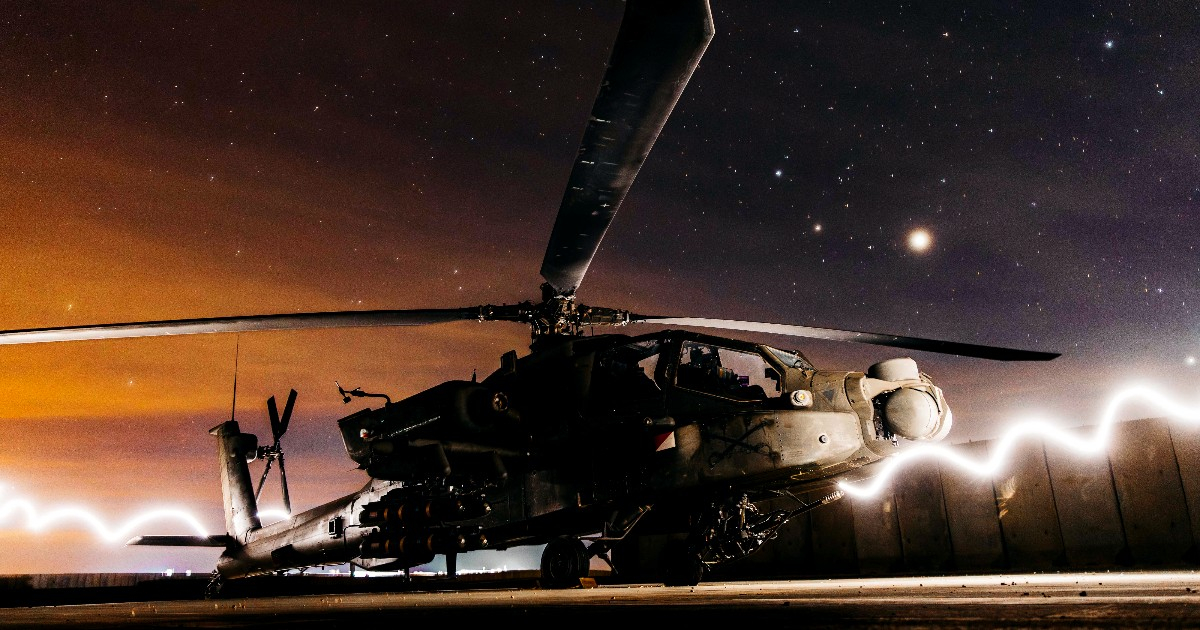
An Apache attack helicopter from the United States Army crashed this Monday near the Strait of Hormuz, and its two crew members had to be rescued, according to The New York Times.
The president Donald Trump confirmed the incident to reporters in New York after attending the NBA finals: “The pilots are fine, no one was hurt”, he said, according to a report from CNN.
Trump did not provide details regarding the causes of the accident, but he promised that an official report would be published "tomorrow." The New York Times noted that the cause of the incident was unclear, not ruling out either mechanical failure or hostile fire.
If the definitive loss of the aircraft is confirmed, it would mark the first Apache helicopter to have been lost since the beginning of the armed conflict between the United States and Iran, which started in late February 2026 with the so-called "Operation Epic Fury."
The incident occurred during a moment of heightened regional tension. On Sunday, Iran and Israel were involved in their first direct exchange of attacks in months: Tehran launched 11 missiles at Israel —the first in two months— which were intercepted with no casualties reported, while the Israeli Air Force bombed military targets in Tehran, Isfahan, and Tabriz, including a petrochemical complex in Mahshahr.
Trump urged both countries to stop the attacks "immediately," and both governments announced a temporary ceasefire.
The Apache operated in the strait area, where it had previously been used to target fast boats of the Iranian Revolutionary Guard as part of the U.S. blockade of Iranian ports.
In May, Apache helicopters took part in the response to an Iranian attack involving missiles, drones, and fast boats against three U.S. destroyers in the strait, destroying six enemy vessels.
The balance of air losses accumulated since the beginning of the conflict is significant. According to a report from the Congressional Research Service published in May, the U.S. military has lost or damaged at least 42 aircraft, including five fighter jets, seven KC-135 Stratotanker refueling aircraft, one search and rescue helicopter, and more than two dozen drones.
Among the more serious episodes, in March a KC-135 Stratotanker crashed in western Iraq, resulting in the death of all six crew members, and three F-15 fighters were mistakenly shot down by Kuwaiti air defenses, although all the pilots successfully ejected to safety.
In April, an F-15E Strike Eagle was shot down over Iranian territory, triggering a complex covert rescue operation involving hundreds of military personnel and intelligence agents, during which the United States had to destroy two of its own special operations aircraft on Iranian soil.
In diplomatic terms, the nuclear negotiations between Washington and Tehran, which had progressed towards a preliminary agreement on May 28 to extend the ceasefire for 60 days, were suspended on June 1 when Iran interrupted them due to the Israeli attacks in Lebanon.
Filed under: