
Related videos:
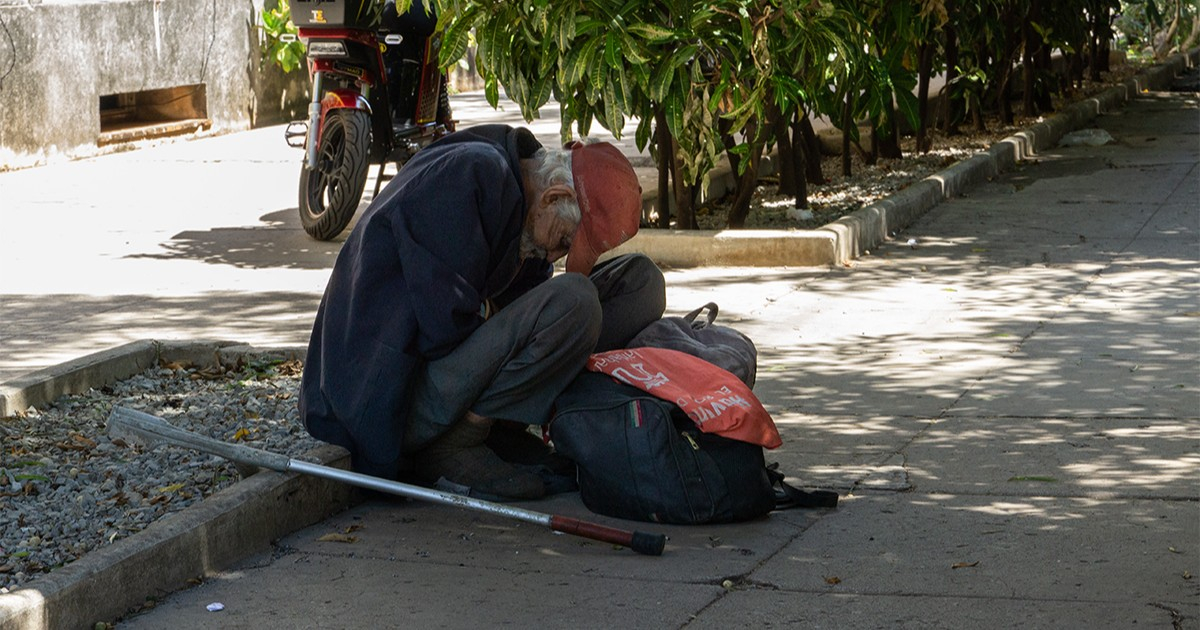
The Associated Press agency published a report on Monday describing elderly Cubans as one of the most vulnerable groups in the face of the economic crisis affecting the island.
The AP text adds to a series of international reports that portray a reality the Cuban regime has tried to downplay: hundreds of thousands of abandoned elderly people, lacking sufficient food, medications, and a family support network.
Cuba is one of the most aging countries in Latin America, with 25% of its population over 60 years old, a proportion that starkly contrasts with the collapse of the state's social assistance system.
The figures are staggering: 79% of those over 70 years old are unable to have three meals a day, according to the Cuban Observatory of Human Rights.
A survey conducted by the organization ASIC with 506 retirees in five provinces revealed that 98.8% feel institutional neglect, and 99% state that their pension does not cover basic needs.
Pensions, even after the increase approved in August 2025, do not exceed 4,000 pesos per month, which is less than 10 dollars at the unofficial exchange rate, while collecting retirement benefits has become a torment for thousands of Cubans.
The contrast with military pensions is obscene: uniformed personnel receive up to 90% of their last salary, while civilian retirees struggle in misery.
The Ministry of Labor and Social Security itself admitted in March 2026 that "there are no resources to assist vulnerable individuals,” a confession that summarizes the institutional neglect of more than 1,774,310 retirees registered on the island.
The system of nursing homes is equally insufficient: there are only 156 centers with 12,697 beds for the entire country, leaving 51 municipalities without any services for the elderly.
The collapse of the Cuban social assistance system is worsened by mass emigration: more than 1.4 million Cubans have left the island since 2020, leaving 17.4% of older adults without close relatives.
An elderly woman from San Germán, Holguín, whose son emigrated, summed it up starkly: "I sometimes go up to three days without eating," relying on neighbors for food and water.
Documented cases are multiplying. Neighbors have called for help for vulnerable elderly people found in conditions of extreme precariousness, while the official media has begun to depict elderly people searching for sustenance in the streets, an image that the regime itself can no longer hide.
The energy crisis of 2026 further exacerbates the situation: amid the collapse of external fuel supplies, Cuba experiences recurring national blackouts with a deficit of 2,025 megawatts during peak hours, disproportionately affecting those who rely on electricity to refrigerate medications or use medical equipment.
In the absence of state support, neighborhood solidarity and remittances from abroad have become the sole real support for the most vulnerable elderly individuals, a reality that poverty, loneliness, and abandonment have rendered synonymous with old age in Cuba.
A Cuban retiree quoted by the Spanish newspaper El País expressed it with bitterness: "You can't tell people that we will live off what we produce. What do we produce?"
Filed under: