
Related videos:
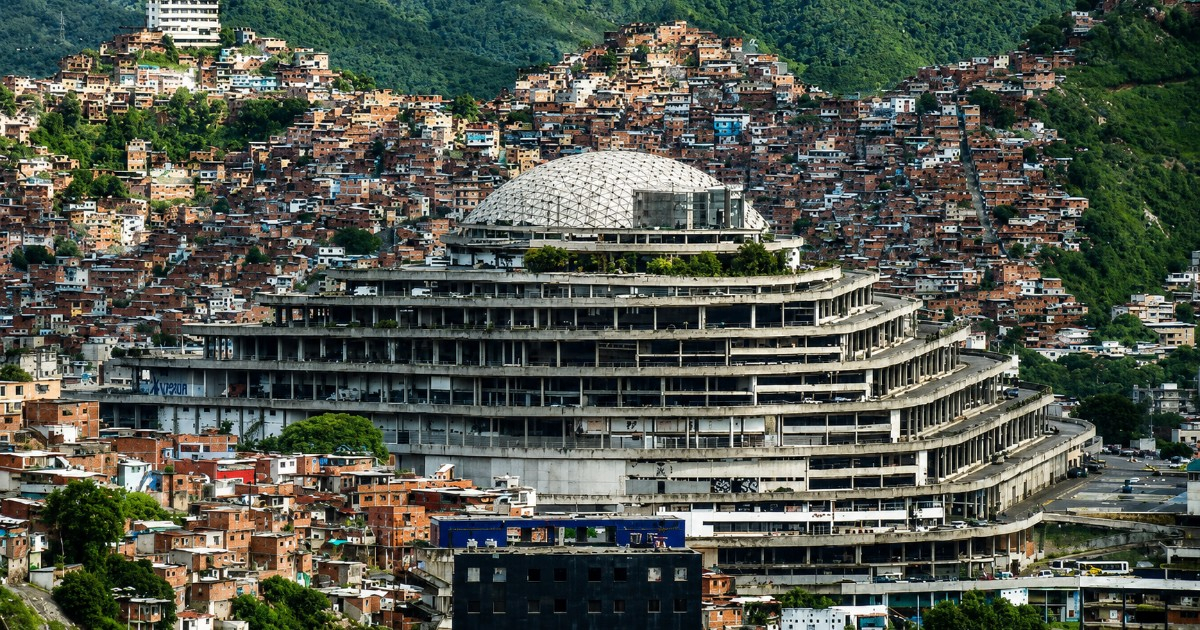
The Inter-American Court of Human Rights (CorteIDH) ordered today the permanent closure of El Helicoide, the infamous detention center in Caracas controlled by Venezuelan intelligence services, as part of the ruling in the case of Rojas Riera and another Vs. Venezuela, announced this Wednesday.
The tribunal declared the regime of Nicolás Maduro internationally responsible for the illegal detention, torture, and multiple human rights violations committed against Jorge Rojas Riera, a volunteer who was participating in logistical support tasks for a peaceful demonstration in Plaza Francia de Altamira, in Caracas, on September 19, 2003.
That day, three agents from the Directorate of Intelligence and Prevention Services (DISIP), dressed in plain clothes and without identifying themselves, violently stormed the place and arrested Rojas Riera without informing him of the reasons for his arrest.
The intervention of the Police of the Autonomous Municipality of Chacao in an attempt to prevent the arrest resulted in what the Court itself describes as a "shootout from all four corners of the Plaza," followed by a chase.
Rojas Riera was transferred to El Helicoide, where he remained in preventive custody for three months and sixteen days without legitimate procedural justification, and was subjected to beatings in various parts of his body, threats of sexual violence, abuse, was pointed at with firearms, and subjected to mock executions.
The Inter-American Court of Human Rights concluded that "the combination of institutional opacity, lack of effective judicial controls, and discretion in the actions of an intelligence agency such as DISIP facilitated the commission of acts of torture and other prohibited treatments" against the victim.
Venezuela never investigated those tortures, failing to fulfill its obligations under the Inter-American Convention to Prevent and Punish Torture.
As an unprecedented measure of redress, the Court ordered the closure of the center after determining that its continuation "is incompatible with the guarantees established in the American Convention on Human Rights," warning that the heightened risk to the integrity of detainees "remains for the individuals held there."
The ruling comes in a context of unfulfilled promises: on January 30, 2026, Delcy Rodríguez announced the closure of El Helicoide and its conversion into a social, sports, and cultural space, as part of a general amnesty for political prisoners.
However, on June 2nd, just days before the sentencing, the NGO Justice, Encounter, and Forgiveness (JEP) confirmed that the closure "has not been carried out" and that at least 25 political prisoners remain detained there.
The UN Fact-Finding Mission on Venezuela had already indicated that the SEBIN—successor of the DISIP—carried out arbitrary detentions, torture, and cruel treatment at El Helicoide that could constitute crimes against humanity.
In addition to the closure, the Inter-American Court of Human Rights imposed on Venezuela the obligation to reopen the criminal investigation and hold those responsible accountable, to conduct a public act of acknowledgment of international responsibility, to adopt a specialized protocol for judges and prosecutors to investigate torture, to create an official registry of torture complaints in the center, and to compensate Rojas Riera and his mother, Jackeline Riera Pietri, for material and immaterial damages, as well as legal costs.
This is not the first time that the Inter-American Court of Human Rights has condemned the conditions of the facility: in the cases of Díaz Peña vs. Venezuela and Guevara Rodríguez and others vs. Venezuela, the court had already concluded that El Helicoide "does not meet the minimum material requirements for the dignified treatment of individuals deprived of liberty" and that the presence there constitutes "per se a violation of the right to personal integrity."
None of those previous rulings led to the effective closure of the center, making today’s order a decisive test of whether the Venezuelan regime is willing to meet its international obligations or if, once again, it will ignore the mandate of the inter-American human rights system.
Filed under: