
Related videos:
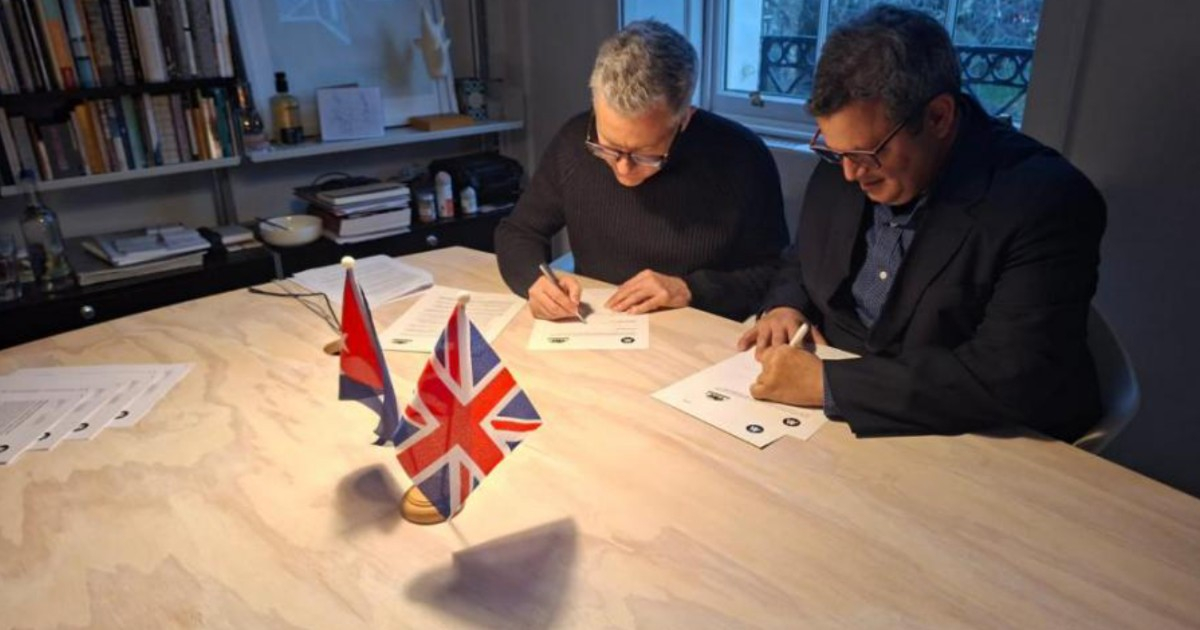
The British government has decided not to proceed with the ratification of the Political Dialogue and Cooperation Agreement signed with Havana in November 2023, marking a significant shift that indicates a hardening of its stance toward the Cuban regime.
Lord Collins of Highbury, representative of the Labour Government, was explicit before the House of Lords: "Now is not the right time to enter into a new agreement and embark on new areas of work."
The official explained that the ratification had been delayed for the Executive to reassess its position in light of the international situation, and he specified that London's immediate priorities are to address the humanitarian emergency through United Nations agencies and to address human rights violations.
The statement contrasts with the position that Lord Collins himself held in March 2025, when he asserted before the House of Lords that the agreement would be presented to Parliament "in due time." In November of that year, the Foreign Office was still conducting an interdepartmental consultation prior to parliamentary scrutiny.
The agreement was signed in Havana in November 2023 by the previous conservative government and was intended to establish a framework for bilateral dialogue on issues such as human rights, sustainable development, and the environment.
The pause came after two consecutive days of parliamentary debate in which both chambers examined the humanitarian crisis on the Island, political repression, and the fate of any aid sent to the country.
The debate in the House of Commons was initiated on Monday by an urgent question from independent MP Jeremy Corbyn, who had recently visited Cuba along with Labour MP Richard Burgon, and primarily held Washington's measures responsible for the fuel shortages, power outages of up to 20 hours a day, and the difficulties faced by hospitals.
The Parliamentary Under-Secretary for Foreign Affairs, Chris Elmore, acknowledged that U.S. sanctions restrict the Cuban economy, but emphasized that internal economic issues also contribute to the crisis and that sustainable improvement will require economic reforms.
Conservative lawmakers rejected the notion that the crisis could be explained solely by external factors. Representative Wendy Morton described the Cuban government's record on political, civil, and human rights as "shameful," and warned against narratives that overlook decades of repression under the single-party system.
The deputy Mark Pritchard described Cuba as "a single-party communist state and a failed state" and demanded that aid be channeled through the Catholic Church or charitable organizations, rather than through the Cuban government.
In the House of Lords, Lord Alton of Liverpool sought support for the Ladies in White and asked when London last demanded that the International Committee of the Red Cross inspect Cuban prisons.
The government assured that its humanitarian contributions are primarily channeled through the World Food Program, UNICEF, and the UN Central Emergency Response Fund, and that it has assigned a fuel management specialist to the World Food Program to facilitate distribution within Cuba.
Orlando Gutiérrez-Boronat, Secretary General of the Assembly of the Cuban Resistance, was in London conducting political negotiations during the sessions and held meetings with conservative and liberal representatives in Parliament.
"The issue of Cuba is very relevant at this moment in the United Kingdom," declared Gutiérrez-Boronat, who added that "the defense of the regime is very weak" and that "there has been no effort to defend its political structure."
The opposition leader noted that the recent visit to London by fellow opposition member José Daniel Ferrer and activist Javier Larrondo, president of Prisoners Defenders, influenced the parliamentary attention given to the Cuban case.
The humanitarian crisis in Cuba is severe: the electricity deficit reached 2,174 MW in May 2026, 33.9% of households reported recent hunger, and 96,000 surgeries have been postponed, including 11,000 pediatric procedures.
Filed under: