
Related videos:
The extreme fuel shortage in Cuba has reached a point where even the Church can no longer distribute humanitarian aid sent to the island normally, as warned this Sunday by the Archbishop of Miami, Thomas Wenski, in an interview with .
Wenski, who has spent three decades coordinating aid shipments from South Florida, warned that what his diocese can send to Cuba is negligible, as the lack of fuel makes it nearly impossible to distribute supplies once they arrive on the island.
The archbishop recounted that in the week prior, his community managed to send a container of chicken to Cáritas Cuba, but upon arrival, the organization had to distribute it with almost no means of transportation. "Cáritas was using what I would describe as wheelbarrows to distribute it. They sent me the photos," Wenski said.
The situation, according to the archbishop himself, reflects something more grave: Cubans are communicating to him that the island is approaching its "zero hour," meaning a humanitarian collapse.
The energy crisis that is halting the distribution of aid has its roots in a combination of factors that worsened since January 2026. The capture of Nicolás Maduro disrupted Venezuelan shipments of between 25,000 and 35,000 barrels of oil daily, which constituted the bulk of Cuba's supply. Mexico also suspended its shipments under pressure from Washington.
The sanctions imposed by the Trump administration reduced fuel imports by 80% to 90%, resulting in power outages of up to 25 hours a day and a deficit in electricity generation of 1,885 MW recorded in March.
The crisis, compounded by years of poor governmental management, was further exacerbated by the hurricane Melissa, a Category 3 storm that devastated the eastern regions of Cuba in October 2025.
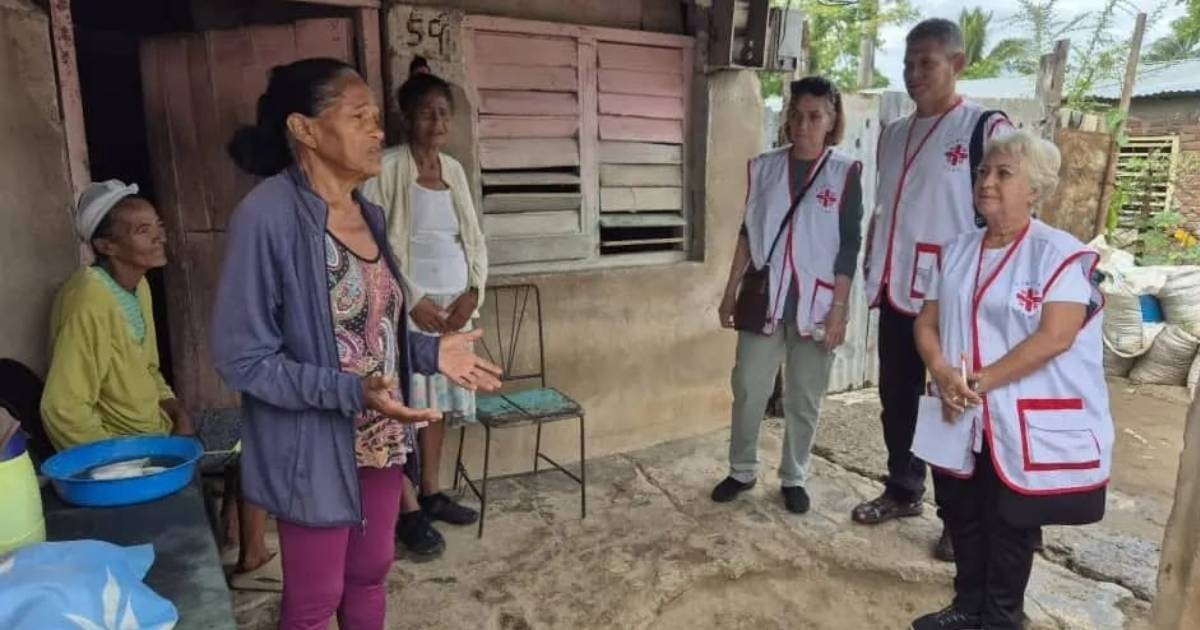
Sissi Rodríguez, executive director of Friends of Caritas Cubana, noted that Caritas had to distribute aid in the affected areas using horse and ox-drawn carts, and that for months, people have been coming to the soup kitchens with containers to take food home instead of eating on-site.
The Catholic Church is not only facing challenges in distributing aid, but it has also seen its own institutional activities come to a standstill. In February, the Cuban bishops had to cancel their ad limina visit to the Vatican because Cuba stopped receiving fuel for airplanes.
Bishop Arturo González Amador of the Diocese of Santa Clara recounted that they were ready to head to the airport in mid-month when they were informed that the planes might not have fuel to leave the island. "Let's sit down and talk", González Amador stated to the magazine Crux, calling for dialogue and an end to the opposing positions.
Javier Larrondo, president of Prisoners Defenders, was unequivocal in assessing the situation: "The situation in Cuba is unsustainable." His organization also documented an alarming increase in political repression, where political prisoner arrests rose from an average of 15 per month in 2025 to 28 in February and over 45 in March 2026, precisely while the regime fears a repeat of the protests on July 11, 2021, which resulted in more than 8,000 arrests.
In this context, the Vatican managed to secure the release of 51 Cuban prisoners in March, including 27 political prisoners, according to Prisoners Defenders. Pope Leo XIV had called in February for a "sincere and effective dialogue" between Washington and Havana, warning that the Cuban people do not need more distress or pain.
Wenski, 75 years old, said he had planned to travel to Cuba last month to meet with the Cuban bishops, but he had to postpone the trip due to a last-minute illness. His visa remains valid for several weeks. "I'm trying to get a couple of days to go," he said, although he clarified that before traveling, he needs to confirm with the Cuban bishops that they will be able to pick him up at the airport, feed him, and take him back so he can return home.
Filed under: