
Related videos:
Cuba begins the 2026 hurricane season in a state of extreme vulnerability: persistent hunger affecting more than a third of households, daily power outages lasting over twenty hours, severe water shortages, and a scarcity of medications. This is warned by the Food Monitor Program in its Press Release No. 49, published on June 2, which alerts that any weather event could have catastrophic consequences for the population.
The hurricane season officially began on June 1 in a country that has yet to recover from Hurricane Melissa, which made landfall in eastern Cuba on October 29, 2025, as a category 3 storm, damaging over 116,000 homes and affecting more than 3.5 million people.
The report "In Cuba There is Hunger 2025" from the FMP reveals the extent of the previous crisis: 33.9% of households report recent hunger, 80.4% have seen their cooking capacity affected by power outages, 48.3% lost food due to lack of refrigeration, and 81.3% must boil or chlorinate water to consume it.
Access to water is another critical issue: 43.3% of households receive water every three days or more, and the hydraulic system operates with only 37% of the fuel needed for pumping.
Power outages exacerbate each of these problems. The electricity deficit reached a record of 2,174 MW on May 14, and this Monday the Electric Union projected an impact of 2,045 MW during peak nighttime hours, with only 1,035 MW available against a demand of 3,050 MW.
The food shortage is equally alarming. The Minister of Food Industry, Alberto López Díaz, admitted on Saturday that "this year we have not been able to provide oil, chicken, or yogurt" through the regulated basket.
This is further compounded by the fact that up to 20,000 tons of food donated by the UN remain undelivered due to a lack of fuel, according to the FMP.
The health situation is equally serious. All provinces of the country are reporting cases of hepatitis A, and Cuba recorded the highest incidence of chikungunya in the Americas in 2025. The regime even urged the population to boil water as a protective measure against contamination.
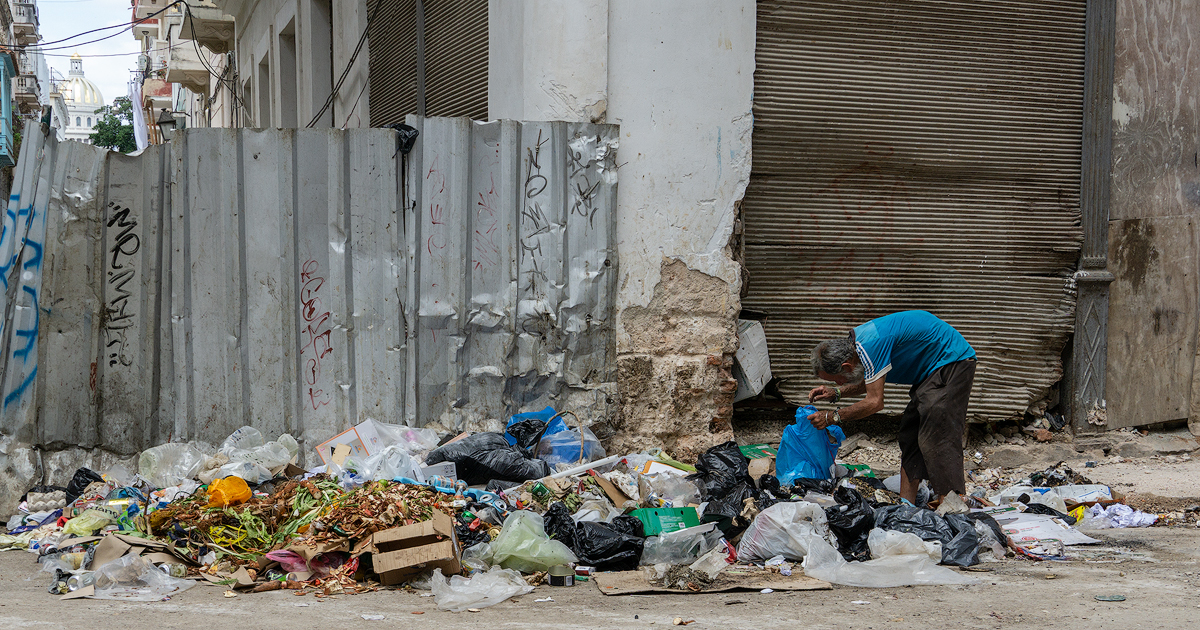
The FMP warns that the trash accumulating in the streets becomes a risk multiplier during the rainy season: "Accumulated garbage, contaminated water, leaks, and sanitary deterioration increase the risks of flooding, diseases, and the proliferation of vectors during the cyclone season."
In terms of medications, 54.2% of Cubans face significant barriers to obtaining them, and the country only has 30% of its essential medicine list available.
INSMET estimates a 40% probability that at least one hurricane will affect Cuba in 2026, above the historical average of 35%, and a 75% probability of impact from a tropical storm.
The FMP concludes that "these activities cannot solely fall on Cuban civil society, which is deeply limited in resources and lacks autonomous management," and calls on the regime for transparent administration of humanitarian aid before the expected peak of cyclone activity in August, September, and October.
Filed under: