
Related videos:
The energy crisis in Cuba, a result of years of government negligence and improvisation, has ceased to be merely a daily inconvenience and has literally become a life-threatening situation.
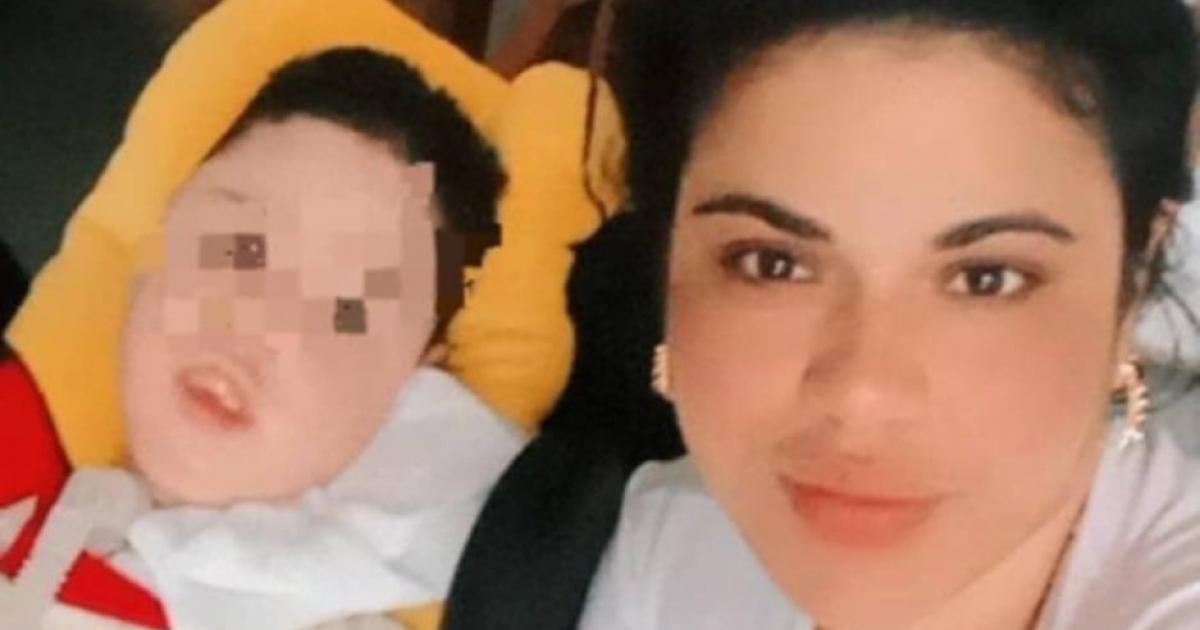
That drama is painfully revealed by Yanelis Hernández Palmero, a mother from Los Palacios, Pinar del Río, who has been hospitalized for a month in the Pediatric Hospital of the province. Not because her son Jeisel has a medical emergency, but because his life depends on electricity, a service that the State is unable to guarantee for her outside the hospital.
The child suffers from spinal muscular atrophy type 1, a degenerative disease that keeps him on ventilation and in chronic respiratory failure, which requires permanent climate control and electricity so that the equipment keeping him alive can function.
Yanelis explains that for the past month she had to leave her home because the converter and batteries provided by the government malfunctioned, and when she sought a solution, the response was the usual resignation.
"There is no solution for that," as stated in a post on Facebook.
The alternative: a generator that can also kill
Yanelis has a power generator. However, this so-called "alternative" becomes absurd in light of the reality of the country.
The mother explains that the plant is extremely noisy, harmful to the child, and also to the neighbors, who have to endure the constant racket every time the family tries to prevent their child from dying due to a power outage.
She acknowledges that many neighbors show empathy and support her case, but others complain, murmur, or even end up blaming the child, as if the urgent need to keep him alive were a selfish act.
"But the solution is not with me, nor is it with my son," he laments, emphasizing that the plant is not a luxury or a comfort; it is the difference between living and dying.
The unfulfilled promise of the leaders
The mother explains that before she was forced to return to the hospital, she decided to stay at home while awaiting a response from the authorities.
She wanted her son to be able to live in their home, even if the conditions were far from ideal. However, the long hours without electricity and the complete lack of official response forced her to give up. She could no longer wait for those who never arrived.
Those responsible for ensuring the necessary resources, appropriate equipment, and minimum support for a ventilated child to live at home offered no solution, despite being aware of the risks posed by power outages.
For all these reasons, the mother is not in the hospital because her child is critically ill, but because the State has failed to fulfill its most basic responsibility: to protect the life of a sick minor.
A public plea to replace the State
Yanelis insists that she doesn’t want to "speak ill of anyone," but her testimony starkly reveals what bureaucracy and incompetence have caused: mothers forced to publicly plead for citizen solidarity to replace government responsibility.
Therefore, his publication is not a formal complaint, but a desperate appeal to raise money to buy a system that can keep the split and his son's medical equipment running.
"I plead with my tear-filled eyes, tears of a mother with a child given a reserved prognosis," she writes, begging for help so that her little one can spend his days at home, rather than in a hospital room due to a power outage.
His final message, accompanied by his phone number (58749357), is not just a plea for help: it is the painful reminder of what the electrical crisis means for a country where daily life even depends on a service that the government has proven unable to guarantee.
Meanwhile, Jeisel, a child who did not choose to be born sick, remains alive solely thanks to a hospital that, in the midst of an energy crisis, serves as the only place where the State can provide him with what he should have in his own home: electricity.
Filed under: