
Related videos:
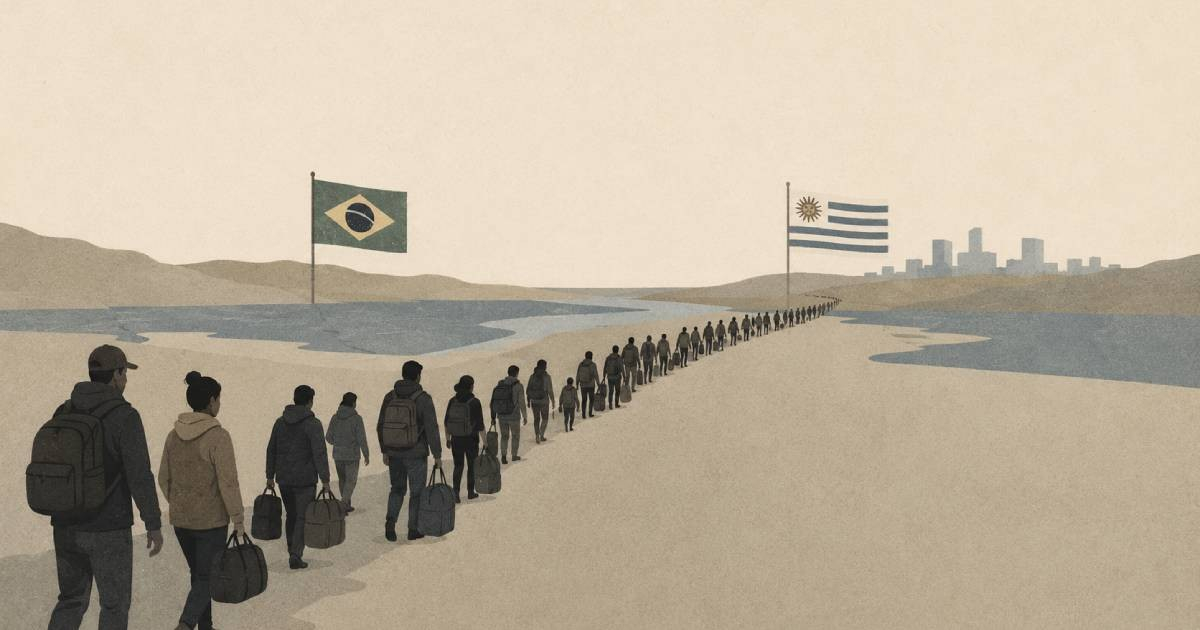
More than 11,000 Cubans crossed from Brazil to Uruguay between January and October 2025 using a route controlled by networks of migrant traffickers that runs from north to south across South America, according to an intelligence report published this year by the Brazilian Intelligence Agency (ABIN) in collaboration with the International Organization for Migration (IOM).
The document, titled "Smuggling of Migrants in Brazil: An Intelligence Analysis," constitutes the first public report of this kind compiled in Brazil and provides a detailed overview of the routes used by thousands of Cubans who leave the island in search of better opportunities away from the economic and political crisis.
According to the report, an average of 30 Cubans crossed the border between Sant'Ana do Livramento in Brazil and Rivera in Uruguay each day during the first ten months of 2025. Most followed an extensive route that starts in Havana and ends in Uruguayan territory after crossing several South American countries.
The journey often begins with a flight from Cuba to Georgetown, in Guyana, the only country in South America that does not require a visa for Cuban citizens. From there, migrants travel overland to Lethem and irregularly cross the Tacutu River to enter the Brazilian state of Roraima. They then travel thousands of kilometers by road to reach southern Brazil and the border with Uruguay.
According to the investigation, organizations involved in human trafficking charge between $1,200 and $10,000 per person, depending on the segment contracted. These networks are primarily made up of Brazilian and Cuban citizens linked to transportation, tourism, and hospitality activities.
The figures indicate a rapid increase in this migratory flow. Between January and September 2025, the number of Cubans entering Roraima rose by 56% compared to the same period the previous year. Simultaneously, the asylum requests submitted by Cuban citizens in that state surged by over 400%, from 5,300 in all of 2024 to more than 18,000 between January and November 2025.
The trend was also reflected at the national level. Brazil received more than 41,900 asylum applications from Cubans during 2025, an increase of 88% compared to the 22,300 recorded in 2024. For the first time, Cubans became the leading nationality applying for refuge in the country, even surpassing Venezuelans.
The report also highlights the increasing importance of an alternative route through the state of Amapá. According to analysts, this route began to gain popularity in 2024 because it offers better security conditions and improved road infrastructure. In this case, migrants arrive from Paramaribo, Suriname, cross French Guiana, and access Brazil through the border town of Oiapoque.
For many of these migrants, Uruguay has become the final destination. The country recorded over 22,000 entries of Cubans during 2025, the highest figure in its history. Of these, around 15,000 remained in Uruguayan territory. That same year, 13,852 Cuban citizens obtained the Uruguayan identity card for the first time, becoming the foreign nationality with the highest number of documents issued, ahead of Argentinians, Brazilians, and Venezuelans.
Behind this new exodus are the profound difficulties facing Cuba. The report links the increase in migration to prolonged blackouts, inflation, shortages of food and medicine, as well as the deteriorating living conditions on the island. Additionally, the tightening of U.S. immigration policies has limited the traditional options for transit to the United States.
As a result, more and more Cubans are choosing to settle in South American countries or to use new migratory routes within the region.
The magnitude of the phenomenon was recently highlighted when the Federal Highway Police of Brazil conducted the largest humanitarian rescue of migrants recorded in a single day in Roraima. In the operation, 108 Cubans were located and five presumed human traffickers were arrested on the BR-401 highway in the municipality of Cantá.
Between 2024 and June 2026, Brazilian authorities rescued 297 migrants in Roraima, with Cubans being the predominant nationality in these operations.
The report concludes that organizations involved in human trafficking have demonstrated a remarkable ability to adapt in response to the surveillance and repression efforts of authorities, posing an increasing challenge for governments in the region and for policies aimed at combating such criminal networks.
Filed under: