
Related videos:
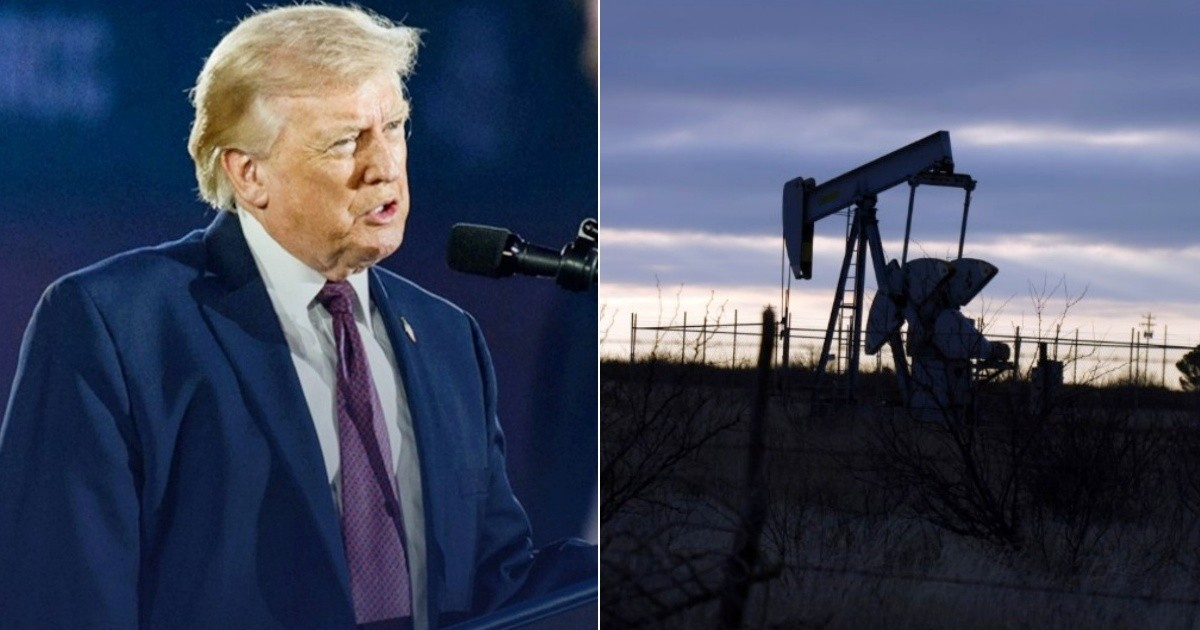
United States became the world's largest oil exporter in May 2026 for the third consecutive month, with shipments of crude oil and fuels reaching 10.5 million barrels per day, according to data from Vortexa confirmed by Reuters.
The data displaces Saudi Arabia and Russia, in a shift that reconfigures the global energy balance.
The figures illustrate the scale of the shift: while the U.S. exported 10.5 million barrels per day in May, Russia was at seven million and Saudi Arabia at 5.9 million.
Just a year earlier, in 2025, Saudi Arabia was leading with 8.1 million barrels per day while the U.S. was exporting only 6.6 million.
The Origin of the Boom: The Shale Revolution
The turning point came after 2010, when the boom in shale oil and gas production transformed the U.S. energy industry.
Since 2000, U.S. production of crude oil and liquids has nearly tripled, reaching about 22 million barrels per day.
In contrast, Saudi Arabia's production has fluctuated between 10 and 12 million according to OPEC quotas, while Russia's production has remained below 10 million since 2020.
In 2015, Washington lifted a 40-year-old ban on oil exports that had been in place since the Arab embargo of 1973, opening global markets to the American surplus.
"In many ways, it serves a role similar to that of OPEC regarding excess production capacity, but it is more of a market mechanism than a strategic device," explained Kenneth Medlock III, a researcher at the Baker Institute for Public Policy.
The geopolitical factor that accelerated the change
The war between the U.S. and Iran, which began in February 2026, has been the catalyst that disrupted Saudi flows through the Strait of Hormuz, through which approximately 20% of the world's oil passes.
At the same time, Western sanctions and Ukrainian drone attacks hit Russian energy infrastructure.
American companies filled the void.
Igor Sechin, director of the Russian oil giant Rosneft and a close ally of Vladímir Putin, acknowledged at the Saint Petersburg Economic Forum that U.S. companies were "the biggest beneficiaries" of the closure of the strait.
To sustain export volume, the administration of Trump authorized in March of this year the release of 172 million barrels from the Strategic Petroleum Reserve, as part of a coordinated effort with the International Energy Agency, totaling 400 million barrels globally.
A new diplomatic lever for Washington
Exporter leadership provides the U.S. with an influential tool that transcends energy markets.
“Washington has a new tool that it had not realized before the war with Iran: energy exports,” stated Michelle Brouhard, policy director at the tracking firm Kpler.
Europe absorbed about 47% of U.S. oil exports so far in 2026, compared to 37% in 2021, driven by the replacement of Russian supply.
Asia accounted for about 46% in May.
The weakening of OPEC
The rise of the U.S. is eroding the pricing power that OPEC has historically held.
The most noticeable blow came when the United Arab Emirates left the organization on May 1 of this year, after nearly 60 years of membership, depriving the cartel of one of its members with the greatest surplus production capacity.
Unlike Saudi Arabia and Russia, where governments set production targets, the American boom is driven by decisions from private companies guided by profitability, which makes it a market stabilizer of a different nature.
Global oil demand reached 104 million barrels per day in 2025, up from 87 million in 2010, indicating that most of the global growth over the past 15 years has been primarily met by the oil boom in the United States.
Filed under: