
Related videos:
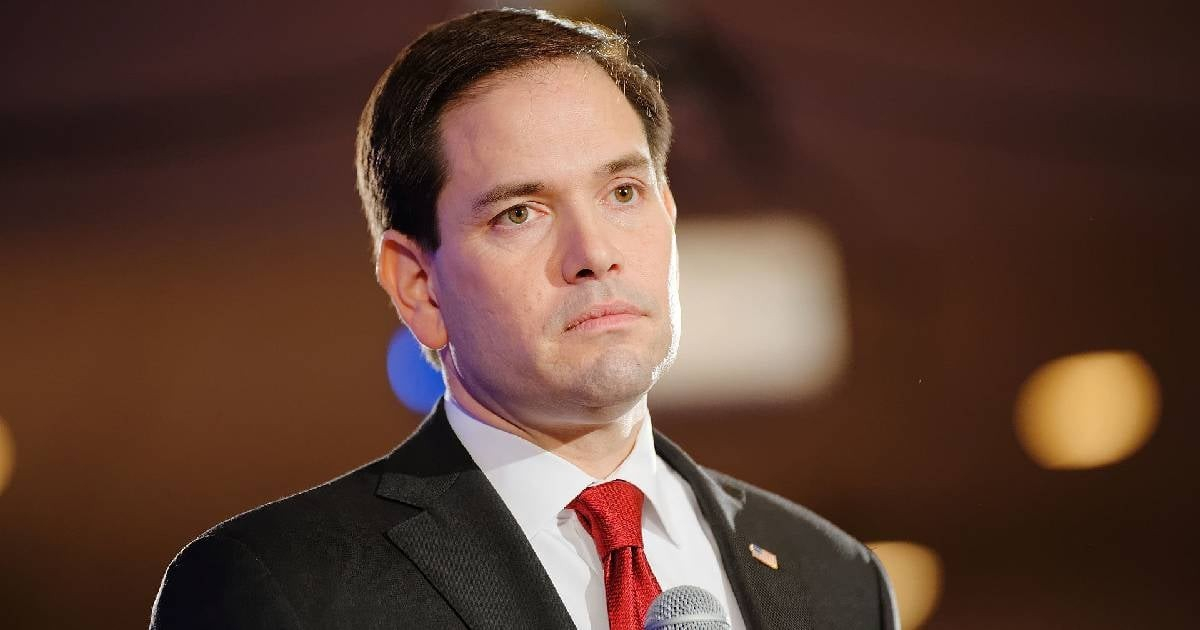
The Secretary of State Marco Rubio announced this Thursday sanctions against Unión Cuba-Petróleo (CUPET), the Cuban state-owned company that controls the import, refining, and distribution of fuels on the island, under Executive Order 14404 signed by President Trump on May 1, 2026.
In his official statement, Rubio directly accused the regime's leadership of turning energy into a tool of repression and illegal enrichment: "While the Cuban people suffered blackouts and waited weeks to fill the tank of their cars, the Castro family traveled on private jets."
The Secretary of State detailed how the regime has diverted energy resources for its own benefit.
"The regime has stolen and hoarded the available fuel, using it for the Castro family's private plane, the security forces employed to repress the Cuban people, to keep empty tourist hotels lit, and to transport people on buses for fake protests and political maneuvers," he detailed.
Rubio described the regime's conduct as "kleptocracy" and stated that "the Cuban communist elites have used energy as a tool for social control and kleptocratic profit."
The designation of CUPET was made under Section 2(a)(i)(A) of EO 14404, for operating in the energy sector of the Cuban economy, and it blocks all its assets and interests in the United States, additionally prohibiting any transactions between U.S. persons or companies and the entity.
The sanction also definitively closes the controversial agreement between Vanguard Energy, a company based in Coral Gables, Florida, and a Cuban import agency to lease CUPET facilities and send over 250,000 barrels of gasoline and diesel per trip, which would have been the largest shipment of U.S. fuel to Cuba since the Eisenhower era.
On Wednesday, the Department of State had already warned that the sanctions remained in effect and that it had not authorized that operation.
Rubio concluded his statement with a direct message: "President Trump wishes for a new future for the Cuban people, with greater freedom and economic and political opportunities. Until then, we will continue to undermine the communist regime's ability to use its energy trade to promote its corrupt agenda and violently suppress the Cuban people."
The action against CUPET is part of a sustained escalation of pressure on the economic apparatus of the regime.
Since January, the Trump administration has imposed more than 240 sanctions against Cuba.
On May 7, Rubio imposed sanctions on GAESA, the military-business conglomerate of the regime, and on June 4 sanctioned Díaz-Canel directly, along with Lis Cuesta Peraza, Alejandro Castro Espín, and his son Raúl Alejandro Castro Calis, among others.
The accusations made by Rubio regarding the use of private jets are backed by documentary evidence: journalistic investigations revealed that Raúl Guillermo Rodríguez Castro, "El Cangrejo", grandson of Raúl Castro, made at least 25 trips to Panama between 2024 and 2025 on aircraft linked to GAESA, including a Dassault Falcon 900EX.
The sanctions come at the worst energy moment in Cuba's recent history.
The electric deficit reached a record high of 2,174 MW on May 14, with only 976 MW available against a demand of 3,150 MW, and power outages have been lasting between twenty and 24 hours each day in several provinces.
The Cuban Minister of Energy, Vicente de la O Levy, admitted in May that Cuba had "absolutely no fuel, no diesel, only associated gas."
The crisis has triggered an unprecedented wave of protests: the Cuban Conflict Observatory recorded 1,311 protests just in May 2026, the month with the highest level of dissent since July 11, 2021.
Filed under: