
Related videos:
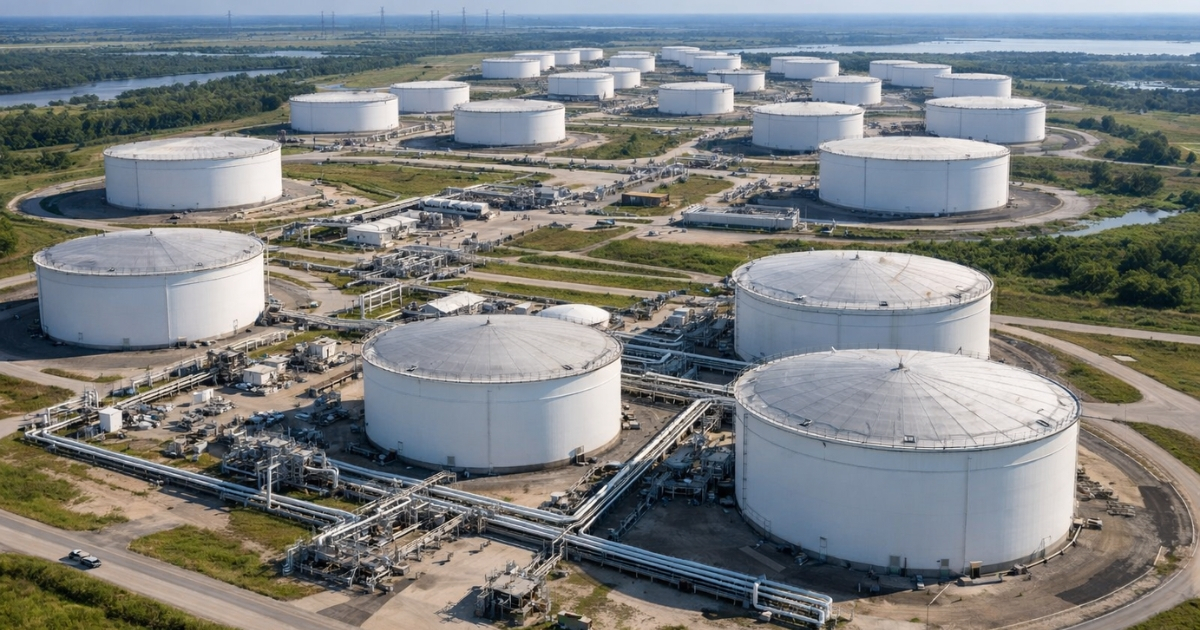
President Donald Trump authorized yesterday the release of 172 million barrels from the United States Strategic Petroleum Reserve (SPR), the largest withdrawal from that reserve in the country's history, in response to the energy crisis triggered by the Iranian blockade of the Strait of Hormuz. The news was confirmed by EFE Noticias.
The measure is part of a coordinated action with the International Energy Agency (IEA), whose 32 member countries unanimously agreed to
"Today, 32 member nations of the IEA unanimously agreed to President Trump's request to reduce energy prices through a coordinated release of 400 million barrels," announced Chris Wright, U.S. Secretary of Energy, when unveiling the measure. Wright specified that the delivery of the American barrels will begin this week and will take approximately 120 days to complete.
The crisis that prompted the decision originated on February 28, when the U.S. and Israel launched the so-called "Operation Epic Fury," conducting more than 1,700 airstrikes against nuclear facilities —including Natanz, Isfahan, and Fordow— and Iranian naval bases. Iran responded by blocking the Strait of Hormuz, through which 20% of the world's oil, equivalent to between 16 and 20 million barrels per day, transits.
The impact on maritime traffic was immediate and devastating: the passage of ships through the strait collapsed by 97%, dropping from 141 vessels daily to just 4 between February 27 and March 8. Energy markets reacted with an unprecedented surge: the price of WTI crude saw a weekly increase of 36%, the largest since 1983, surpassing 90 dollars per barrel, while Brent reached peaks of up to 120 dollars. Goldman Sachs estimated a risk premium of between 14 and 15 dollars per barrel directly attributable to the conflict.
The announcement of the coordinated release of reserves had an immediate effect on the markets: the price of Brent fell between 10% and 11%, dropping below 90 dollars per barrel. The Energy Ministers of the G7 supported the coordinated measures with the IEA in a virtual meeting held this week.
The U.S. SPR currently holds about 415 million barrels, which is nearly 60% of its maximum capacity of 714 million, following reductions made during the Biden administration. The reserve, created in 1975 after the 1973 energy crisis and the Arab embargo, stores crude oil in underground salt caverns in Texas and Louisiana, and has been used on rare occasions throughout its history: during the Gulf War in 1991, after Hurricanes Katrina and Rita in 2005, during the civil war in Libya in 2011, and in 2022 in response to the Russian invasion of Ukraine.
The energy crisis also hit American consumers: the price of gasoline in Florida rose to $3.63 per gallon, a situation that contradicts the central promise of Trump's 2024 campaign to cut energy costs in half within 12 months. Trump plans to replenish the SPR with 200 million barrels over the next year, buying at low prices, which would represent a 20% increase compared to what will be released in this operation.
Filed under: