
Related videos:
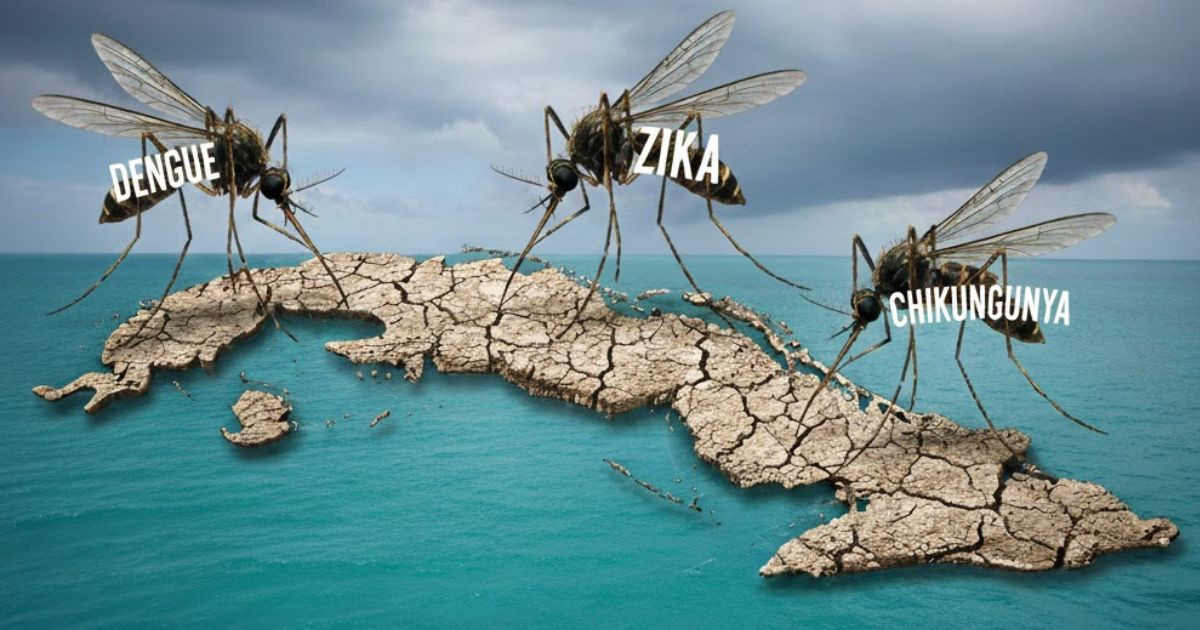
The Ministry of Public Health (Minsap) has activated epidemiological surveillance with the onset of summer and warned that Cuba could face a new dengue epidemic if it does not manage to control the factors that promote the spread of the transmitting mosquito.
The warning was issued by the Deputy Minister of Public Health, Carilda Peña, during an intervention this Thursday on the official television program Mesa Redonda where she alerted about the simultaneous circulation of the four serotypes of the dengue virus, a situation that increases the risk of outbreaks and serious complications.
"If all four serotypes are circulating, it is evident that when one predominates in our health scenario, we could experience localized outbreaks of the disease. If we do not implement a set of actions, we could face an epidemic," the official affirmed.
The call comes in a particularly concerning context. This very Friday, health authorities in Matanzas confirmed the first two cases of dengue for the 2026 season in the province.
Additionally, they acknowledged the existence of other suspected cases under epidemiological surveillance, which were described as "not insignificant at all."
Although the Government insists on monitoring and vector control, the authorities themselves have acknowledged the persistence of environmental issues that facilitate the reproduction of the mosquito Aedes aegypti.
Peña mentioned among them the accumulation of solid waste and water leaks, two phenomena that are increasingly visible in cities across the country.
The garbage collection crisis has become a constant issue. In Havana, the daily generation of waste far exceeds the available collection capacity due to a lack of fuel and the deterioration of the vehicle fleet.
Similar situations can be seen in other provinces, where improvised landfills, stagnant waters, and the deterioration of sanitary infrastructure have become part of the urban landscape.
Power outages also contribute directly to the problem. The prolonged interruption of the electrical supply affects water pumping and forces thousands of families to store it in containers which, in many cases, end up becoming breeding grounds for the transmitting mosquito.
This situation has worsened in recent months, characterized by widespread power outages and a generation deficit that has reached record levels.
The authorities' concern is rooted in one of the worst recent epidemiological crises. According to data from the Pan American Health Organization (PAHO), Cuba ended 2025 with at least 81,909 cases of dengue and chikungunya and 65 associated fatalities from both diseases.
The Minsap officially acknowledged the existence of a dengue epidemic in November of that year, after months of publicly denying the extent of the problem.
Viral circulation did not stop with the change of the calendar. In January 2026, PAHO reported new deaths from chikungunya and more than 1,457 active cases, a sign that the transmission of vector-borne diseases continues to pose a challenge for health authorities.
This scenario is compounded by the spread of other diseases associated with inadequate hygiene and sanitary conditions. As recently acknowledged by Canal Caribe journalist Gisela García Rivero, all provinces in the country have reported cases of hepatitis A, with a particular prevalence in Havana, Matanzas, Santiago de Cuba, Ciego de Ávila, and Camagüey.
While the Ministry of Public Health strengthens epidemiological surveillance at ports, airports, and the primary care system, the warning of a potential epidemic once again highlights structural issues that remain unresolved and continue to create favorable conditions for the spread of transmissible diseases on the Island.
Filed under: