
Related videos:
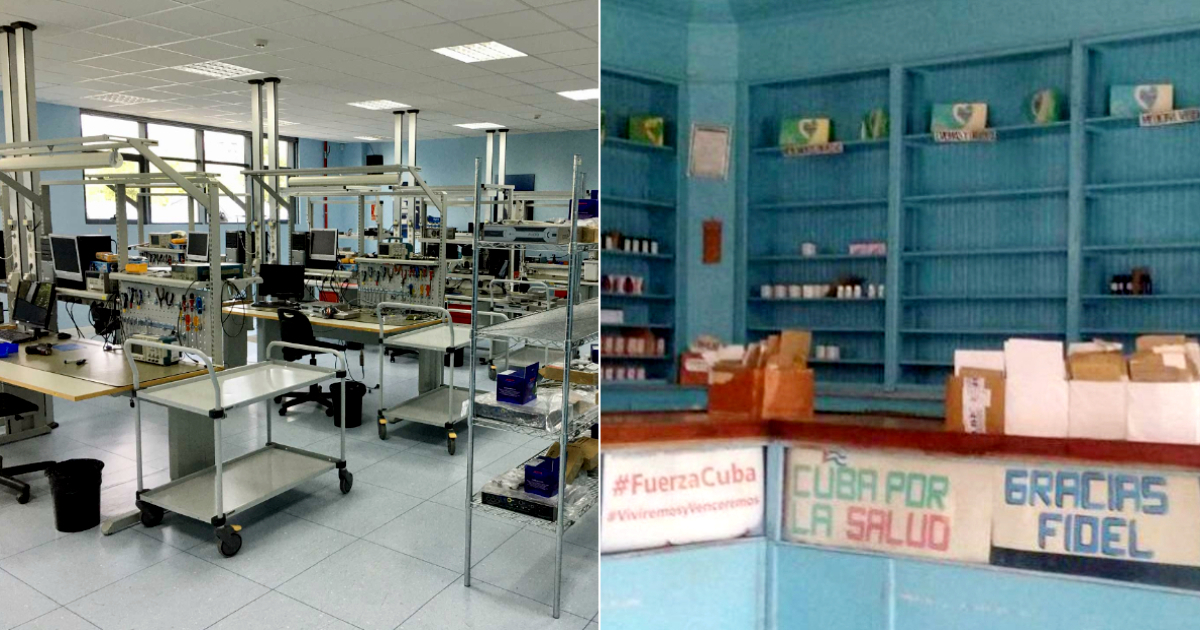
While millions of Cubans struggle to obtain basic medications, a company owned by the state conglomerate BioCubaFarma maintains an industrial and commercial platform in Spain from which it manufactures and distributes medical technology to international markets.
The revelation, published on X by the user @joankelincuba and verified by this editorial team, shows that Neuronic S.A., a Cuban state-owned company linked to the Center for Neuroscience of Cuba (CNEURO) and part of BioCubaFarma, currently exercises management control of I.C. Neuronic S.L., a company based in Zaragoza, specialized in the development, manufacturing, and marketing of medical equipment.
The relationship between both entities is not new. I.C. Neuronic S.L. was established in Spain in 1994 as a mixed Spanish-Cuban company. However, the commercial registries indicate that since September 2022, Neuronic SA is listed as the sole administrator of the Spanish company.
The Spanish company develops and markets electroencephalographs, electromyographs, evoked potential systems, and other specialized neurophysiology equipment used in hospitals and research centers. BioCubaFarma itself has publicly highlighted Neuronic's international activities and its export capabilities from Spain to dozens of markets.
"In the present day, this leading company based in Zaragoza, Spain, exports to more than 20 countries in North America, Africa, Asia, Europe, and Latin America," indicates the BioCubaFarma website about Neuronic S.A.
The connection with the scientific institutions of the Cuban state is also reflected in the advisory structure of the company. The external advisory board of I.C. Neuronic S.L. includes researchers affiliated with the Cuba Neuroscience Center (CNEURO), the Center for Genetic Engineering and Biotechnology (CIGB), and joint projects between Cuba and China.
Among them are the neuroscientist Mitchell Valdés Sosa, a distinguished academic from the Academy of Sciences of Cuba; René Iván González Fernández, head of the Neuromodulation Group at CNEURO; and several researchers associated with Sino-Cuban biotechnology initiatives. The composition of this body reinforces the close integration between the Spanish company and some of the major scientific institutions controlled by the Cuban state.
However, the existence of this sophisticated business structure in Europe contrasts with the precarious situation and pharmaceutical shortages that Cubans face on the island.
In recent years, BioCubaFarma has repeatedly acknowledged challenges in ensuring a stable production of medications due to a lack of funding, raw materials, and supplies. The country's pharmacies have experienced prolonged shortages, and hundreds of medications have been affected by production interruptions.
The crisis has forced thousands of families to rely on shipments from abroad, donations, help groups on social media, or the informal market to obtain treatments intended to manage hypertension, diabetes, cardiovascular diseases, infections, and other chronic conditions.
The situation has become one of the main concerns of the Cuban population and has generated ongoing criticism of the management of the state healthcare and pharmaceutical system.
In this context, the case of Neuronic S.A. raises questions about the priorities of a corporate structure that, on one hand, has the capacity to sustain industrial and commercial operations in Europe and, on the other, is part of a conglomerate unable to ensure a stable supply of essential medications within the country.
The investigation shows no illegality in Neuronic's operations or in the existence of its Spanish subsidiary. There is also no public evidence to suggest that the company is violating the European or Spanish regulations under which it operates.
However, the case illustrates a contradiction that is becoming increasingly visible to many Cubans: while the regime attributes the shortage of medications to the lack of resources caused by the U.S. embargo, several of its main business structures continue to develop international projects and expand their presence in foreign markets.
The matter takes on an additional dimension following the arrival of Mayda Mauri Pérez as the president of BioCubaFarma. Mauri Pérez held leadership positions within the conglomerate for many years and was identified by CiberCuba in an investigation published in 2023 as the mother of economist Alejandro Peñalver Mauri, founder of Cubamodela.
That company made headlines by being one of the first small and medium-sized enterprises promoted in official media and was presented by Cubadebate as an example of the so-called "new economic actors" supported by the regime. The investigation by CiberCuba then pointed out the existing familial and professional ties between the entrepreneur and some of the most influential economic structures in the country.
The coincidence does not prove any irregularity, but it helps illustrate how certain emerging business sectors appear to be linked to circles with privileged access to the state’s economic institutions.
The story of Neuronic S.A. transcends the business realm. The existence of a productive platform in Spain under the control of an entity integrated into BioCubaFarma reflects the contrast between the capability of certain state structures to operate and expand in international markets and the everyday reality of millions of Cubans who continue to search through empty pharmacies for medications they cannot find.
Filed under: