
Related videos:
The National Electric System (SEN) of Cuba is expected to experience an estimated impact of 1,720 MW during the peak evening hours on Friday, according to the report from the Electric Union (UNE).
The figure represents a marginal improvement compared to Thursday, when the deficit reached 2,027 MW at 8:00 PM, but the system remains in severe collapse.
At 6:00 am this Friday, the availability of the SEN was only 1,030 MW against a demand of 2,590 MW, resulting in an impacted capacity of 1,560 MW since dawn. By noon, the estimated impact was 1,550 MW.
For the evening peak, the UNE projects an availability of 1,310 MW against a maximum demand of 3,000 MW, resulting in a deficit of 1,690 MW. "If the anticipated conditions persist, a shortfall of 1,720 MW is expected during this time," the official report warns.
The slight improvement depends on two uncertain additions: the integration of a unit from the CTE Antonio Guiteras with 200 MW - currently in the startup process - and unit two from the CTE Santa Cruz with 80 MW. Both are subject to technical conditions that the regime itself cannot guarantee.
The structural causes of the collapse remain intact.
Five units from the CTE Antonio Guiteras, Máximo Gómez, Ernesto Guevara de la Serna, and Lidio Ramón Pérez are currently out of service. Four blocks from the Mariel, Renté, and Nuevitas plants are undergoing maintenance.
The most devastating factor continues to be the shortage of fuel. 106 distributed generation plants are halted due to a lack of hydrocarbons, which translates to 890 MW out of service. The total unavailable megawatts due to fuel scarcity amounts to 1,203 MW. The Patana de Regla, Patana de Melones, Central Fuel in Mariel, and Central Fuel in Moa also remain out of service.
The capital is not spared from the crisis. The Electric Company reported that on Thursday the province experienced service interruptions for 24 hours, with a peak impact of 395 MW at 8:00 PM.
"It was necessary to shut down circuits for emergency reasons with 100 MW. It was not possible to restore service," the company stated in its official note.
The 54 photovoltaic solar parks contributed 3,288 MWh on Thursday, with a peak power of 440 MW at noon.
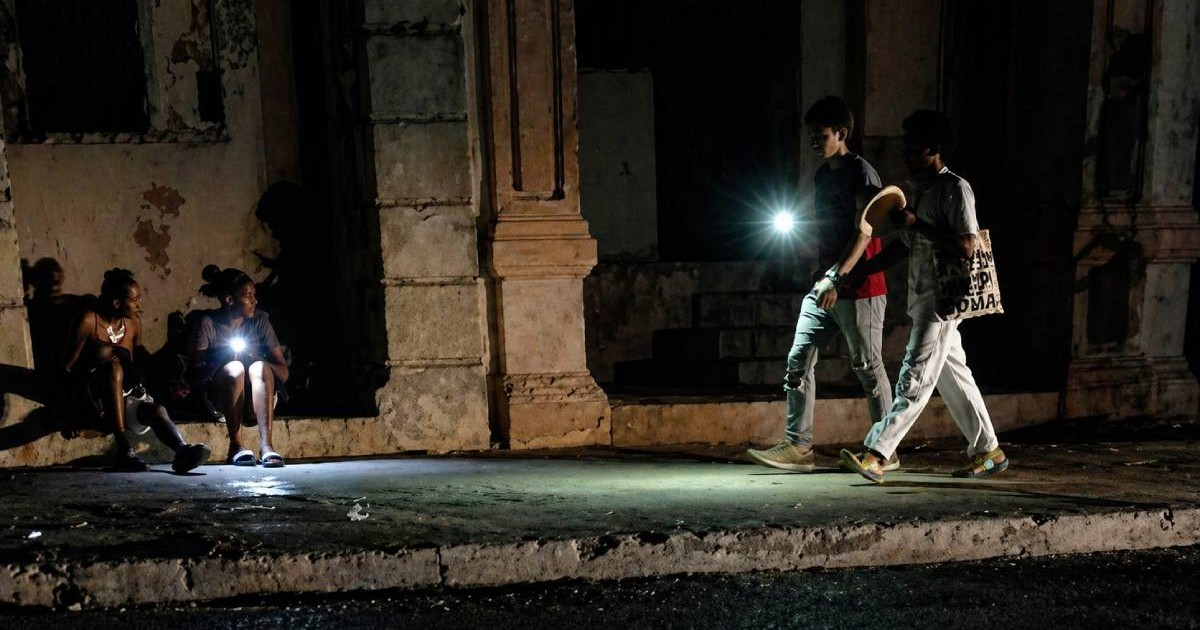
The crisis has triggered a wave of pot-banging protests in Havana and Santiago de Cuba since June 3, with residents of Santos Suárez experiencing up to 31 consecutive hours without electricity and those in Luyanó reporting over thirty hours without light or water.
The worst record of the year occurred on May 14, when the deficit reached 2,174 MW.
Filed under: