
Related videos:
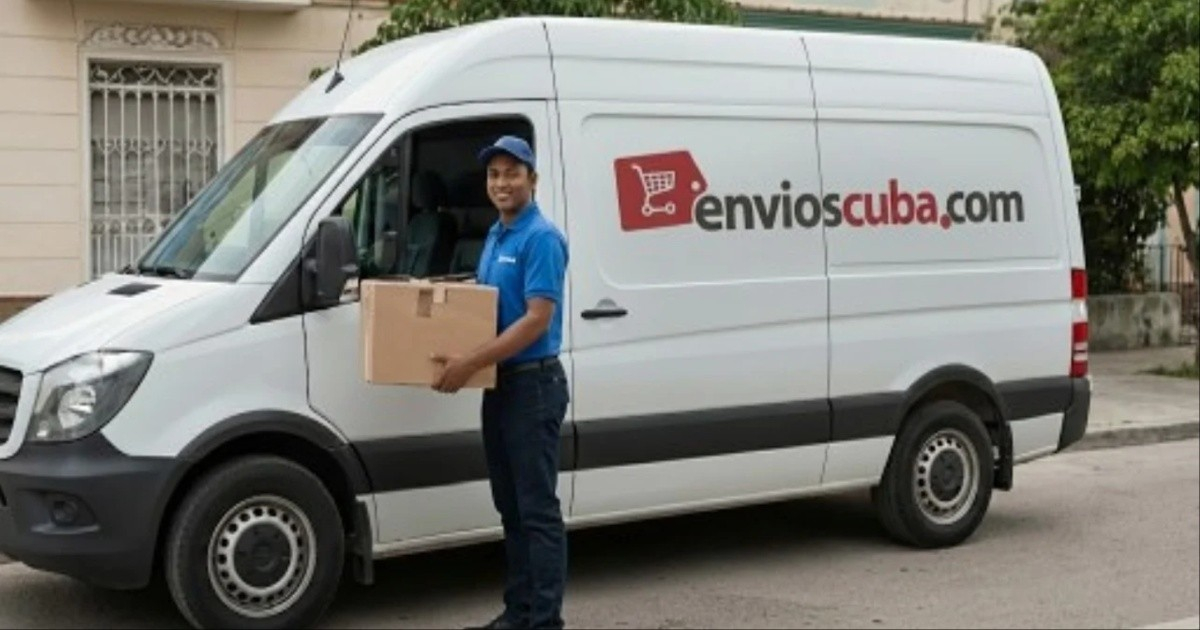
The e-commerce platform EnvíosCuba, one of the major virtual stores targeting the Cuban market, announced the suspension of its operations in a brief statement published on its website, without providing explanations about the reasons or clarifying whether the measure is temporary or permanent.
The message, which completely replaced the site's digital interface, simply stated that "due to reasons beyond our control, our platform can no longer provide services."
The company assured that it will fulfill all approved and ongoing orders, and bid farewell to its customers with a message of gratitude: "Thank you very much for your loyalty over the years. It has been an honor and a privilege to serve you."
EnvíosCuba not only operated as an online store; it also served as a commercial umbrella under which several specialized shops functioned, including Puerto Envío, Electro Envío, Mercado, Carlos III, and Almacén-On, all of which are now out of the virtual environment following the closure of the parent business.
The platform was marketed as "the leading store for shopping and shipping to Cuba" and claimed to offer more than 10,000 products, including food, appliances, hardware, and household items.
Its business model was based on in-kind remittances: the emigrated family member paid for products from abroad, and the recipient received them in Cuba at prices inaccessible to a Cuban worker, whose average monthly salary is under 11 dollars.
According to a report from Diario de Cuba, behind the platform is NACTWS S.L., a company registered in Palma de Mallorca in November 2017, with a share capital of only 3,000 euros, entirely controlled by Sonia Álvarez Pérez as the sole administrator.
The NGO Cuba Siglo 21 and the digital newspaper CubaNet have linked the platform to the military conglomerate GAESA and to the Cuban-Canadian businessman Vladimir Graverán Becerra, husband of Álvarez Pérez, identified as a central figure in the network of companies used to operate e-commerce, remittances, and online sales related to the Cuban Armed Forces.
At the same time, Diario de Cuba documented "similar links" between EnvíosCuba and the CIMEX Corporation, a pioneering company in the collection of foreign currency in Cuba, which was absorbed by GAESA in 2011.
The closure occurred in a context of intense U.S. pressure on the Cuban economic-military framework.
On May 1st, President Donald Trump signed Executive Order 14404, which expanded sanctions against individuals and entities linked to the Cuban state apparatus. GAESA was formally sanctioned on May 18th.
A few days later, Visa and Mastercard ceased operations in Cuba following the break with a foreign processing bank and FINCIMEX, the financial institution of GAESA responsible for processing remittances and international payments.
The Visa and Mastercard operations, which were one of the main payment methods used by thousands of Cubans abroad to make purchases on platforms like EnvíosCuba, have been suspended as of June 6.
Meanwhile, other platforms targeting the same market—Supermarket23, Katapulk, Cubamax, and MallHabana—continue to operate for the time being.
The closure of EnvíosCuba occurred a few days after the expiration date (June 5) of the grace period established following the new sanctions from the Trump administration and the suspension of Visa and Mastercard operations in Cuba, although the company has not clarified whether there is a direct connection between these events and the cessation of its services.
The U.S. Secretary of State, Marco Rubio, described GAESA as "a state within a state" that controls assets valued at around 18 billion dollars and approximately 70% of the Cuban economy. "Today, Cuba is not controlled by any 'revolution'. Cuba is controlled by GAESA," Rubio stated in a message to the Cuban people.
Filed under: