
Related videos:
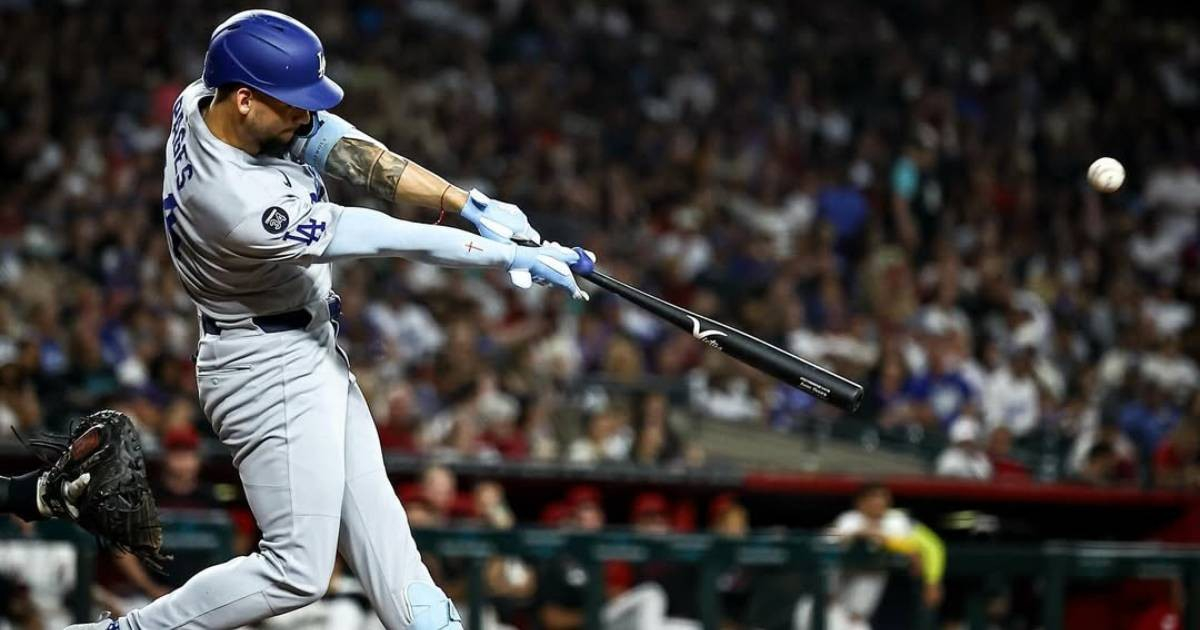
Andy Pagés plays for one of the most famous teams in world baseball, earning $800,000 this season and ranking among the offensive leaders in Major League Baseball. However, none of these accomplishments can ease the worry he feels every time he tries to communicate with his family in Cuba and his messages go unanswered.
The 25-year-old center fielder for the Los Angeles Dodgers, originally from Mantua in Pinar del Río, lives in the United States with his wife Alondra, while his parents and sister remain on the island, separated by thousands of kilometers and by a migration reality that makes it difficult for them to reunite.
"I have not found anything that gives me that tranquility and peace," Pagés confessed in statements to the newspaper .
"Because, just as things are there, you always keep in mind that anything could happen at any moment. And I have my whole family in Cuba. So you have to live with that constant worry," he added.
For the Cuban ballplayer, the toughest moments come when he tries to call his loved ones and no one answers. When calls go straight to voicemail, uncertainty sets in immediately.
While in the United States he is experiencing the best moment of his sports career, in Cuba his family continues to face the everyday challenges stemming from the economic and energy crisis the country is undergoing.
Pagés observes this reality from a distance, through telephone conversations, photographs sent by his relatives, and news about blackouts, shortages, and the deterioration of living conditions on the island.
On the field, his performance has been one of the great surprises of the season. The Cuban is among the leaders in Major League Baseball in runs batted in, has amassed 15 home runs, and has established himself as a key player in the Dodgers' lineup, not to mention his defensive work in the outfield.
But outside the stadium, the reality is different.
His teammate Miguel Rojas, a veteran Venezuelan infielder, asserts that many times the public forgets that behind the uniform, there are individuals who carry family and personal concerns.
"We are here to perform and, in fact, to entertain people," Rojas explained. "The problem arises when the lights go out at night, when you have to go back home, when you become an ordinary human being on the street."
Pagés is one of the dozens of Cuban players currently in Major League Baseball while having close relatives in the island. This is a reality shared by many athletes who have achieved professional success far from their homeland, yet continue to live with the constant worry for those they left behind.
When nostalgia hits hard, the gardener looks for small memories of home. Sometimes he turns to the Cuban food available in Los Angeles, although he acknowledges that nothing can replace what he left behind in Cuba.
"Such things should not happen in a country as beautiful and joyful as Cuba," he lamented.
While he waits for the day he can reunite with his family, Pagés clings to his Christian faith and remains focused on baseball. This duality encapsulates the experience of many Cuban emigrants: pursuing a professional dream while continuing to suffer for those who remain on the other side of the sea.
Filed under: