
Related videos:
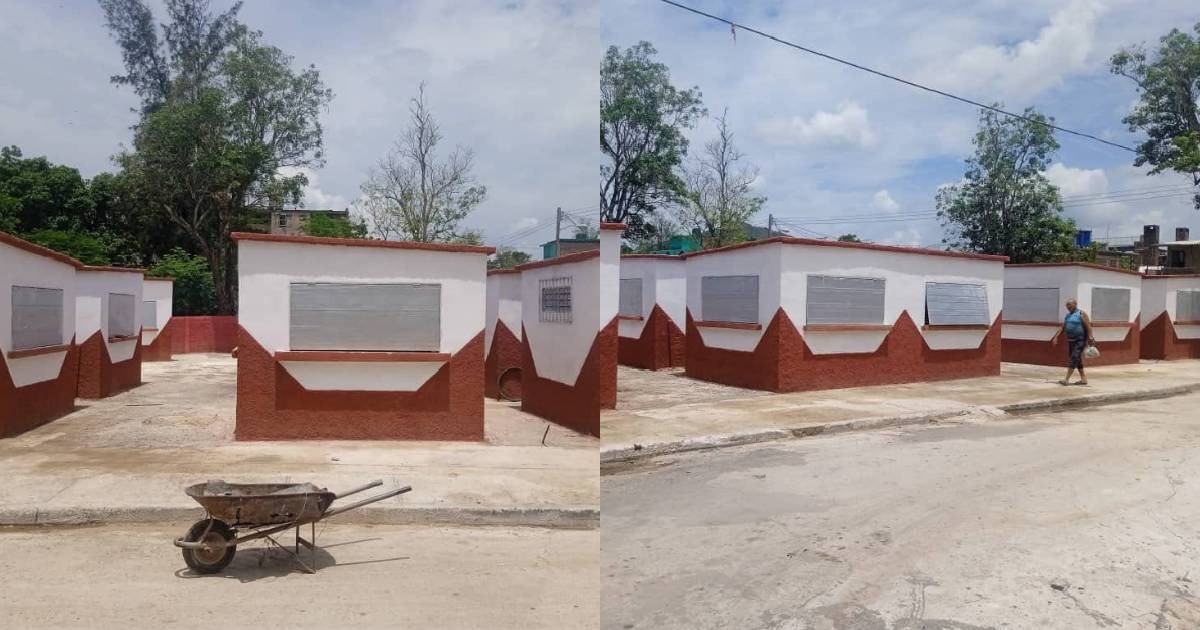
Images published this Saturday on social media show the new kiosks that will replace the informal market Los Chinos, in the Lenin neighborhood of the city of Holguín, after authorities removed small businesses and street vendors from the site on Thursday.
The Facebook page Holguín Memories published photographs of the new structures located on Cuba Street, near the hospital. These are flat-roofed modules with white walls on the upper part and terracotta bases featuring a triangular design, equipped with silver metal blinds and aligned on new concrete pavement.
The rental price for each space is around two million Cuban pesos, although those who pay that amount will never be owners of the space, as reported in the publication.
An exchange in the comments of the post made it clear. "I thought that if you paid that price, you were the owner," wrote one user.
The response was emphatic: "Wrong, my friend, the right to sell, and if you stop working for yourself, the state takes over again."
The public's reaction to the images has been mixed. Some view the reorganization positively, highlighting the aesthetic improvement and the elimination of the microdump that existed at the site.
"The microdump is eliminated, urban planning is applied to the area, and a service problem for the population is resolved," noted a commentator, although they added that the project should include walkways, landscaping, pergolas, and lighting.
Others point directly to the consumers' pockets. "The people pay for that... they need to brace themselves for the prices," summarized one user.
The concern is clear: if merchants have to pay a rent of two million pesos for a space that does not belong to them, they will inevitably pass that cost onto the prices of their products.
"Two million is an outrage. They were taken out of that area for indiscipline, lack of hygiene, and other situations, okay, but I can’t believe that amount has to be paid. It would practically be like the saying goes: working for the English," wrote another citizen.
Several comments also criticized the absence of trees in the design. "They didn't leave space for trees, what were they thinking?" asked a user.
"Today we complain about the lack of hygiene, rightfully so, but tomorrow we will complain about the higher prices of food and the scarcity that all those people will create in that place," anticipated a neighbor from Reparto Lenin.
The eviction and replacement of the market happen at the worst possible time from a food security perspective. Los Chinos was the largest access point for food in the province, and its closure affected over 350 vendors who had already been unable to operate for almost two weeks due to prior restrictions.
The context is critical, as approximately 97% of the Cuban population lacks adequate access to food according to the Food Monitor Program, and nearly 34% of households reported that at least one member went to bed hungry in the past month.
The Minister of Food Industry admitted on state television that for the entire year, oil, chicken, and yogurt had not been able to be distributed through the ration book.
Filed under: