
Related videos:
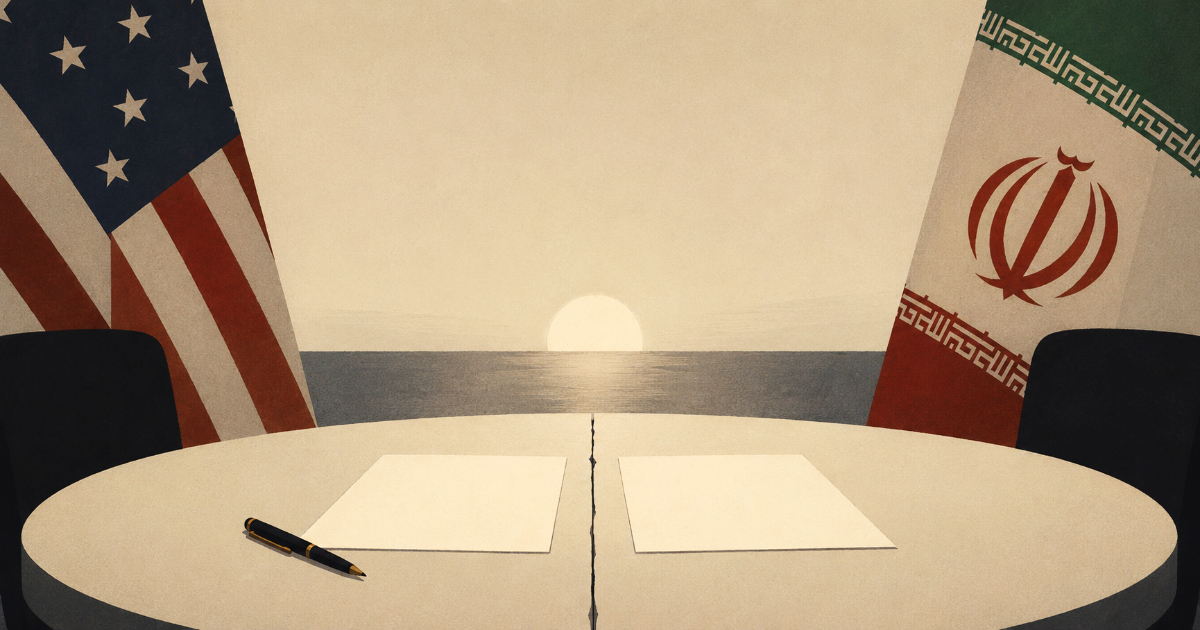
The Prime Minister of Pakistan, Shehbaz Sharif, announced on Sunday that the United States and Iran had reached a "peace agreement," which President Donald Trump confirmed on Truth Social, stating that the deal was "closed" with the message "Let the oil flow!".
However, the reality behind the announcement is considerably more fragile than those words suggest.
There is still no definitive text, and what is circulating are versions from both sides that do not match, warned analyst Nacho Montes de Oca this Monday in an extensive thread on X that broke down the actual state of the negotiations point by point.
The formal signing is scheduled for Friday the 19th in Switzerland, but the main obstacle is that Ayatollah Mojtaba Jamenei has not formally approved any document.
What exists in practice is not a treaty, but rather a preliminary memorandum of understanding that establishes a 60-day moratorium to continue negotiating the most contentious issues.
Trump announced the lifting of the naval blockade on the Strait of Hormuz, but Iran has not yet formalized that reopening.
The most critical unresolved issue is the Iranian nuclear program: Washington demanded a 20-year moratorium on uranium enrichment, while Tehran proposed between five and 15 years.
Iran possesses approximately 440-450 kg of uranium enriched to 60%, a quantity technically close to the threshold for making a weapon. "It is unclear what mechanism the United States can use to force the delivery of the enriched uranium," Montes de Oca noted.
Another open front is Lebanon. Iranian support for Hezbollah has disappeared from the original text of the agreement, complicating any ceasefire, as Israel rejects conditions on its offensive and does not consider itself part of the memorandum.
The Israeli Prime Minister, Benjamín Netanyahu, declared that his forces will not withdraw from southern Lebanon. In this regard, Defense Minister Israel Katz also made a statement. "Israel has to give in but receives nothing in return," summarized the analyst.
There are also unconfirmed rumors of an immediate financial compensation to Iran, in addition to access to approximately 24 billion dollars in frozen assets and relief from sanctions within 60 days after the signing.
The announcement did have a concrete effect: the price of Brent crude fell to 81 dollars amid the prospect of reduced conflict, a relief for the global economy partly driven by the oil monarchies of the Gulf that supported the negotiations.
The agreement stands in striking contrast to the promises Trump made to the Iranian people on February 28, 2026, when he launched Operation Epic Fury alongside Israel: "When we finish, take control of your government. It will be yours to take".
Trump even spoke of a "regime change". The current agreement, on the other hand, leaves the ayatollah regime in power, militarily weakened but politically intact.
Critical voices within the Republican field have harshly attacked the agreement. Former Secretary of State Mike Pompeo described it as "not America First" on May 24, comparing it to the pact negotiated by Barack Obama in 2015.
The former National Security Advisor John Bolton was even more direct: he warned that "the ayatollahs will have won a significant victory" and that Iran would be "back on the path to nuclear weapons."
The paradox is striking: the same hawks who in 2018 supported Trump's withdrawal from Obama's nuclear agreement are now criticizing the new deal for resembling that one too closely, with the difference that by 2026, Iran's nuclear program is much more advanced.
"In any case, what we have is an announcement without the certainty of its practical application," concluded Montes de Oca, summarizing what the betting platform Polymarket estimated to be around a 57% chance of a nuclear agreement being reached before June 30.
Filed under: