
Related videos:
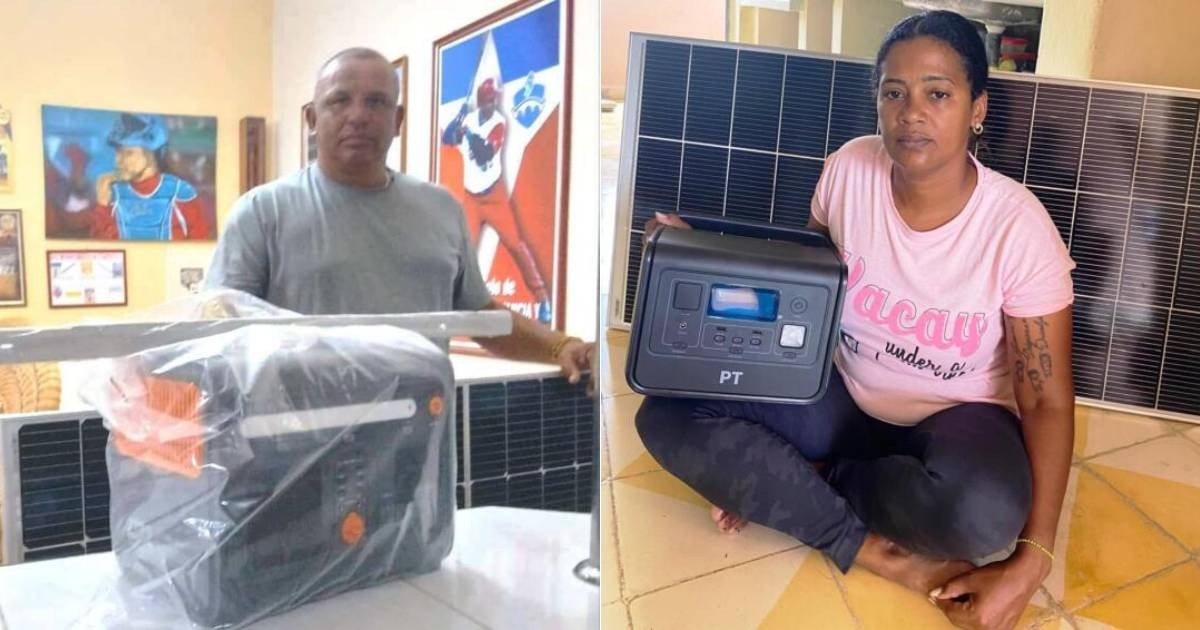
The Cuban state delivered photovoltaic systems to six sports legends from the province of Sancti Spíritus as an official recognition, a decision that reveals, more than any speech, the depth of the energy crisis facing the island.
According to the information published by Radio Sancti Spíritus, the beneficiaries were the baseball players Frederich Cepeda, Eriel Sánchez, and José Raúl Delgado, the canoeist Serguey Torres — Olympic champion in Tokyo 2020 —, the judoka Dayaris Mestre, and the basketball player Jacinto de Jesús González Peralta.
The most revealing aspect is not who received the award, but what that award represents in today's Cuba.
The official source admitted it outright: "Previously in the country, other Olympic and world champions had been recognized with cars," stated María Zamora Clavo, president of the Provincial Commission for Retired Athletes and Sports Glories.
This shift—from the automobile to the solar panel—serves as an accurate thermometer of how the material conditions of the country have changed under 67 years of communist dictatorship.
In the 1980s, with the Soviet subsidy, elite athletes and front-line workers received Lada or Moskvich cars. During the Special Period in the 90s, the incentives dropped to Panda televisions and Chinese appliances. In October 2023, the Cuban government awarded 17 cars to athletes and coaches in recognition of sporting merit.
In 2026, the new symbol of privilege is solar energy.
Cuba closed 2025 with electric deficits exceeding 2,000 MW and power outages of more than 20 hours a day in several provinces, with some interior areas receiving barely three hours of electricity a day.
The Minister of Energy and Mines, Vicente de la O Levy, himself acknowledged that 2026 would be "difficult, slightly better" and that blackouts would not disappear.
In that context, a photovoltaic system installed at home —priced in the informal market between $3,600 and $4,500— has become the most valued and scarce commodity in the country.
The program was approved through an agreement of the State Council and the National Commission for Athlete Support, and it also extends to outstanding workers in Health, Education, and National Heroes of Labor.
The installation is carried out by Copextel, a state-owned technology company.
The unequal access to solar panels reveals a new form of privilege in Cuba: while the State distributes them to selected groups, the majority of the population remains subjected to prolonged power outages with no solution in sight.
Zamora Clavo confirmed that the program has not ended: "There are still sports legends in the country who will be supported with the delivery of solar panels, and later, we will begin recognizing other figures who have been Pan American and Central American medalists."
Filed under: