
Related videos:
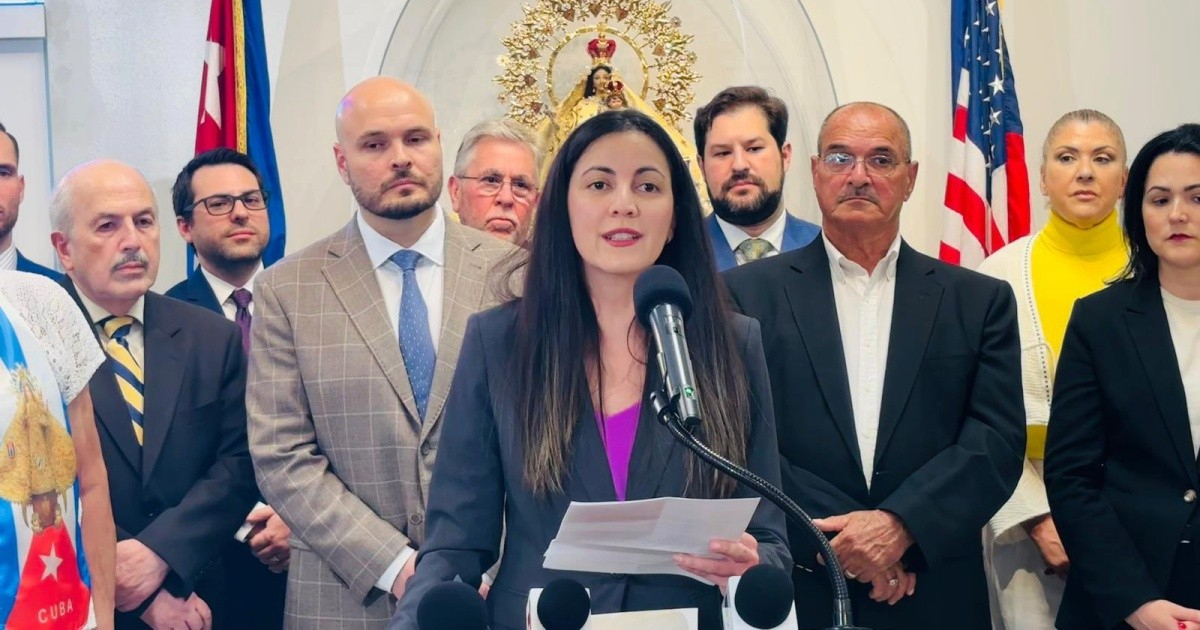
The Liberation Agreement —the broad Cuban opposition coalition— and the Cuban-American Bar Association (CABA) announced yesterday in Miami a strategic alliance to build the legal infrastructure necessary for a future democratic transition in Cuba.
The press conference brought together Rosa María Payá, coordinator of the Liberation Agreement; Jordi Martínez-Cid, president of CABA; and opposition leader José Daniel Ferrer, founder of the Patriotic Union of Cuba (UNPACU).
An alliance for the "day after"
Payá emphasized that the initiative addresses an urgent question about the future of the island: what will happen the day after a political change.
"We are building the legal foundations of a democratic Cuba even before the regime changes. We are preparing the rules for the transition and the principles of the rule of law so that they are ready from day one," he stated.
The coordinator was straightforward in describing the risk they want to avoid: “When a dictatorship collapses, it leaves a void. We are working to prevent Cubans from facing that void.”
According to the official statement from Cuba Decide, CABA will serve as a strategic partner for legal advice to the working groups of the coalition and the future provisional government.
The alliance will promote three initiatives:
-adapt the transition law of CABA to the mandate of the Agreement.
-identify a network of qualified legal advisors.
-deploy specialized lawyers directly in the working committees.
Operational preparation
Payá described the agreement as a qualitative leap in the organizational maturity of the opposition.
"This is what operational preparation refers to. We are moving from a unified political roadmap to gathering institutional management capacity to execute it, with volunteer lawyers from across the diaspora joining this effort through CABA."
Among the priorities of the future provisional government from day one, Payá mentioned the release of political prisoners, the dismantling of the regime's repressive apparatus, and the restoration of the rule of law.
CABA brings decades of legal experience
Martínez-Cid emphasized that the organization has been working for over fifteen years on legal proposals for a possible transition, including a draft law created in collaboration with exile and dissent groups.
"By aligning our vast network of legal professionals with the operational mandate of the Liberation Agreement, we are moving beyond activism to concrete preparation. We are ready to provide the structural legal architecture necessary to ensure a fair, orderly, and lasting transition to democracy," he stated.
Founded in 1974, CABA is the most important voluntary association of lawyers in the Cuban diaspora and includes judges, lawyers, legal assistants, and law students.
Ferrer: "Without a legal framework, it is impossible to rebuild Cuba."
Ferrer, who arrived in exile after years of political imprisonment for his involvement in the 11J protests, described the alliance as a "momentous" piece of news.
“Without a strong legal framework, it is impossible to rebuild Cuba. It is impossible to live in freedom if there is no independence of powers and respect for the rule of law,” he noted.
The Agreement is progressing on its roadmap
The Liberation Agreement was signed in early March in Miami by more than 30 organizations of the Cuban exile, with a three-phase roadmap -Liberation, Stabilization and Reconstruction, and Democratization- aimed at culminating in the first free elections in Cuba in over seventy years.
Since its signing, the Agreement has garnered progressive endorsements: Florida officially recognized the Liberation Agreement in April through a proclamation by State Senator Alexis Calatayud, marking the first formal legislative endorsement from an elected state official.
The plan was presented later in Madrid and before the Senate of Italy in Rome.
More than 700 political prisoners remain incarcerated in Cuba according to Human Rights Watch, while the regime rejects the ultimatum from the United States to release high-profile detainees.
Payá summarized the ambition of the project: “We want to be ready to govern, to lead, and to support the transition when power fractures in Cuba.”
Filed under: