
Related videos:
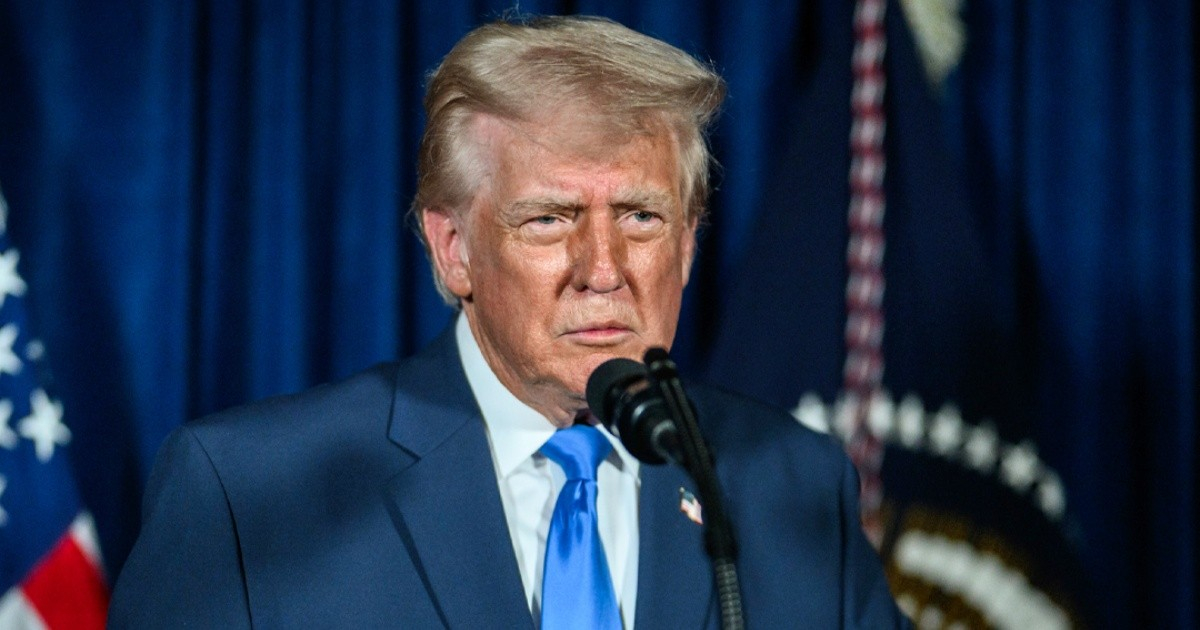
Donald Trump addressed one of the biggest uncertainties of the peace agreement with Iran this Monday and categorically denied that Washington has agreed to pay 300 million dollars to Tehran as part of the memorandum of understanding signed between both nations to end more than three months of conflict in the Persian Gulf.
The president used his social media platform Truth Social to refute the versions spread by Iranian media, labeling them as "fake news" attributed to the Democrats.
“The story that the U.S. is paying $300 million to Iran is false news, spread by the Democrats”, Trump wrote on Truth Social, adding that “Iran has agreed never to have a nuclear weapon.”
Vance reinforces the message from the White House
The vice president JD Vance supported the president's position in interviews with Fox and NBC, stating unequivocally: “The agreement stipulates that they will not receive a single penny of American money.”
Vance conditioned any future economic benefits for Tehran on the fulfillment of verifiable commitments regarding its nuclear program.
"If they demonstrate verifiable commitment, and that means a real inspection regime, then they will be able to benefit from the agreement," he stated.
The vice president also specified that one of the "fundamental" points of the memorandum states that both Washington and the International Atomic Energy Agency will assist Iran in "destroying its reserves of highly enriched uranium," which entails the return of nuclear inspectors to the country.
The origin of the controversy
The version regarding the alleged payment emerged in the context of negotiations that included discussions about the relief of sanctions and Iran's access to frozen assets abroad, estimated at over 100 billion dollars spread across Qatar, India, Iraq, Luxembourg, and Japan.
Although Trump denied the direct payment of 300 million, he did not clarify whether the agreement includes any mechanism for unlocking those assets or the exact extent of any eventual sanctions relief.
The denial came hours after Trump announced in Évian-les-Bains, the host of the G7, that the agreement was already finalized.
"The agreement is already signed, and the strait is now partially open," he declared before reporters.
The agreement and its uncertainties
The memorandum, the full text of which the Trump Administration promised to publish in the next 24 to 48 hours, establishes the reopening of the Strait of Hormuz -blocked by Iran for three months- and a 60-day extension of the ceasefire to negotiate outstanding issues, including the future of the Iranian nuclear program.
The agreement between the United States and Iran comes after a war that began on February 28, 2026, with Operation Epic Fury, a joint air offensive against Iranian nuclear and military facilities that triggered the blockade of the strait and a global energy crisis.
From the Iranian side, Deputy Foreign Minister Kazem Gharibabadi made it clear regarding the climate of distrust:
"This memorandum does not imply trust in the enemy; it has been drafted with evident distrust."
Pressure from Congress and tensions with Israel
The democratic opposition demanded transparency.
The senator Chuck Schumer demanded the full publication of the text and asked, "The American people deserve details and complete transparency: what exactly does this 'understanding' contain?"
Meanwhile, hours after the announcement, Israel launched a drone strike in southern Lebanon against Hezbollah positions, raising fresh tensions, as Tehran claims that the memorandum demands a complete cessation of hostilities on that front.
Countdown to the signing in Geneva
The official signing is scheduled for Friday in Geneva, although Swiss President Guy Parmelin expressed caution:
"It is more prudent to discuss this weekend," he warned, noting that the composition of the delegations is still not defined.
Parmelin recalled that Switzerland has acted as a "protecting power" between the U.S. and Iran since 1980, and that the ceremony in Geneva will serve as a public ratification, given that both parties already formally digitalized their commitment to cease hostilities last Sunday.
"We must have patience to understand the details. It will take place in Geneva because this is the will of the parties and the facilitator, Pakistan," he stated.
Filed under: