
Related videos:
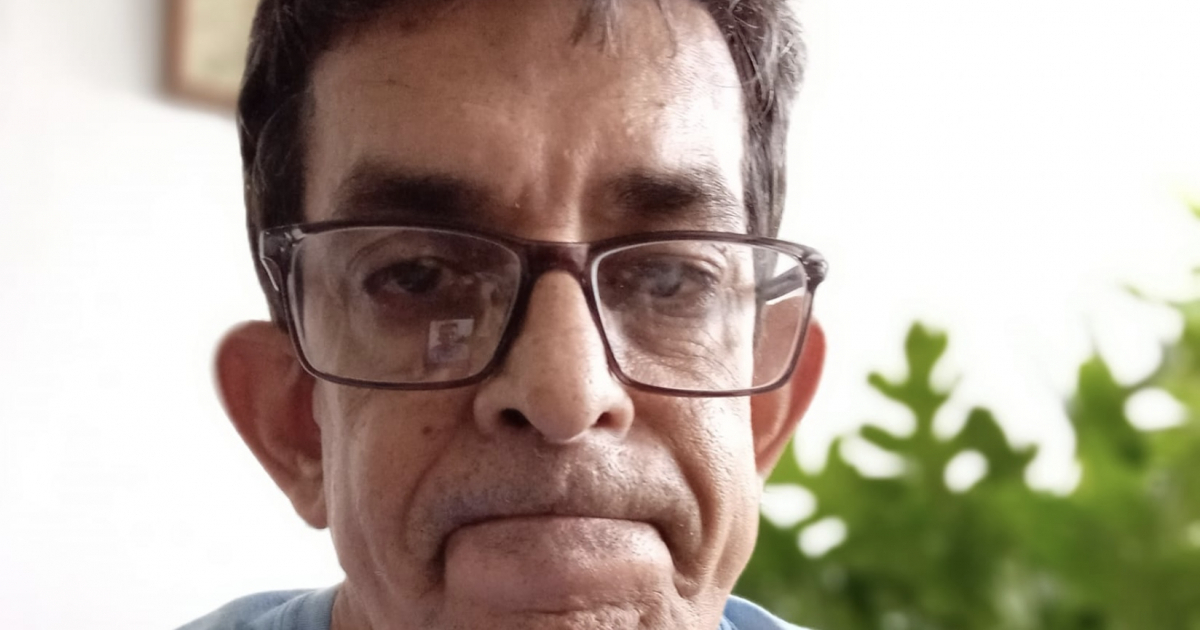
The Cuban comedian and actor Ulises Toirac posted this Tuesday on Facebook a direct critique of the dual power structure that underpins the Cuban political system, questioning the coexistence of the Communist Party of Cuba (PCC) and the People's Power (PP) as two parallel government apparatuses financed by the people amidst an unprecedented crisis.
"There are two governments: the PCC and the PP. Both have a structure that spans from the grassroots to the national level. Thousands of salaries, thousands of properties, thousands of cars, thousands of trips (both domestic and international)...," wrote Toirac, who began his reflection by stating that he was speaking because he had been told, "whoever has a better idea should say it."
The comedian contrasted that bureaucratic machinery with the daily reality of Cubans: "There is hunger in this country, there are no medicines, there is no electric power system, there are no resources of any kind. Two entities that APPARENTLY duplicate each other are being maintained. And Liborio is paying for it."
The term "Liborio" — a popular figure representing the average Cuban citizen — summarizes in the publication who bears the cost of both structures, while the island experiences blackouts of up to 20 hours a day, electricity deficits exceeding 2,100 MW in May and a drinking water system operating at 37% of its capacity.
Toirac concluded the publication with a rhetorical question that summarizes his argument: "Don't you think one is superfluous... or...?"
The criticism points to a structural reality established since the 1976 Constitution, whose Article 5 defines the PCC as "the superior leading force of society and the State."
This architecture effectively creates two overlapping chains of command in each province and municipality of the country: one that is ideological-party based and another that is administrative-governmental, each with its own staff, vehicles, properties, and budgets.
The publication is part of a sustained pattern of public criticism by the comedian of the Cuban government throughout 2026.
On March 18, he stated that "the decisions of this government are what set the economy on fire", and on May 2, he questioned the regime for prioritizing mobilizations and propaganda events over solving concrete problems like waste disposal and power outages.
On June 13, just days before this publication, Toirac stated that the reforms announced by Díaz-Canel arrived "too late and reluctantly" and that "they won't work today either."
On Monday, while responding to a user who called him a "mercenary," Toirac reaffirmed his stance without backing down in his criticisms of the government apparatus.
The consistent stance of the comedian is that Cuba's main problem does not lie in external factors such as the U.S. embargo, but rather in the internal management of the government itself and its structural inability to resolve the crisis that the population faces daily.
The New York Times reported in January 2026 that monthly food rations “barely lasted ten days” and that obtaining medication was “almost impossible” without foreign assistance, data that give concrete weight to the question that Toirac poses to the regime: if there are no resources for the people, can Cuba afford to maintain two governments at the same time?
Filed under: